Navigating the Complex Landscape of Vegan and Plant-Based Leather: An In-Depth Look at Sustainable Alternatives and Industry Challenges

The fashion industry, long reliant on conventional animal leather, is undergoing a profound transformation driven by escalating environmental and ethical concerns. While animal leather has been a staple for millennia, its production today is far from sustainable, prompting a global search for viable alternatives. However, this quest has unveiled a complex landscape where the term "vegan leather" itself has become a battleground, often masking the very environmental issues it pur purports to solve. This article delves into the intricate world of sustainable leather alternatives, examining the critical distinctions between various materials, their environmental footprints, and the ongoing innovations shaping the future of ethical fashion.
The Hidden Costs of Conventional Leather Production
The environmental and ethical toll of traditional animal leather production is extensive and well-documented. At its core, conventional leather is a co-product of the meat and dairy industries, meaning its existence is intrinsically linked to animal agriculture, one of the most resource-intensive and polluting sectors globally.
The livestock industry, particularly cattle farming, is a significant driver of deforestation, especially in critical ecosystems like the Amazon rainforest. Forests are cleared to create grazing land and to grow feed crops, leading to irreversible biodiversity loss and the release of sequestered carbon, exacerbating climate change. The Food and Agriculture Organization (FAO) estimates that livestock accounts for approximately 14.5% of global anthropogenic greenhouse gas emissions, with methane from enteric fermentation being a particularly potent contributor.
Water consumption is another substantial issue. Raising livestock requires vast amounts of fresh water for drinking, feed production, and sanitation. Furthermore, the tanning process, which transforms raw hides into durable leather, is notoriously water-intensive and chemically demanding. Traditional chrome tanning, used for about 80-90% of global leather production, involves a cocktail of heavy metals, salts, and acids. The wastewater generated from tanneries is often laden with toxic chemicals, including chromium, sulfides, and ammonia, which, if improperly treated, can contaminate local water bodies, destroy aquatic ecosystems, and pose severe health risks to nearby communities. Exposure to chromium VI, a common byproduct of chrome tanning, is a known carcinogen and can cause a range of health problems, from skin irritations to respiratory issues and cancer. Alternatives like vegetable tanning, while less toxic, are still resource-intensive and often utilize harsh chemicals.
Beyond environmental impacts, animal welfare remains a central ethical concern. The animals raised for leather often endure conditions associated with industrial farming, including confinement, mutilation, and inhumane slaughter practices. The demand for leather, therefore, directly supports an industry many find morally objectionable.
The "Vegan Leather" Paradox: Greenwashing and Petrochemical Dependency
In response to these concerns, the market for "vegan leather" has surged, promising cruelty-free and environmentally conscious alternatives. However, the term itself has become one of the most greenwashed claims in recent years, largely due to the widespread use of synthetic, fossil-fuel-based plastics in its composition.
Historically, "faux leather" or "pleather" has been made predominantly from polyurethane (PU) or polyvinyl chloride (PVC). These materials, while animal-free, are derivatives of petroleum, a non-renewable resource, and their production and disposal carry significant environmental burdens.
Polyvinyl Chloride (PVC) is widely regarded as one of the most toxic plastics. Its production involves chlorine and ethylene dichloride, processes that release highly carcinogenic substances like dioxins. Throughout its lifecycle, from manufacturing to incineration, PVC can emit harmful chemicals, posing risks to factory workers and surrounding communities. Greenpeace has long campaigned against PVC due to its significant environmental and health impacts, including its contribution to endocrine disruption, birth defects, and immune system damage.
Polyurethane (PU) is often considered a "better" alternative to PVC, as its production generally requires fewer hazardous chemicals. However, it is still a fossil-fuel-derived plastic. While manufacturers have made strides in developing PU with a percentage of plant-based raw materials, a significant portion of commercial PU remains entirely petroleum-based. The manufacturing process for PU can also involve toxic chemicals, particularly isocyanates, which are known respiratory sensitizers and can cause occupational health issues. The durability and flexibility of PU have made it a popular choice for synthetic leathers, but its reliance on petrochemicals and its non-biodegradable nature at end-of-life underscore its limitations as a truly sustainable solution.
This reliance on plastics means that many products marketed as "vegan leather" are essentially plastic textiles, contributing to the plastic pollution crisis. They do not biodegrade in landfills and can release microplastics into the environment, further complicating their ecological footprint. The "vegan" label, while accurate in terms of animal welfare, often diverts attention from the material’s underlying petrochemical composition, leading to consumer confusion and hindering genuinely sustainable choices.
The Dawn of Bio-Based Innovation: A Spectrum of Plant-Derived Materials
Amidst the complexities of synthetic vegan leathers, a new wave of innovation is emerging, focusing on bio-based materials derived from plants, agricultural waste, and even fungi. This shift represents a concerted effort to move beyond petrochemical dependency and create truly sustainable, circular alternatives. The evolution of these materials can be seen as a chronological progression: from early, simple synthetic imitations to sophisticated composites and, more recently, entirely natural, plastic-free alternatives. This journey reflects a growing understanding of material science and an increasing commitment to ecological principles within the fashion and textile industries.
These new materials often fall into several categories:

- Agricultural Waste Valorization: Utilizing by-products from food and beverage industries that would otherwise go to waste. This approach aligns with circular economy principles by minimizing waste and maximizing resource efficiency.
- Novel Plant Cultivation: Materials derived from plants specifically grown for their fiber or structural properties, often chosen for their low-resource requirements.
- Fungal and Bacterial Innovations: Harnessing the natural growth processes of microorganisms to create sheet-like materials.
The development of these bio-based leathers, however, is not without its challenges. While the base materials are natural, achieving the desired durability, water resistance, and aesthetic qualities often still requires some form of binding agent or coating. For many, this still involves a percentage of PU plastics, highlighting the ongoing technical hurdles in creating high-performance, entirely plastic-free materials that can compete with conventional leather in terms of longevity and feel.
Spotlight on Sustainable Plant-Based Leather Alternatives
The following represent some of the most promising and innovative plant-based leather alternatives currently in development or commercial use. Each offers unique properties and addresses sustainability from different angles, though most still incorporate some level of plastic, usually polyurethane, for enhanced performance. Crucially, consumers must check individual product compositions to ascertain the true environmental profile.
-
Agave Leather (Desserto):
- Source: Utilizes waste from Mexico’s tequila industry, specifically the leaves and bagasse (sugar cane pulp) of the agave plant. This innovative approach addresses industrial waste while providing a plant-based material.
- Process: The agave leaves are harvested, processed, and then integrated into a composite material.
- Sustainability: Reduces waste from the beverage industry. Agave plants are hardy and require relatively little water.
- Plastic Content: Not plastic-free. Typically blended with PU to achieve desired flexibility and durability.
-
AppleSkin (Vegatex):
- Source: Made from apple by-products—seeds, stalks, and skins—left over from the beverage industry (juice and cider production).
- Process: These previously discarded items are reduced, dried into a fine powder, and then combined with PU before being coated onto a cotton and polyester canvas. The blend is often around 50% apple waste to 50% PU.
- Sustainability: Upcycles agricultural waste, reducing landfill burden.
- Plastic Content: Not plastic-free. Contains a significant percentage of PU and often polyester in the backing.
-
Banana Leather (Banofi):
- Source: Derived from banana crop waste, such as stems and leaves, often sourced from smallholder farmers. This provides additional income for farmers and utilizes waste that would otherwise be burned, contributing to air pollution.
- Process: Fibers are extracted from the waste, combined with a blend of natural and synthetic additives, and then coated onto a fabric backing.
- Sustainability: Transforms agricultural waste, supports local economies, and prevents burning.
- Plastic Content: Not plastic-free. Incorporates a blend of natural and synthetic additives, including PU.
-
Cactus Leather (Desserto):
- Source: Produced by Adriano Di Marti, the same company behind agave leather, this material uses the leaves of the prickly pear cactus.
- Process: Mature cactus leaves are harvested without damaging the plant, dried under the sun, and then processed into a durable, flexible material.
- Sustainability: Prickly pear cactus is a hardy plant requiring very little water, making it highly environmentally friendly compared to water-intensive crops or livestock.
- Plastic Content: Not plastic-free. Typically contains a PU binder for structural integrity and longevity.
-
Coconut Leather (Malai):
- Source: Uniquely made from fermented coconut water, not the flesh. Malai harnesses the cellulose produced by bacteria during the fermentation process.
- Process: Coconut water, a waste product of the coconut industry, is fermented with bacterial cultures, which produce a jelly-like cellulose material. This material is then harvested, treated, and molded.
- Sustainability: Utilizes an abundant waste stream, is biodegradable, and typically does not require synthetic coatings.
- Plastic Content: Tends to be plastic-free. The natural properties of the fermented cellulose allow for a flexible, durable, and water-resistant material without the need for additional plastic coatings, making it one of the most promising truly plastic-free options. However, always verify individual product specifications.
-
Coffee Leather (Culthread):
- Source: Addresses the massive global waste problem of coffee grounds.
- Process: Culthread’s coffee leather is made from a composite of 30% recycled coffee grounds and 70% recycled water bottles. It is then coated with PU for strength and durability.
- Sustainability: Upcycles two significant waste streams (coffee grounds and plastic bottles).
- Plastic Content: Not plastic-free. Relies on recycled plastic bottles for structure and a PU coating.
-
Cork Leather:
- Source: Derived from the bark of cork oak trees.
- Process: Cork bark is sustainably harvested by hand every 9-12 years without harming the tree, allowing it to regenerate. The bark is then boiled, flattened, and pressed into thin, flexible sheets.
- Sustainability: Highly sustainable due to the regenerative nature of cork oak trees, which also act as carbon sinks and support biodiversity. The harvesting process is non-destructive.
- Plastic Content: Tends to be plastic-free, but check individual products. The sustainability profile heavily depends on the backing material used. While cork itself is natural, some manufacturers use actual leather, polyamide, polyester, or PU as a backing to prevent breakage and enhance durability. For the lowest environmental impact and guaranteed vegan status, look for cork products lined solely with cotton.
-
Corn Leather:
- Source: Made from corn, specifically utilizing the dextrose (simple sugar) extracted from harvested corn.
- Process: Dextrose is fermented to create a bioplastic polymer, which can then be processed into various materials, including faux leather.
- Sustainability: Utilizes a renewable resource.
- Plastic Content: Not plastic-free. The "bioplastic" polymer, while bio-based, often has properties similar to traditional plastics and may still require chemical processing and coatings.
-
Grape Leather (Vegea):
- Source: Utilizes grape leftovers from the Italian winemaking industry, including skins, stalks, and seeds.
- Process: These by-products are processed into a pulp and then transformed into a leather-like material using bio-based plastics.
- Sustainability: Recycles agricultural waste from a major industry, reducing waste and creating value.
- Plastic Content: Not plastic-free. Incorporates bio-based plastics in its composition.
-
LemonSkin:
- Source: Similar to AppleSkin, it is made from lemon by-products from the beverage industry.
- Process: Lemon waste is powdered and mixed with PU, then coated onto a lyocell or recycled polyester backing.
- Sustainability: Upcycles agricultural waste.
- Plastic Content: Not plastic-free. Contains PU and often recycled polyester.
-
Kombucha Leather:
- Source: Derived from the SCOBY (Symbiotic Culture of Bacteria and Yeast) formed during the fermentation of kombucha tea.
- Process: As kombucha ferments, the SCOBY grows thicker. Once it reaches a suitable size, it can be harvested, dried, and molded into a leather-like material.
- Sustainability: Utilizes a natural fermentation process and a readily available culture.
- Plastic Content: Not plastic-free. While the SCOBY itself is natural, research is ongoing to achieve commercial-scale durability and water resistance without synthetic binders or coatings. Currently, most experimental versions require some form of stabilization.
-
Mango Leather (Fruitleather):
- Source: Pioneered by the Dutch company Fruitleather, this material is made from waste mangoes that are unsuitable for sale due to cosmetic imperfections or overripeness.
- Process: The mangoes are pulped, natural additives are introduced for preservation, and the mixture is spread thinly, dehydrated, and then bound onto organic cotton. A PU coating is typically added for durability and flexibility.
- Sustainability: Addresses food waste, a significant environmental problem.
- Plastic Content: Not plastic-free. Utilizes a PU coating for performance.
-
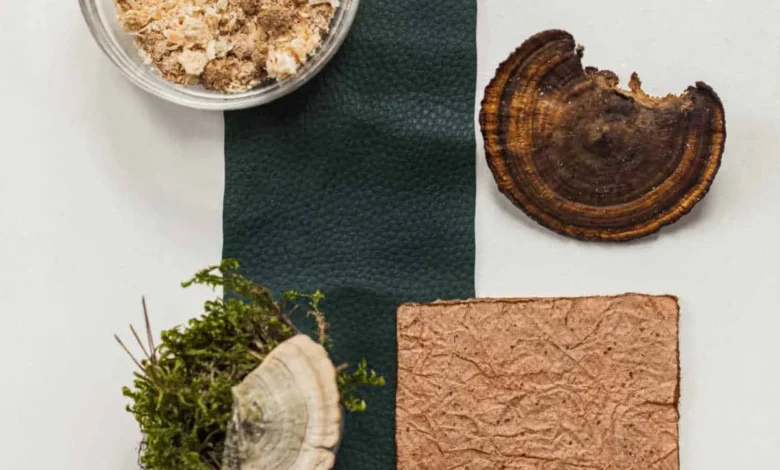
Mushroom Leather (MuSkin, Mylo, Fine Mycelium):
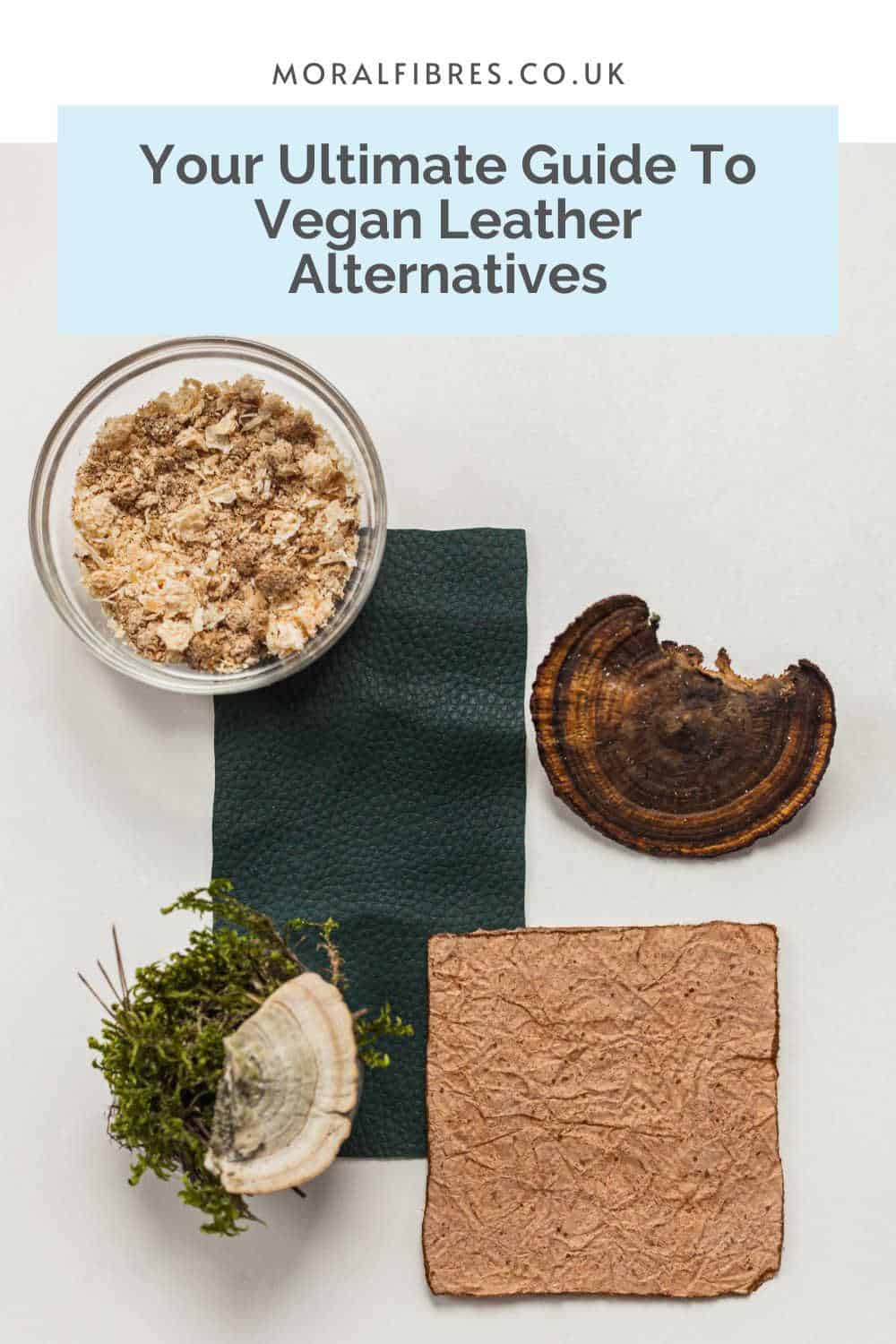
- Source: Primarily derived from mycelium, the root structure of fungi.
- Process: Companies like Grado Zero Espace (MuSkin) utilize specific mycelium strains (e.g., Phellinus ellipsoideus) which are grown in controlled environments, then harvested and processed. Other brands like Mylo (Bolt Threads) and Fine Mycelium (MycoWorks) also grow mycelium into large sheets.
- Sustainability: Can be grown quickly with minimal resources, potentially biodegradable, and offers a highly sustainable alternative. MuSkin, in particular, is treated using natural processes.
- Plastic Content: Tends to be plastic-free (MuSkin is entirely plastic-free and biodegradable). Other mushroom leathers, while promising, may incorporate bio-based or synthetic binders for enhanced performance. It is crucial to check the composition label. Mycelium-based materials represent a frontier for truly circular and plastic-free materials.
-
Pineapple Leather (Piñatex):
- Source: Derived from the long fibers found in pineapple leaves, a by-product of the pineapple harvest.
- Process: The leaves, typically discarded, are decorticated to extract long fibers, which are then processed into a non-woven mesh and coated. This provides an additional income stream for pineapple cultivators.
- Sustainability: Utilizes agricultural waste, reduces waste burning, and supports farming communities.
- Plastic Content: Not plastic-free. Piñatex typically has a PU-based coating to provide its final characteristics of durability and water resistance.
-
Teak Leaf Leather:
- Source: Made from large, fallen or sustainably harvested teak leaves.
- Process: The huge leaves (up to 45 cm long and 20 cm wide) are dried, dyed, and bonded with fabric. The composite is then finished with a thin PU-based laminate for durability.
- Sustainability: Utilizes natural, renewable resources (fallen leaves), preventing waste.
- Plastic Content: Not plastic-free. Uses a PU-based laminate.
-
Tomato Leather (Bioleather):
- Source: Made by extracting cellulose fibers from tomato plant waste.
- Process: The Indian company Bioleather uses a unique two-layer construction, which they claim eliminates the need for a polyurethane layer.
- Sustainability: Utilizes agricultural waste and offers a promising path towards plastic-free production.
- Plastic Content: Tends to be plastic-free. Bioleather’s innovative two-layer design aims to achieve durability without PU. This approach earned it the Best Innovation in Textile award at the PETA Vegan Fashion Awards in 2021, signifying its potential as a truly sustainable, plastic-free option. As with other emerging materials, independent verification and careful review of specific product compositions are advised.
The Quest for Truly Plastic-Free Alternatives: Challenges and Innovations
The distinction between bio-based materials that still rely on plastic binders or coatings and those that are genuinely plastic-free is paramount for consumers seeking truly sustainable options. While many plant-based leathers reduce the overall plastic content compared to traditional faux leathers, the ultimate goal for many innovators is to eliminate petrochemicals entirely.
The primary challenge lies in replicating the functional properties of leather—durability, flexibility, water resistance, and aesthetic appeal—without synthetic polymers. Plastics like PU and PVC offer unmatched resilience and versatility, making their replacement a complex material science problem. Researchers are exploring novel natural binders, advanced cellulose treatments, and innovative structural designs to achieve these properties.
Companies focusing on mycelium (mushroom leather) and fermented cellulose (coconut leather) are at the forefront of this plastic-free movement. Their success hinges on scaling production, ensuring consistent quality, and achieving cost-effectiveness that makes these materials competitive in the mainstream market. The future will likely see a diversification of these truly natural polymers, with advancements in bioplastics derived from renewable resources that are also fully biodegradable. This end-of-life consideration is crucial; a material’s sustainability isn’t just about its source but also its impact when discarded.
Industry Response and Consumer Implications
The fashion industry’s response to these innovations has been varied but increasingly positive. Major luxury brands, once staunch defenders of animal leather, are now investing in and experimenting with plant-based alternatives. Stella McCartney, for example, has been a pioneer in using materials like Piñatex and Mylo. This shift is driven not only by consumer demand for ethical products but also by regulatory pressures and a growing awareness of environmental, social, and governance (ESG) factors within corporate strategies.
Regulators are beginning to address the issue of greenwashing, with potential for stricter labeling laws that mandate clear disclosure of material composition, including the percentage of bio-based versus synthetic content. Such measures would empower consumers to make more informed choices and hold brands accountable for their sustainability claims.
For consumers, navigating this evolving landscape requires vigilance. The term "vegan leather" should be a starting point for inquiry, not an endpoint. Checking material composition labels, researching brands’ transparency reports, and understanding the differences between materials are essential steps toward truly sustainable purchasing. The economic impact of this shift is also significant, fostering innovation, creating jobs in material science and sustainable manufacturing, and potentially redirecting agricultural waste streams into valuable new industries.
Conclusion: A Transformative Era for Materials Science and Fashion
The journey from conventional leather to genuinely sustainable alternatives is a complex and ongoing one, reflecting broader shifts in how industries address environmental responsibility and ethical sourcing. While the initial wave of "vegan leather" often involved petrochemical plastics, the current era is marked by remarkable innovation in bio-based materials. From agricultural waste to fungal mycelium, scientists and designers are harnessing nature’s ingenuity to create materials that are not only animal-free but also significantly reduce environmental impact.
The critical takeaway for both industry stakeholders and consumers is the imperative for transparency. As new materials emerge, clear labeling and honest communication about their composition, lifecycle, and biodegradability are essential to avoid future greenwashing. The ultimate vision is a circular economy for fashion materials, where products are designed to be durable, repairable, and ultimately returnable to nature or recycled, minimizing waste and maximizing resource efficiency. This transformative era promises a future where style and sustainability are not mutually exclusive but intrinsically linked, redefining the very fabric of fashion.