Florida Man Arrested Over AI-Generated Image Depicting Sheriff Injured by Gunmen Marks Growing Global Crackdown on Synthetic Misinformation

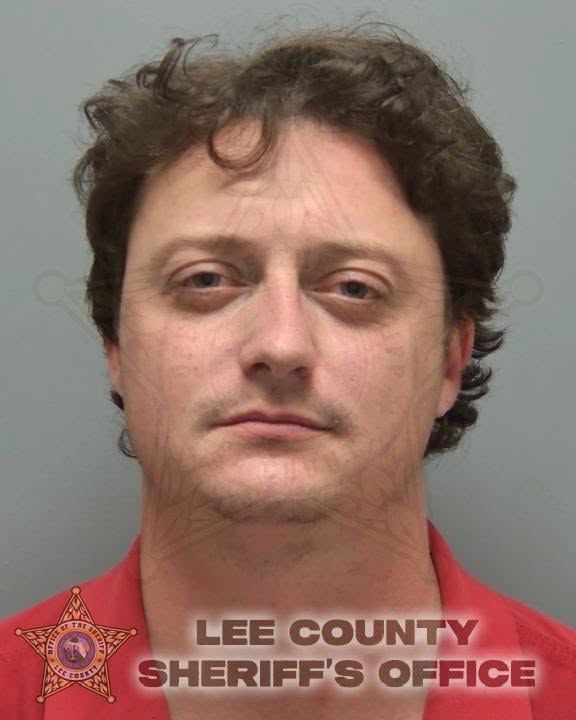
The intersection of generative artificial intelligence and criminal law enforcement has crossed a critical threshold following the arrest of a Florida man accused of publishing a synthetic image that portrayed a local sheriff wounded and fleeing from armed assailants. Christopher Ashley Nimmons, a 30-year-old resident, now faces severe felony charges after authorities tied an Instagram account sharing the threatening deepfake imagery directly to his personal identity and physical vehicle. This high-profile arrest highlights a rapidly escalating global crisis wherein the accessibility of sophisticated AI image generators is being weaponized to harass public officials, disrupt emergency services, and deceive law enforcement agencies.
The incident underscores a broader, international phenomenon currently challenging judicial and legislative frameworks worldwide. Just days before Nimmons was taken into custody, international news outlets reported on a similar case in Singapore, where a man faces up to a decade in prison for disseminating an artificially generated photograph of a saltwater crocodile swimming in a public reservoir. Concurrently, law enforcement departments across the United States are grappling with a surge in fraudulent reports backed by synthetic visuals, ranging from fabricated threats involving dangerous exotic wildlife to targeted intimidation campaigns against civil servants. As generative models become increasingly indistinguishable from reality, the legal ramifications of creating and sharing deceptive digital media have evolved from civil liability into serious criminal offenses.
The Arrest of Christopher Ashley Nimmons
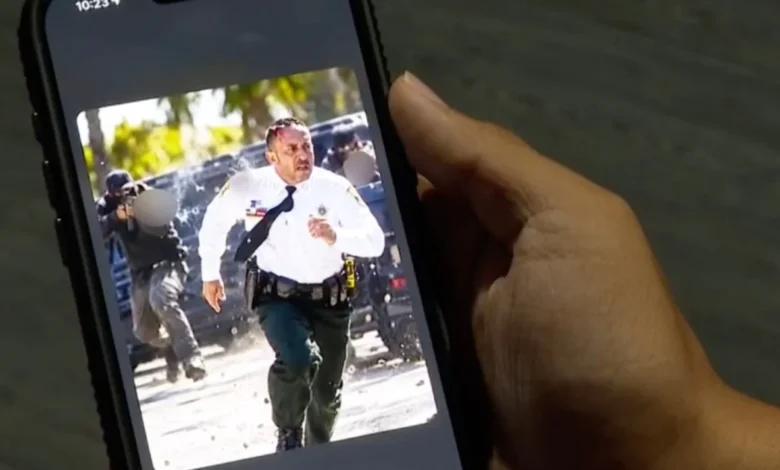
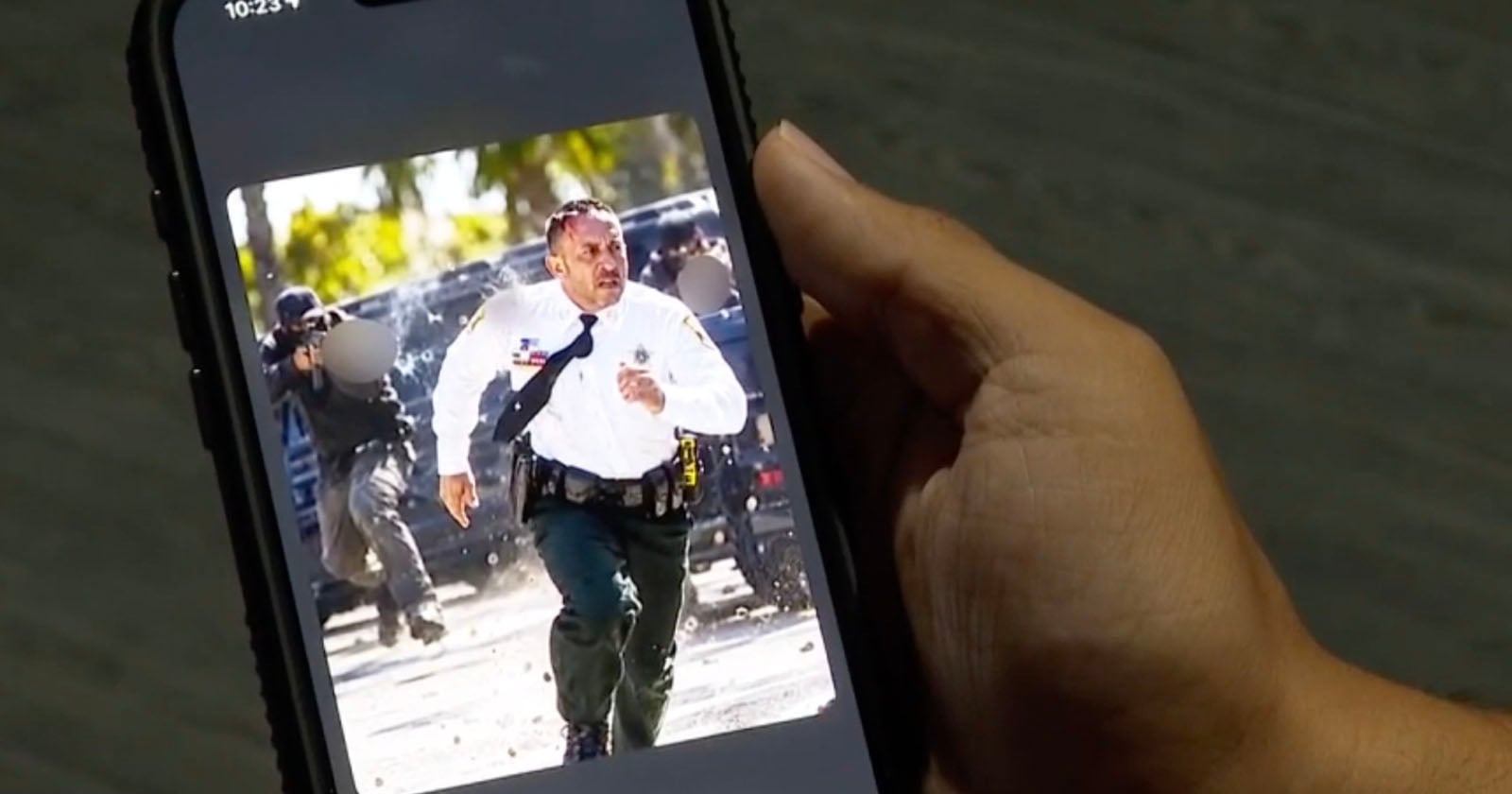
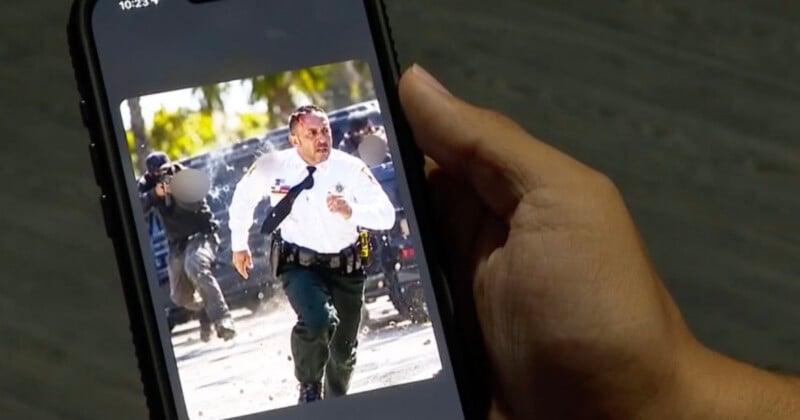
According to official police reports and regional news investigations, the sequence of events leading to Nimmons’s arrest began in the comments section of a popular local news page on Instagram. UC Breaking News, a digital platform focused on Southwest Florida, had published a routine news update regarding the unfortunate death of a Lee County police dog. Beneath this solemn post, an account linked to Nimmons uploaded a digitally manipulated image. The synthetic graphic was designed to look like a genuine photograph, depicting Lee County Sheriff Carmine Marceno in full official uniform, visibly suffering from a head injury, and frantically fleeing from two unidentified gunmen.
Lee County law enforcement officials immediately categorized the image not merely as poor taste or online trolling, but as a direct, menacing threat. The department’s specialized Intelligence Unit initiated a rapid forensic investigation to unmask the operator behind the social media handle. Investigators successfully traced the digital footprint of the Instagram account to Nimmons, establishing probable cause for his apprehension.
The takedown occurred swiftly during a routine traffic stop executed by local deputies. Upon searching Nimmons’s vehicle, law enforcement officers recovered a firearm alongside a cellular telephone. Technical analysis confirmed that the phone number associated with the device matched the registration details of the Instagram account used to distribute the inflammatory image. Consequently, Nimmons was placed under arrest and formally charged with written threats to kill or do bodily injury, a serious felony under Florida law. He was subsequently booked into the local detention facility, where he awaits further judicial proceedings.
Official Responses and Law Enforcement Stance
The response from the leadership of the Lee County Sheriff’s Office was immediate, resolute, and uncompromising. Sheriff Carmine Marceno addressed the public and potential offenders directly, emphasizing that the utilization of modern technology to mask criminal intent will yield no protection under the law.
"Threats of violence are something we will ALWAYS take extremely seriously," Sheriff Marceno stated in an official release to regional media outlets. "If you threaten law enforcement, we will find you and hold you accountable. Hiding behind a screen or using AI will not protect you from the consequences of your actions."
Marceno praised the proactive capabilities of his department’s specialized cyber and intelligence units, which analyze digital threats and execute rapid operational responses. He reiterated that despite intimidation tactics, whether executed through traditional means or advanced digital manipulation, the agency remains steadfast in its mandate to protect the community and uphold public safety without hesitation.
Legal analysts note that prosecuting individuals for AI-generated threats represents an evolving frontier for prosecutors. Historically, statutes regarding written or electronic threats were designed around text-based communications, phone calls, or traditionally edited photographs. The integration of generative artificial intelligence complicates evidentiary standards, requiring experts to verify the synthetic nature of the media while establishing the specific intent of the creator to instill fear, provoke panic, or incite violence against specific individuals, particularly sworn law enforcement personnel.
A Global Wave of AI-Driven Disruptions
The arrest of Christopher Ashley Nimmons is not an isolated incident; rather, it mirrors an alarming international trend wherein artificial intelligence is leveraged to create tangible, real-world disruptions. Authorities worldwide are confronting a wave of synthetic hoaxes that consume municipal resources, endanger public safety, and overwhelm emergency response infrastructure.
Just prior to the Florida incident, authorities in Singapore apprehended a man under strict local laws following the publication of a hyper-realistic AI-generated photograph depicting a massive saltwater crocodile in a public aquatic recreation area. The image quickly circulated across digital platforms, prompting Singapore’s national water agency to treat the perceived threat with utmost gravity. Out of an abundance of caution, officials suspended all public work operations at the affected reservoir for a mandatory two-day period to conduct exhaustive sweep operations.
During this extensive search, specialized wildlife management teams and marine units scoured the perimeter and waters, ultimately discovering zero evidence of any reptile. The disruption forced local rowing and canoeing sporting associations to cancel scheduled training sessions and competitions, causing significant logistical and financial inconvenience. Upon determining the image was entirely artificial, Singaporean prosecutors charged the individual under stringent laws designed to penalize actions that cause public alarm or disruption, with potential prison sentences reaching up to ten years.
A similarly bizarre and resource-intensive event unfolded simultaneously in Santa Ana, California. Local police detectives launched a formal investigation after receiving a digital photograph allegedly captured by a community member. The image displayed a highly venomous Gaboon viper—an indigenous African snake renowned for its potent cytotoxin—coiled threateningly on a wooden structure amidst suburban foliage. The reporting party claimed he had encountered the lethal reptile loose in a residential neighborhood.
Santa Ana Police Department detectives immediately mobilized animal control units and specialized reptile handlers to secure the perimeter and search for the deadly serpent. However, during subsequent follow-up interviews, inconsistencies in the reporter’s account prompted closer scrutiny. Confronted by investigators, the individual eventually confessed that the photograph was entirely generated by artificial intelligence and that the emergency wildlife report was an intentional hoax. While police have not yet disclosed whether formal criminal charges will be levied against the creator of the Santa Ana hoax, the incident has intensified calls from municipal leaders for legislative penalties targeting individuals who submit fabricated AI evidence to emergency services.
Broader Implications for Digital Forensics and Public Trust
The proliferation of these incidents highlights profound societal and technological vulnerabilities. As text-to-image and photo-editing AI models become democratized, accessible via standard mobile applications and consumer-grade computers, the barrier to entry for generating convincing disinformation has effectively vanished. The average citizen now possesses the tools to fabricate photographic evidence of crimes, disasters, wildlife hazards, or political violence within seconds.
This capability creates immense challenges for journalists, legal systems, and democratic institutions. When photographic evidence can no longer be trusted inherently, public trust in visual media erodes rapidly—a phenomenon media theorists term the "liar’s dividend," where bad actors can dismiss genuine photographic evidence of wrongdoing simply by claiming it is AI-generated. Conversely, when synthetic images are deployed maliciously to simulate threats against law enforcement officials or public figures, they force agencies to expend valuable taxpayer funds and human resources investigating non-existent perils.
Digital forensics experts argue that mitigating this crisis will require a multifaceted approach encompassing technological, legal, and educational interventions. On the technological front, developers of generative artificial intelligence tools are facing mounting regulatory pressure to implement mandatory cryptographic watermarking, invisible metadata tagging, and strict safety guardrails that prevent models from generating likenesses of real people, public officials, or dangerous contraband.
Simultaneously, legislative bodies across various jurisdictions are beginning to draft specialized bills aimed at criminalizing the malicious deployment of deepfake media. While traditional statutes covering harassment, public mischief, and uttering threats can be adapted to prosecute offenders—as demonstrated in the Nimmons case in Florida—legal scholars advocate for specific statutes that address the unique harms posed by generative AI. These proposed laws aim to penalize both the unauthorized generation of deceptive likenesses and the intentional dissemination of synthetic media designed to incite panic, defame individuals, or disrupt critical infrastructure.
Ultimately, the cases in Florida, Singapore, and California serve as a stark warning to the public. As law enforcement agencies enhance their digital investigative capabilities and signal zero tolerance for synthetic harassment, the illusion of anonymity behind computer screens is rapidly dissolving. The swift arrests of individuals misusing generative AI demonstrate that while technology continues to evolve at a breakneck pace, the legal consequences for threatening public safety and weaponizing digital deception remain absolute.