Unspun’s 3D Weaving Technology Poised to Revolutionize Global Apparel Manufacturing

The global apparel industry stands at a critical juncture, grappling with supply chain fragilities, escalating costs, and a pressing mandate for environmental sustainability. In this challenging landscape, unspun, a deep-tech company specializing in 3D weaving, is emerging as a formidable disruptor, offering a paradigm shift from traditional mass production to a localized, on-demand manufacturing model. Spearheading this transformation is Arne Arens, former Global Brand President at The North Face and CEO of Boardriders, who transitioned to lead unspun as its CEO earlier this year, bringing invaluable executive insight from both sides of the apparel supply chain.
A New Manufacturing Paradigm: The Power of 3D Weaving

Traditional apparel manufacturing, particularly for woven garments, has long been characterized by a multi-stage, geographically dispersed process. Flat fabrics are produced, often in distant factories, then cut into patterns, and finally sewn together to create finished products. This method, prevalent for decades, generates significant material waste on cutting floors, relies heavily on labor-intensive sewing, and is notorious for its extended lead times, typically ranging from nine to twelve months. These factors have driven much of the industry’s production to low-wage countries, primarily in Asia, creating complex global supply chains susceptible to disruptions.
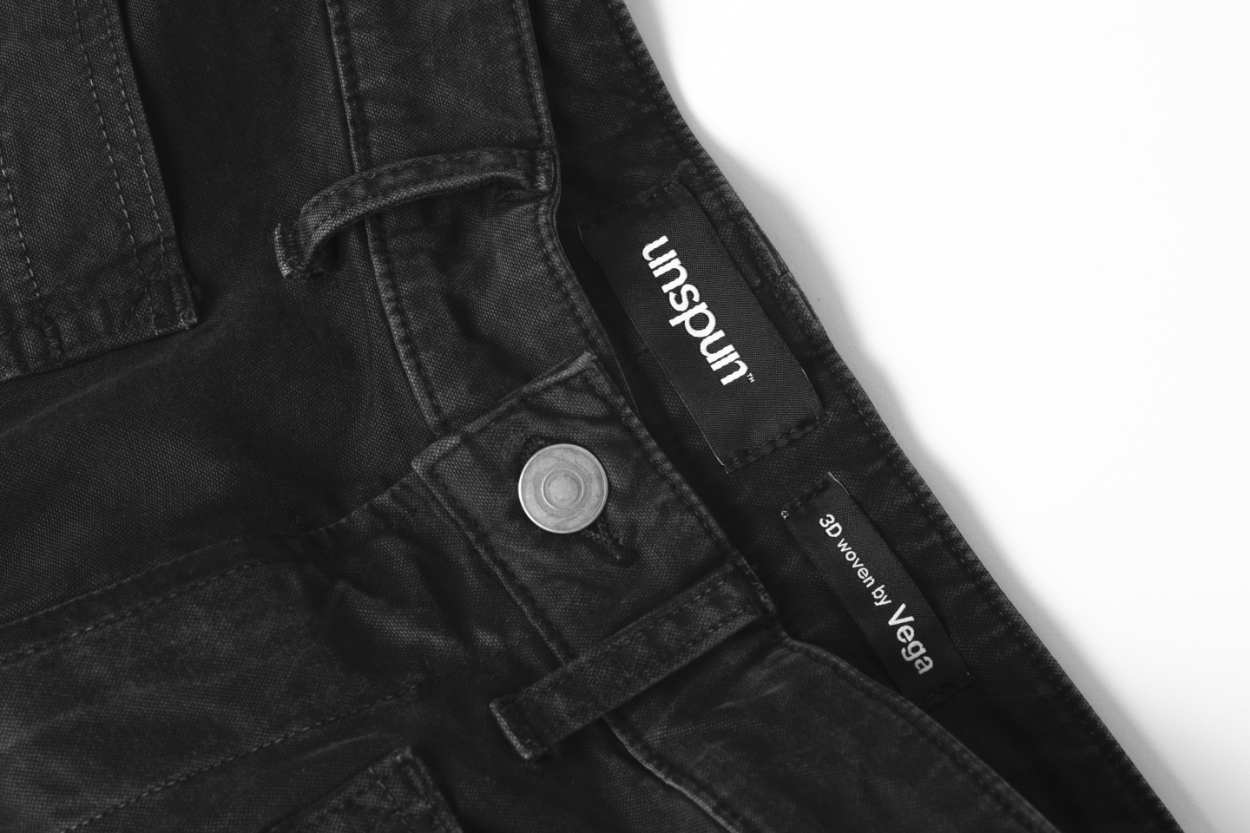
Unspun’s core innovation, the Vega platform, directly confronts these inefficiencies with its groundbreaking 3D weaving technology. Unlike conventional weaving that produces flat fabric, Vega machines weave individual yarns directly into seamless, three-dimensional forms. Arne Arens explains, "Thousands of individual yarns – we have 3,000 yarns – go into a loom that interlaces warp and weft directly into a seamless three-dimensional tube." This circular weaving motion creates a garment component, such as a trouser leg, that can dynamically change its geometry and diameter as it weaves, widening or tapering precisely as needed.
The implications are profound:

- Zero Cutting Waste: By weaving directly into shape, the need for cutting fabric pieces from a larger bolt is eliminated, drastically reducing material waste.
- Reduced Sewing: The seamless nature of the woven product significantly minimizes the subsequent sewing steps required for assembly.
- Speed and Efficiency: A pair of trouser legs can be produced in approximately eight minutes, a stark contrast to the slow process often associated with 3D knitting, which has historically confined it to niche, high-price-point applications. This speed enables scalability and cost-effectiveness previously unattainable for such advanced manufacturing.
This direct-to-shape production method differentiates 3D weaving from 3D knitting, which, while also producing seamless garments, typically operates at slower speeds and is often associated with stretchier, more fluid fabric constructions. Unspun’s technology brings the structural integrity and durability of woven cloth to a seamless format, disrupting a market segment that accounts for roughly half of all apparel production.
Arne Arens: Bridging Brand Strategy and Deep Tech
Arne Arens’s journey to unspun underscores the strategic importance of this technological shift. With a distinguished career at the helm of major global brands like The North Face (Global Brand President, 2017-2021) and Boardriders (CEO, overseeing brands such as Quiksilver, Billabong, Roxy, and DC Shoes), Arens possesses a deep understanding of the challenges inherent in managing vast, global apparel supply chains. His move to lead a technology company in its industrialization and commercialization phase highlights a growing recognition within the industry that fundamental change requires embracing innovative production methods.

Arens describes his current role as a dynamic blend of commercial engagement, capital fundraising, and internal engineering oversight. Approximately one-third of his time is dedicated to collaborating with commercial partners—brands and manufacturers—showcasing unspun’s machinery and technology. Another third is focused on the crucial aspect of capital fundraising, a perpetual necessity for deep-tech startups in their industrialization phase. The remaining third is spent internally, on engineering reviews, test plans, operations, and nurturing unspun’s corporate culture.
His experience provides a unique vantage point. "When I was at North Face or Boardriders, the product was made nine thousand miles from my desk," Arens notes. "Here, I can watch a pair of trousers come off the machine before we get our day going. That tangibility changes the way you run a company and interact with the team." This direct connection to production allows for rapid iteration and a hands-on approach to problem-solving, a critical advantage in the volatile world of technology commercialization.
Economic Imperatives: Unlocking Margin and Mitigating Risk

The economic case for unspun’s 3D weaving technology extends far beyond simple unit cost comparisons, which have historically driven offshore production. Arens emphasizes two primary financial benefits:
- Lead Time Reduction: Shrinking lead times from 9-12 months to 1-2 months dramatically improves forecasting accuracy. This is crucial for brands, as the current system often leads to significant overproduction and subsequent discounting. Arens cites that an average apparel retailer discounts approximately 40% of its units annually. By reducing lead times, brands can achieve forecasting accuracy closer to industry leaders like Zara, which discounts around 15% of its inventory. This shift alone can yield a 400-500 basis point improvement in gross margin for brands.
- Elimination of Tariffs and Transport Costs: Localized production in target markets like the US or Europe inherently removes the burden of import tariffs and international shipping costs, providing additional margin upside.
For manufacturers, the financial advantages are equally compelling. The automation inherent in unspun’s system collapses multiple production steps (weaving flat fabric, shipping, cutting, sewing) into a single, automated process. This leads to a 50-60% reduction in material costs and, coupled with automation, can enable manufacturers to double their operating margin over a four-to-five-year period compared to legacy supply chains.
The "unit-cost mindset" that has long dominated apparel production decisions is gradually being challenged by a more holistic view that accounts for the hidden costs of long lead times, inventory obsolescence, and supply chain risk. Unspun’s model offers a compelling alternative by directly addressing these often-overlooked profitability drains.

Environmental Impact and the Mandate for Sustainability
Beyond economic benefits, unspun’s technology offers substantial environmental advantages, aligning with the industry’s growing mandate for sustainability. A study conducted by unspun indicates that its 3D weaving process can achieve roughly half the carbon footprint of the legacy apparel supply chain. This reduction stems from several key areas:
- Reduced Overproduction: The on-demand model, where garments are produced only after a consumer indicates intent to purchase, virtually eliminates the waste associated with unsold inventory.
- Minimized Transport: Localized manufacturing hubs reduce the need for extensive global shipping of materials and finished goods, cutting down on fuel consumption and associated emissions.
- Material Waste Reduction: The elimination of cutting room waste, a significant contributor to textile landfill, directly translates into more efficient material utilization.
As consumer awareness of fashion’s environmental impact grows and regulatory pressures intensify, technologies like unspun’s provide a tangible pathway for brands and manufacturers to meet their sustainability commitments.

Reshoring and Geopolitical Tailwinds
The concept of "Made in America" or "Made in Europe" has gained significant traction in recent years, propelled by a confluence of factors including geopolitical instability, trade tariffs, and the vulnerabilities exposed by the COVID-19 pandemic. These external conditions have created a strong tailwind for unspun’s model, making the case for domestic manufacturing more urgent and appealing.
However, Arens clarifies that the core value proposition of unspun’s technology is independent of these transient geopolitical shifts. While tariffs and supply chain fragmentation amplify the benefits of reshoring, the fundamental advantage lies in lead-time reduction and operational efficiency. "If they went away and it became economically feasible to produce in China again, the nine-to-twelve-month lead time still applies if you do it the old-fashioned way… versus our one-to-two-month lead time if you do it with unspun in the US or Europe," Arens explains. The ability to produce locally and on-demand offers inherent resilience and responsiveness that traditional offshore models cannot match, regardless of tariff regimes.

The portability of the unspun model is also a key strength. Arens asserts it can work anywhere because the elimination of labor arbitrage, through automation and efficiency gains, makes production financially viable in high-wage economies. In fact, he suggests Europe might even be "a little easier" due to existing lower wage rates in key apparel production countries like Turkey and Portugal compared to the US, implying robust feasibility across Western markets.
Building the Ecosystem: Partnerships and Piloting for Scale
The journey from innovative technology to widespread industrial adoption is fraught with challenges, a reality Arens acknowledges by referencing the "graveyard of upstream innovation." Unspun is strategically navigating this by building a "triangle" of partnerships involving itself, brands, and manufacturers.

Key to this strategy is leveraging existing relationships and demonstrating tangible value:
- Micro-factory Validation: Unspun’s micro-factory in Emeryville, equipped with seven Vega machines (some for R&D, others for full production), serves as a crucial validation hub. This allows unspun to rigorously test and confirm industrial metrics like uptime, repeatability, and quality yield before external deployment.
- Strategic Manufacturer Partnerships: Advanced conversations are underway with major players like Arvind, a vertically integrated apparel manufacturer in India that works with global brands such as Gap, Levi’s, and PVH. Arvind’s interest signals the technology’s potential for world-class manufacturers seeking innovation and sustainability.
- Brand Commitments and Pilots: Unspun has secured letters of support from major US retailers like Walmart and REI Co-op, indicating strong interest in integrating the Vega platform. Advanced sample development is in progress with Muji (Japan) and Walmart, with unspun actively connecting Walmart with potential US manufacturing partners. Smaller, low-risk pilot runs are also being explored with brands like Filson, Patagonia, J.Crew, and Banana Republic from the Emeryville hub, allowing brands to experience the technology firsthand and build confidence for larger orders.
- Government Support: The state government of New Mexico has expressed significant support for bringing advanced manufacturing back, offering a potential location for an unspun facility and demonstrating how government subsidies can play a role in de-risking initial infrastructure investments.
This multi-pronged approach aims to overcome the "chicken-and-egg" problem where manufacturers hesitate to invest in new infrastructure without guaranteed demand, and brands are reluctant to place orders without established production capacity. By marrying demand with supply and demonstrating economic viability, unspun seeks to build reliable purchase orders (POs) and volume commitments.
The Evolving Landscape of Manufacturing Jobs
A common concern with automation is its potential impact on employment. While AI-driven advancements in other sectors have led to headcount reductions, unspun’s model aims to net-create specialized manufacturing jobs in regions where they previously vanished. Arens clarifies, "The jobs we’re creating in Europe and the US are jobs that left decades ago. Anything we create locally is net new to the garment industry."
These new roles are not the entry-level, minimum-wage sewing jobs of the past. Instead, they are highly skilled industrial positions:
- Textile Technicians: Operating and overseeing the advanced weaving machinery.
- Maintenance People: Ensuring the optimal functioning and longevity of complex equipment.
- Quality Engineers: Upholding rigorous standards for the seamlessly woven products.
- 3D Design and Pattern-making Experts: Contrary to fears of obsolescence, skills in pattern-making and 3D design become even more critical. Every garment requires complete digital engineering before production, with the 3D geometry, weave structure, and construction defined digitally. This digital product file then translates directly into machine instructions, making these design skills more valuable and central to the production process.
This shift represents a qualitative upgrade in manufacturing employment, offering industrial wages and requiring advanced technical expertise, thereby contributing to a more skilled workforce in the domestic apparel sector.

A Decade Ahead: On-Demand, Custom Manufacturing
Looking a decade into the future, Arne Arens envisions a fundamental transformation in apparel production for woven garments. The single most significant metric to change will be the elimination of overproduction. The industry will move decisively towards an on-demand, custom-made model.
This vision combines unspun’s current focus on efficient, localized production with its original premise of personal fit, where custom-made jeans were produced based on individual measurements. The convergence of these capabilities leads to a distributed, custom-manufacturing model, where garments are made only when desired by a consumer.

While Arens doesn’t foresee a scenario akin to every household having a 3D printer for apparel, he anticipates a network of localized manufacturing hubs. "One on the East Coast, one on the West, one in the middle – or thirty-five throughout the country? Or is it even more distributed?" he muses, highlighting the potential for greater geographical dispersal of production. This distributed model, facilitated by unspun’s technology, represents a profound departure from the centralized mass-manufacturing model that has dominated the industry for generations. It promises an agile, responsive, and sustainable future for apparel production, fundamentally altering how garments are conceived, created, and delivered to consumers worldwide.