Navigating the 2026 Holiday Retail Landscape: Affordability, Category Creep, and Agentic Commerce Will Define the Season

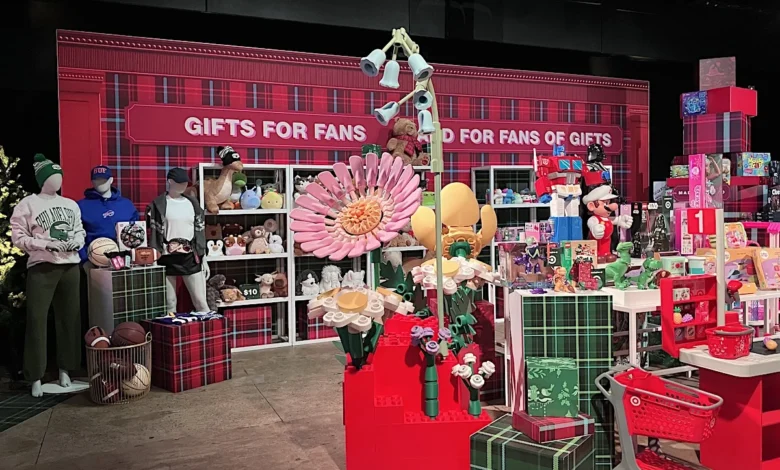
Major brick-and-mortar retailers across the United States have officially fired the starting gun on their 2026 holiday shopping campaigns, releasing aggressive timelines, promotional calendars, and strategic previews weeks ahead of traditional schedules. Giants including Target, Walmart, Kohl’s, Best Buy, and Macy’s have published detailed press releases outlining their precise Black Friday and Cyber Monday windows. Alongside these logistical announcements, merchandising teams are rolling out comprehensive media presentations, product sneak peeks, and early holiday advertising campaigns designed to capture consumer attention in an increasingly crowded marketplace.
The underlying strategies guiding retail operations this season represent accelerated evolutions of tactics honed over recent years. Retailers are once again stretching Cyber Week promotions by several days, while an increasing number of operators are pushing doorbuster events and early Black Friday discounts deep into October. Home improvement retailer Lowe’s and consumer electronics giant Best Buy have both established formal holiday lineups featuring weeks of savings that commence long before Halloween.
However, the economic backdrop for the 2026 holiday shopping season is markedly distinct from previous years. Persistent inflationary pressures, fluctuating fuel costs, and cautious consumer sentiment have created an environment of heightened unpredictability. Despite these macro-economic headwinds, the National Retail Federation (NRF) has issued an optimistic, record-breaking forecast, projecting that total seasonal holiday sales will cross the historic $1-trillion threshold for the first time.
The Crucial Balance of Consumer Spending and Budget Fatigue
While retail analysts widely agree that American consumers will continue to spend throughout the fourth quarter, the composition of that spending remains a critical variable. Industry experts warn that if consumer budgets are exhausted prematurely by aggressive October and early November promotions, or if discretionary income is squeezed by unexpected spikes in gas and utility prices, the late-season sales period could experience a notable slowdown.
Michael Brown, partner and Americas Retail Leader at global strategy and management consulting firm Kearney, noted the difficulty in predicting overall market winners. There are going to be a lot of unknowns coming out of this holiday, and it is really going to be hard to pick who the winners are going to be at this point in time, Brown explained. Retailers must carefully balance the timing of their discounts to ensure they maintain consumer engagement without cannibalizing December revenue or margins.
To provide deeper insight into how the market will unfold, retail analysts and industry consultants have identified three primary themes that will dictate performance through the final quarter of 2026: the intense battle over value and affordability, aggressive category creep, and the emergence of agentic commerce driven by artificial intelligence.
The Battle Over Value and Affordability
Value has emerged as the central narrative of the 2026 holiday season. Executive leadership teams across the retail sector have continuously emphasized affordability to justify their product lineups to shoppers facing rising fixed costs. Target has made repeated structural adjustments to its pricing strategy throughout the year, culminating in a September announcement that lowered prices on nearly 2,000 home and apparel products to appeal directly to budget-conscious households.
As the calendar turns toward the peak holiday shopping weeks, pricing transparency has become far more overt. Major chains are actively segmenting their merchandise into clear, accessible pricing tiers. Kohl’s is leveraging its ongoing partnership with beauty retailer Sephora to market nearly 2,000 beauty items priced under $30. Similarly, Target has structured its upcoming holiday assortment to include 8,000 new gift items, with more than half of the entire collection priced under $20.
Bryan Gildenberg, founder of Confluencer Commerce, noted that price point is becoming more and more important to shoppers whose fixed costs have gone up faster than their wages have, particularly with fuel costs being high. Retailers are operating under the core assumption that consumers are returning to strict budgeting practices, forcing shoppers to maximize the physical volume of gifts they can acquire within a fixed spending limit.
Despite these targeted affordability initiatives, competing strictly on price presents substantial structural challenges for traditional department stores and mid-tier retailers. According to Kearney’s Michael Brown, Amazon and Walmart maintain an insurmountable structural advantage in pricing execution and consumer convenience. Walmart customers are already physically present in stores for weekly essentials, while Amazon offers unmatched digital friction-free transactions. Consequently, brands like Target, Macy’s, and Kohl’s are forced to chase these market leaders by coupling compelling affordability with differentiated product exclusives.
Category Creep and Non-Traditional Merchandising
A second defining trend of the 2026 holiday season is the expansion of category creep, wherein retailers deliberately venture far outside their traditional core product categories to capture a larger share of the consumer wallet. This tactic is designed to maximize customer lifetime value during the period of peak annual expenditure.
Lowe’s has leaned heavily into this strategy by positioning foundational home maintenance services as viable holiday gifts. In its official 2026 holiday lineup announcement, Lowe’s heavily promoted its HomeCare+ gift card. Priced at $99 per year, the subscription provides homeowners with professional assistance twice a year, covering up to seven essential home maintenance services—including air filter replacements and dryer vent cleaning—completed by trained Lowe’s associates. In the same promotional rollout, Lowe’s highlighted pet-specific gifts from its Heart & Heard brand, along with an expanded inventory of traditional holiday decor, toys, apparel, and home goods.
While crossing into non-traditional categories can occasionally alienate shoppers who associate a brand with a specific product vertical, industry observers suggest that contextual relevance is key. Gildenberg observed that when retailers try to get a little bit too far outside of the core reason why the shopper is there, it gets weird and confusing pretty fast. However, in the case of Lowe’s, framing the offerings around home care maintains a logical connection to the brand’s core value proposition.
Simultaneously, mass merchants like Target are employing cross-category merchandising strategies anchored by high-profile intellectual property partnerships. Target has scheduled the nationwide release of an exclusive 350-piece collection inspired by the upcoming HBO Harry Potter television series, debuting both in stores and online on November 7 to coincide with the show’s Christmas Day release. The collection spans apparel, home decor, accessories, and collectibles, uniting multiple retail categories under a single pop-culture theme.
The Rise of Agentic Commerce and Artificial Intelligence
Perhaps the most significant wild card of the 2026 holiday season is the integration of generative artificial intelligence and autonomous shopping assistants. Retailers have rapidly deployed proprietary AI tools to capture digital traffic and assist shoppers with complex gifting queries. Target introduced its AI shopping assistant, Ask Target, in beta just ahead of the holiday sales rush. Meanwhile, Walmart and Lowe’s have integrated their respective AI systems, Sparky and Mylow, into their digital ecosystems throughout 2026.
These conversational AI shopping assistants are specifically engineered to parse nuanced consumer prompts, such as requests for quiet-luxury-inspired gifts for women restricted to clothing and accessories priced under $50. While the precise adoption rates and conversion efficiencies of these retail-specific AI tools will not be fully quantified until fourth-quarter earnings reports are released in early 2027, their broader market impact is already taking shape.
Kearney’s Michael Brown highlights that consumers are increasingly turning not only to retailer-owned AI bots, but also to third-party large language models like ChatGPT and Gemini for comprehensive price monitoring and cross-platform comparisons. Because modern AI agents can execute surgical price checks across the entire digital retail landscape in milliseconds, the risk of lost sales has escalated dramatically. Retailers face unprecedented exposure if an autonomous agent queries their catalog on a day when a competitor like Macy’s or Kohl’s happens to offer a lower price point.
Agentic commerce is really the wild card this holiday season, Brown concluded. The critical question facing the industry is which brands will secure the lion’s share of automated shopping transactions without the consumer ever manually reviewing the broader competitive landscape.
Outlook and Implications for the Fourth Quarter
As the retail industry moves deeper into November and December, executive strategies will be tested against real-time economic pressures. With the NRF projecting trillion-dollar sales figures, the aggregate volume of consumer spending is expected to remain robust. However, the distribution of those dollars among competing retail channels will depend heavily on the agility of pricing strategies, the effectiveness of AI-driven discovery tools, and the ability of traditional merchants to defend their margins against escalating promotional intensity. The ultimate winners of the 2026 holiday season will be those organizations capable of seamlessly uniting affordability, digital convenience, and differentiated merchandising in an increasingly automated retail ecosystem.