Studio Vapore Transforms Western Academy Beijing Music Classrooms with a Super-Chromatic Fusion of Sound and Color

The Western Academy of Beijing (WAB), a premier international institution renowned for its progressive approach to education, has unveiled the first phase of a comprehensive campus-wide renovation, beginning with its music department. Orchestrated by the Beijing-based design firm Studio Vapore, the 7,500-square-foot project reimagines the traditional, often somber atmosphere of music education facilities into a vibrant, "super-chromatic" environment. By prioritizing a tripartite strategy of layout, sound, and color, Studio Vapore has created a space that functions as both a high-performance acoustic laboratory and an aesthetically stimulating sanctuary for students and faculty alike. This renovation marks a significant milestone in the school’s broader master plan to modernize its facilities, ensuring they align with the institution’s reputation for excellence in the arts and holistic student development.
A Strategic Layout for Modern Pedagogy
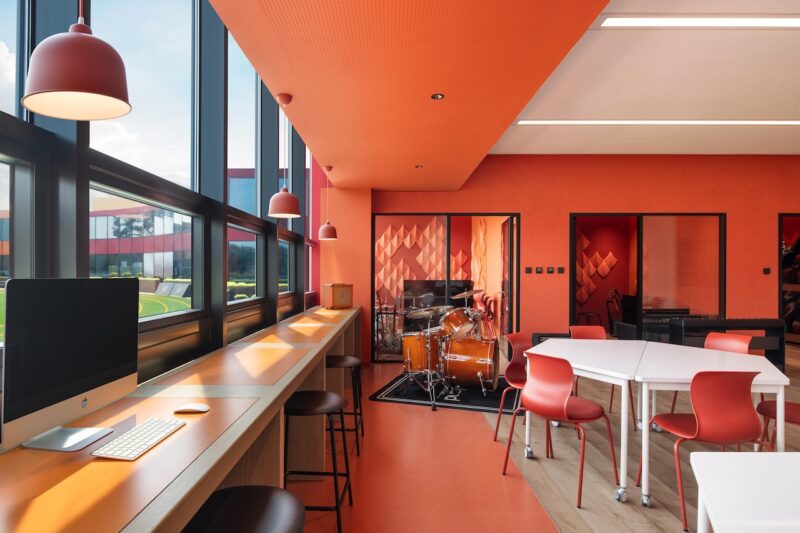
The architectural intervention by Studio Vapore centers on a highly organized layout designed to maximize the utility of the available 7,500 square feet. The floor plan is anchored by a shared central corridor that serves as the primary artery for student movement. Arranged along this perimeter are the primary classrooms, each of which is integrated with dedicated practice rooms. This "room-within-a-room" configuration is a deliberate departure from traditional siloed music departments, where practice rooms are often isolated in windowless basements or distant wings.
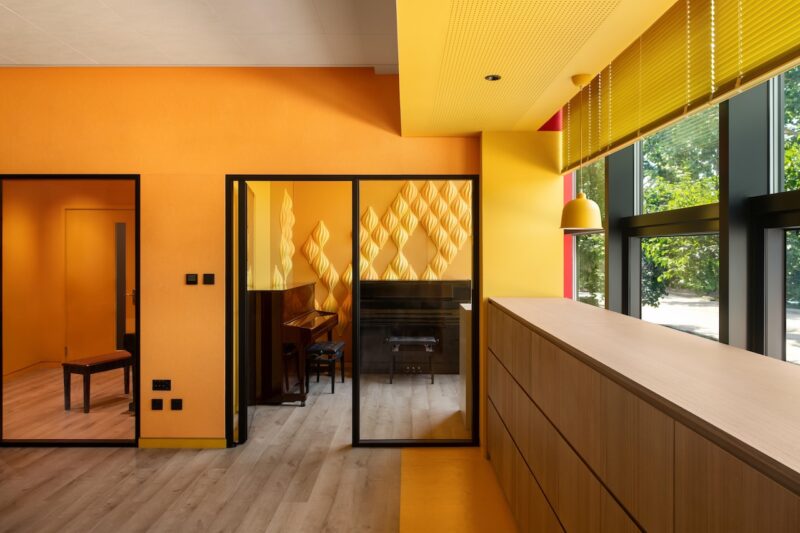
By utilizing expansive glass partitions, Studio Vapore has introduced a level of transparency that serves two critical functions: supervision and inspiration. Faculty members are able to maintain visual contact with students in both the common instructional areas and the more intimate practice booths simultaneously. This visual connectivity ensures a safe and accountable environment while fostering a sense of community. Students practicing solo are no longer isolated; they are part of a visible, collective effort of artistic creation. The layout allows for a seamless transition between various modes of learning, enabling a single zone to accommodate formal teaching, group rehearsals, and individual practice sessions without logistical friction.
The Science of Sound: Acoustic Engineering and Materiality
In any facility dedicated to music, the primary metric of success is acoustic performance. Studio Vapore recognized that the vibrant visual identity of the project could not come at the expense of sound quality. To achieve this balance, the firm collaborated extensively with acoustic engineers to develop a comprehensive suite of treatments that address every surface of the environment, from the ceilings and walls to the floors and custom-built furnishings.
The technical challenge involved managing two distinct acoustic needs: internal room reverberation and inter-room sound transmission. To mitigate the transfer of sound between the energetic main classrooms and the quiet practice rooms, the design employs advanced insulation and decoupling techniques. Within the rooms themselves, the designers introduced a variety of specialized finishes, including high-density felt panels and custom fabrics.
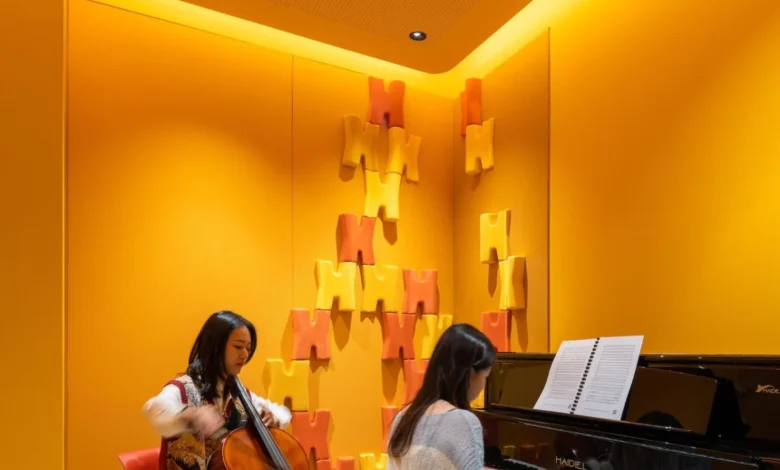
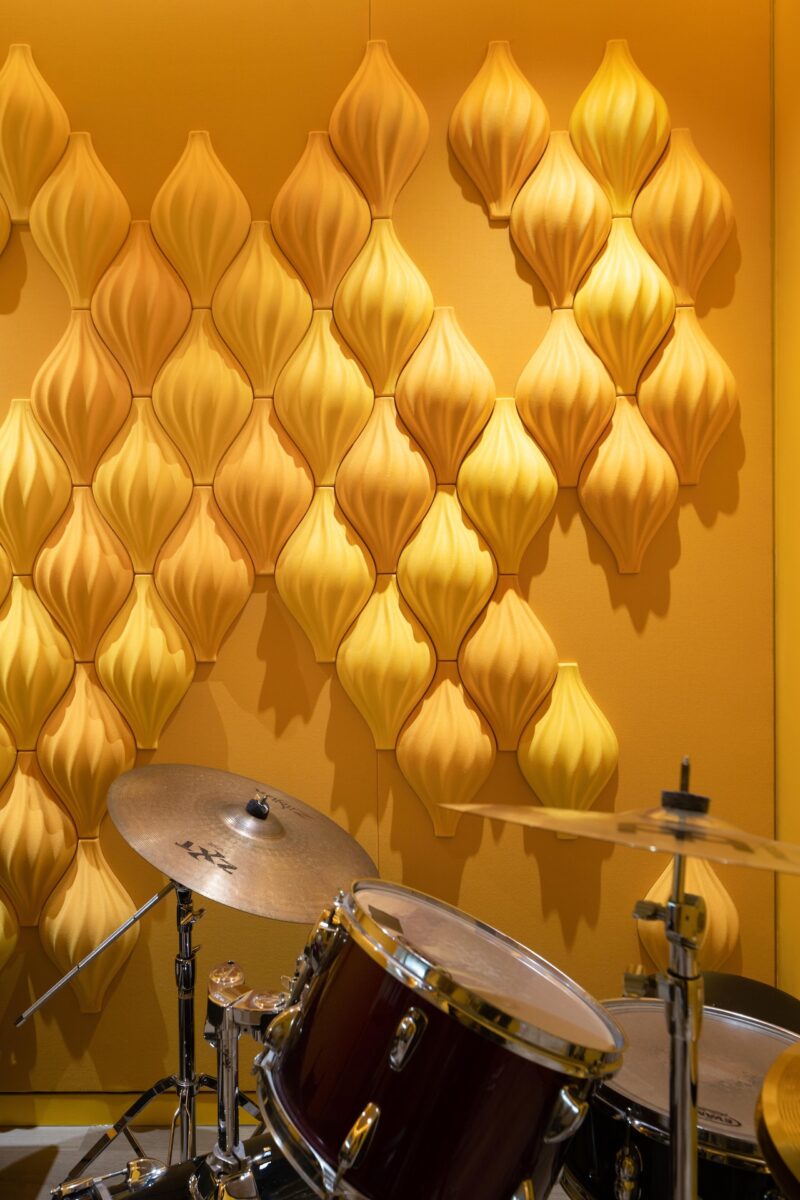
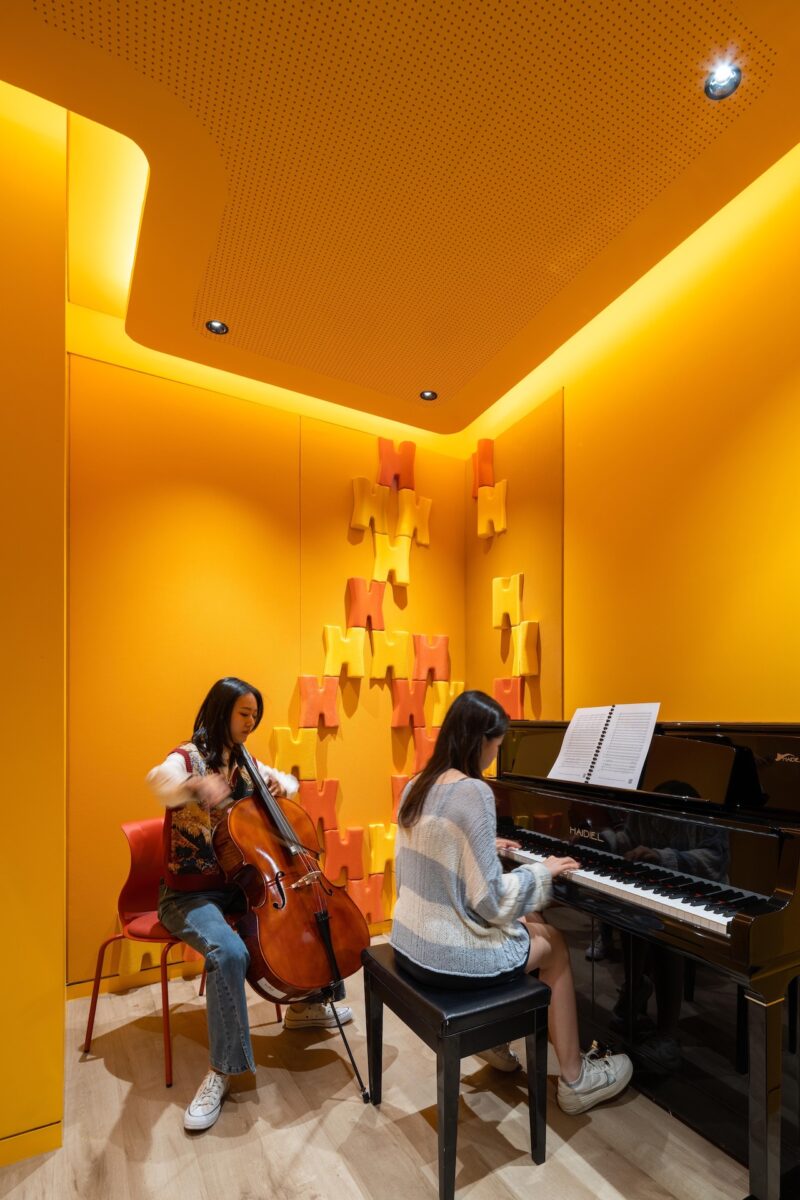
One of the most striking features of the project is the deployment of three-dimensional acoustic elements. These quirky, geometric wall modules are not merely decorative; their varying depths and angles are mathematically calculated to diffuse sound waves, preventing the "flutter echo" common in rectangular rooms. By breaking up standing waves, these modules ensure a crisp, clear auditory environment suitable for both the delicate tones of a cello and the percussive intensity of a drum kit. The integration of these technical requirements into the visual language of the room represents a sophisticated synthesis of form and function.
The Chromatic Narrative: Color as an Organizing Layer
Studio Vapore is widely recognized for its "super-chromatic" interiors, and the Western Academy Beijing project serves as a masterclass in the psychological and functional application of color. The designers utilized a palette of "juicy hues"—specifically red, orange, and yellow—to serve as a secondary organizing layer for the facility.
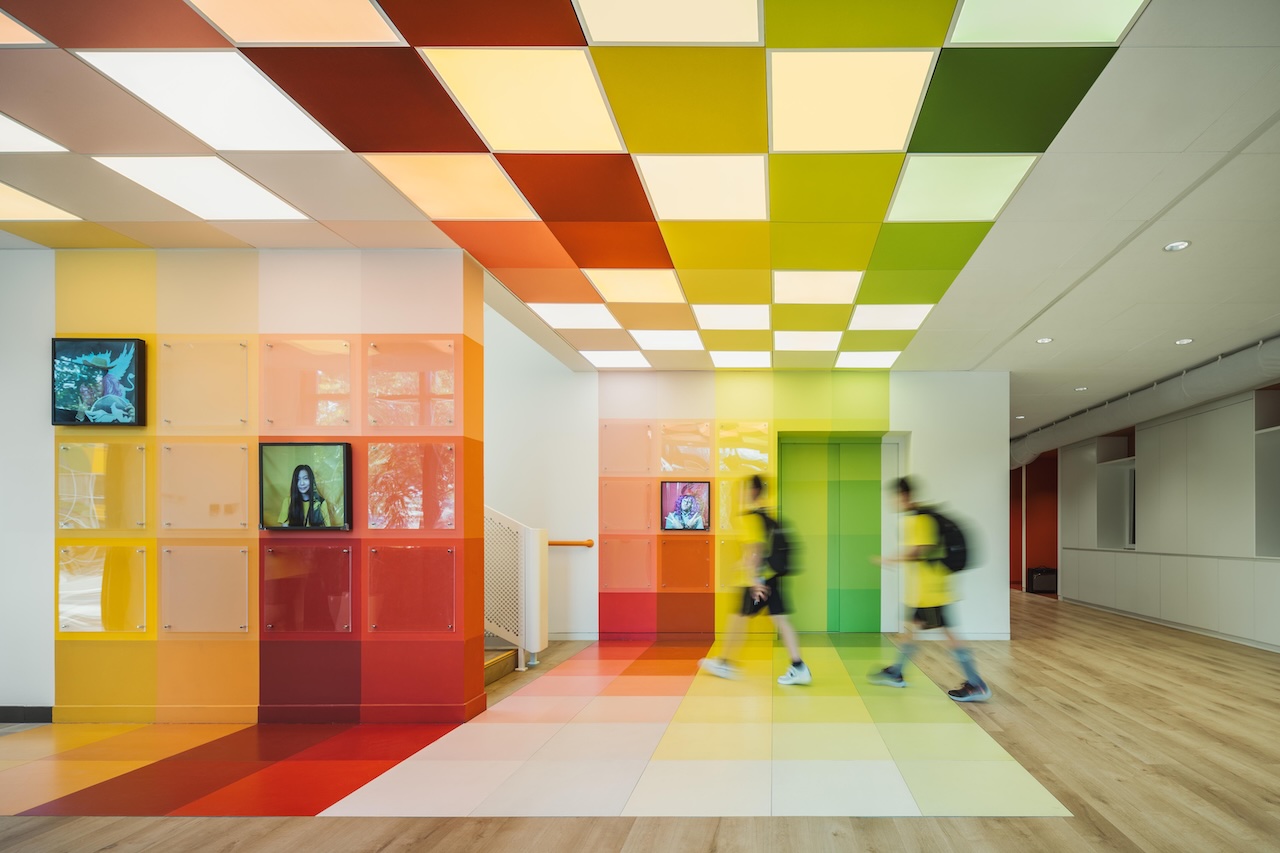
In this scheme, color functions as a sophisticated wayfinding device. Each of the three primary classrooms is defined by one of these exuberant tones, corresponding to the school’s three distinct age groups (Elementary, Middle, and High School). This allows students to immediately identify their designated zones as they traverse the shared corridors.
- Yellow: Used to denote spaces for the youngest learners, the yellow rooms radiate energy and optimism, designed to foster a sense of play and discovery in early music education.
- Orange: Applied to the middle-tier classrooms, the orange hues bridge the gap between play and discipline, encouraging social interaction and collaborative rehearsal.
- Red: Reserved for the most advanced students, the red rooms signify passion, intensity, and the rigor of high-level performance.
This bold palette extends beyond the classroom walls to the very entrance of the music wing. By branding the department with such high-impact colors, the school has created a distinct identity for the arts within the larger institutional context. The threshold of each room, visible from the hallway, signals a transition from the general academic environment into a specialized space of creativity.
Chronology of the Renovation
The renovation of the Western Academy Beijing music classrooms followed a structured timeline designed to minimize disruption to the academic calendar:
- Commission and Visioning (Early 2023): Studio Vapore was selected following a competitive bid process, tasked with revitalizing a dated wing of the campus that no longer met the school’s acoustic or pedagogical standards.
- Design and Engineering Phase (Spring 2023): Designers worked in tandem with acoustic consultants to finalize the material palette and spatial configuration. This phase included the 3D modeling of sound diffusion patterns.
- Construction and Implementation (Summer 2023): The bulk of the heavy construction, including the installation of sound-dampening sub-floors and glass partitions, was completed during the summer break.
- Acoustic Tuning and Finishing (Autumn 2023): Upon the return of students, final adjustments were made to the acoustic panels and the custom-built furniture was installed.
- Phase One Unveiling (Early 2024): The completed music wing was officially opened, serving as the flagship project for the school’s ongoing campus upgrade initiative.
Official Responses and Educational Impact
The response from the Western Academy Beijing community has been overwhelmingly positive. While the school has not released a formal press statement, internal feedback from the faculty highlights the transformative nature of the new design. "The ability to see my students practicing in their individual booths while I conduct a small group session in the main room has changed how I manage my time," noted one senior music instructor. "The space itself feels like an instrument—it’s tuned to our needs."
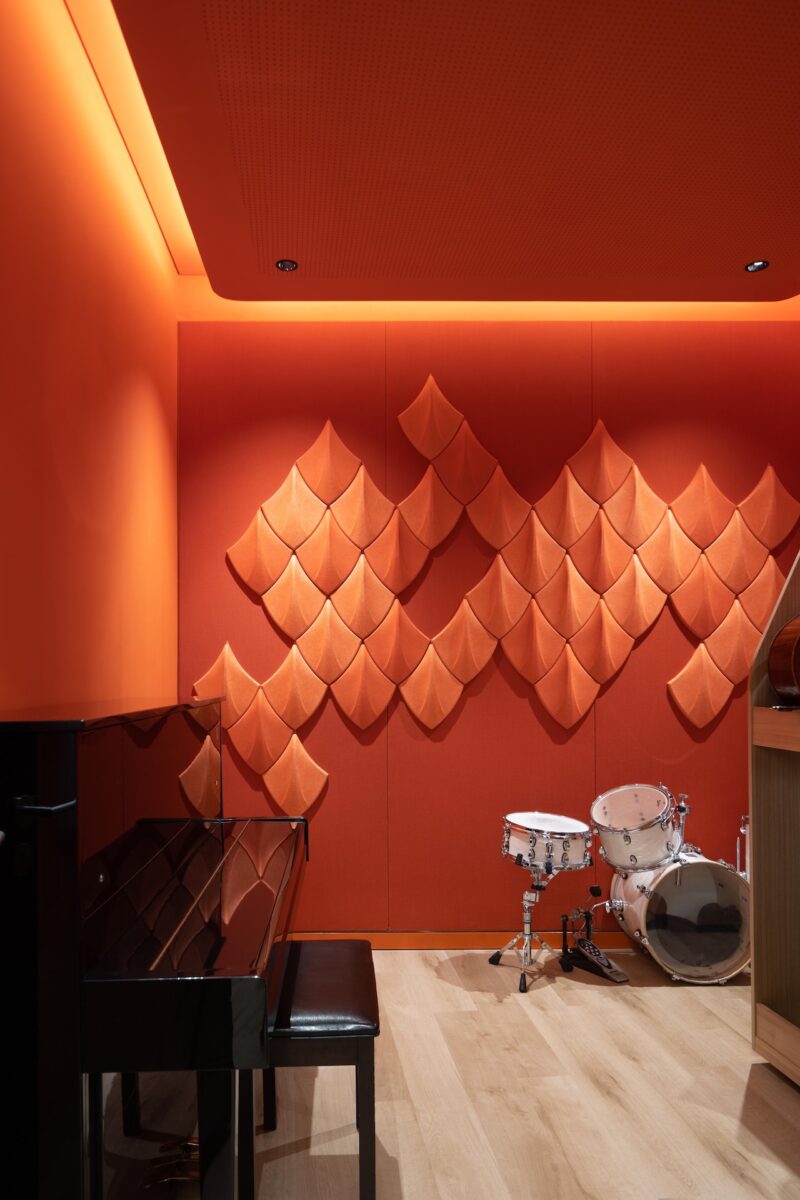
Architectural critics have also noted that the project challenges the "industrial" aesthetic often found in modern school design. By opting for "Starburst candy" colors and tactile felt surfaces, Studio Vapore has acknowledged that the physical environment plays a direct role in student engagement. The "super-chromatic" approach is theorized to stimulate the brain’s creative centers, making the music wing a destination students are drawn to, rather than just a place they are required to attend.
Broader Implications and Analysis
The Western Academy Beijing project reflects a growing trend in global educational architecture: the move toward "branded" specialized spaces. As international schools compete for students on a global stage, the quality of their arts and sports facilities becomes a key differentiator. Studio Vapore’s work demonstrates that a renovation does not need to be a total structural overhaul to be effective; by focusing on the "big moves" of layout, sound, and color, they have achieved a high-impact result within a 7,500-square-foot footprint.
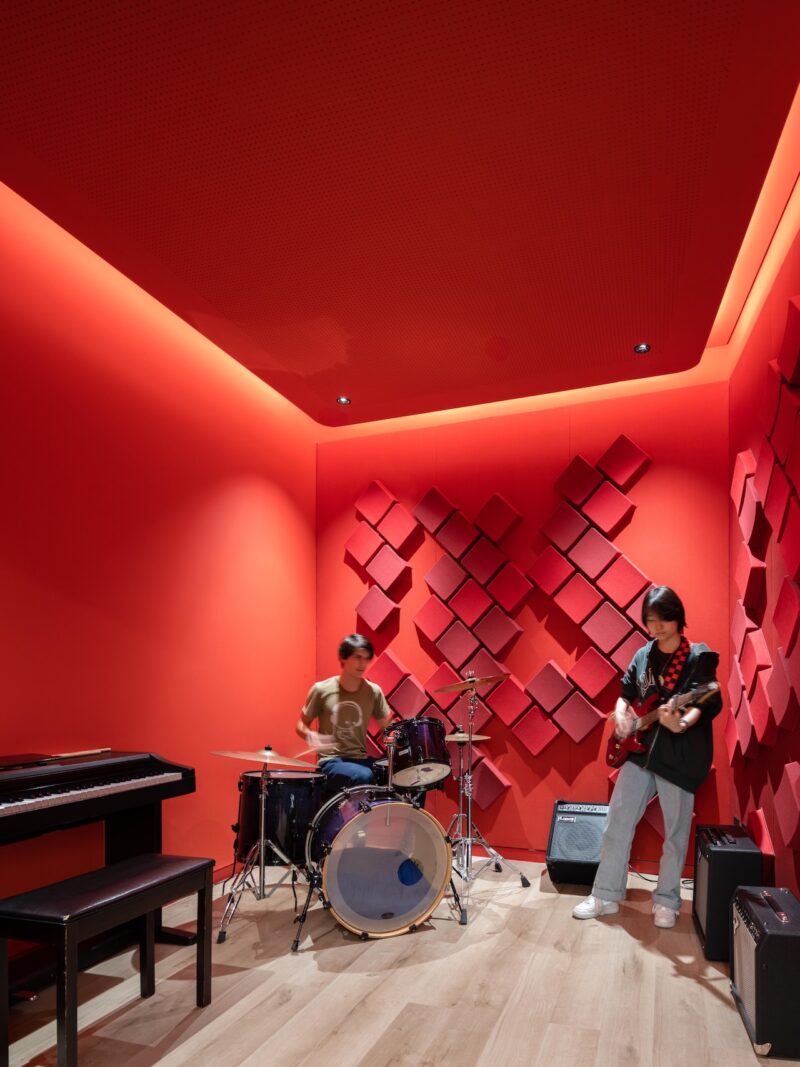
Furthermore, the project highlights the evolution of the "maker space" concept. While typically applied to STEM (Science, Technology, Engineering, and Math) labs, the music wing at WAB applies the same principles of transparency, flexibility, and high-performance tools to the performing arts. This "Music Maker Space" model suggests that the future of campus design lies in breaking down the walls between different modes of learning.
As the first phase of a broader campus upgrade, the music classrooms set a high bar for the subsequent renovations at Western Academy Beijing. The project proves that when technical engineering is married to bold aesthetic choices, the result is an environment that does more than just house an activity—it inspires it. The success of this super-chromatic intervention suggests that the next decade of educational design will likely see more schools moving away from neutral palettes in favor of environments that reflect the vibrancy and diversity of the students they serve.