Ibraaz Centre Forges a Vibrant Hub for Dialogue and Cultural Exchange, Rejecting Traditional Museum Silence

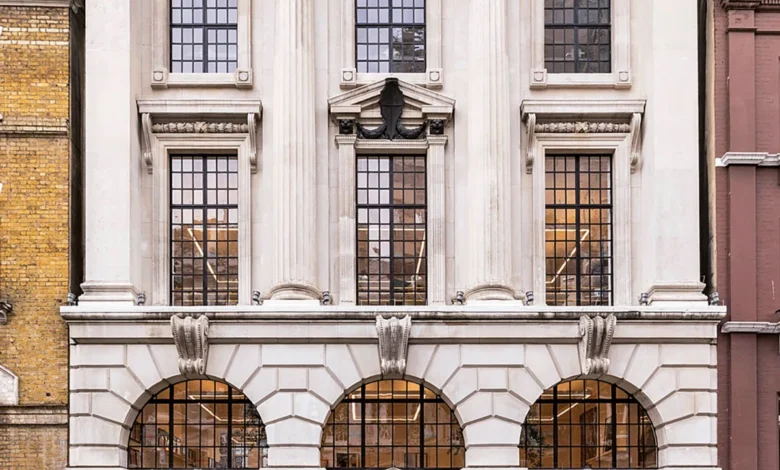
The Ibraaz centre, a newly established cultural institution, is actively redefining the concept of a public space for art and dialogue, explicitly rejecting the notion of a hushed, passive viewing experience. Hammad Nasar, a key figure associated with the centre, articulated this vision, stating, "Our ambition is not a traditional ambition for people to come and quietly admire things in a hush and then walk out. We want noise. We want conversations." This philosophy permeates the design and programming of the London-based venue, which opened its doors in October, aiming to foster active engagement and community building around art, literature, food, and discourse, particularly concerning the Middle East and North Africa.
A Multi-Sensory and Discursive Space
Upon entering the Ibraaz centre, visitors encounter a thoughtfully designed environment that encourages interaction and contemplation. The third floor features a Musalla, a term translating to "spiritual practice room." During a recent visit, this space was dedicated to Joe Namy’s Cosmic Breath, an auditory installation featuring recordings of the adhan, the Islamic call to prayer, sourced from various global locations. Louise Oram, Head of Communications and Partnerships at Ibraaz, highlighted the multifaceted nature of the Musalla, explaining that its carpeted interior is intended not only for listening but also as a dedicated area for prayer, reflection, or simply a respite from the urban environment.
In contrast, the basement houses the Minassa, defined as "a platform, podium, dais, or stage." This dynamic area is earmarked for a diverse range of activities, including film screenings, performances, and regular discussions, talks, and debates. This intentional architectural division underscores Ibraaz’s commitment to offering distinct yet complementary experiences that cater to a broad spectrum of engagement.
The spirit of conversation extends throughout the centre. Meeting rooms are designed to facilitate discussions, while the Oula cafe, managed by French-Tunisian chef Boutheina Ben Salem, provides a welcoming and communal atmosphere. Situated on the ground floor opposite the Maktaba, or "bookshop," the cafe serves as a natural gathering point. The Maktaba itself is a significant cultural outpost, operated by Burley Fisher Books and curated in collaboration with the Palestine Festival of Literature. During the visit, Ahmad Al-Bazz’s impactful photobook, The Erasure of Palestine, was prominently displayed in the shop window. Nasar personally encouraged a closer examination of the publication, recounting a recent event where Al-Bazz engaged in a discussion about his work within the bookshop, illustrating the centre’s commitment to hosting authorial dialogues.
The Genesis of Ibraaz: From Online Platform to Physical Hub
The foundational ethos of Ibraaz—to foster connection and dialogue—stems from its origins as an online publication launched in 2011. This initiative emerged in the immediate aftermath of the Arab Spring, a period of significant political and social upheaval across the Middle East and North Africa. "To create a platform where people could gather online," as Nasar described its initial purpose, reflects the pressing need for accessible and open channels of communication during a time of rapid change and uncertainty. This initial impulse to connect has remained a guiding principle, evolving into the physical London centre. Nasar further elaborated on the centre’s objective as a "discursive place of gathering."
This evolution into a physical space was significantly influenced by contemporary geopolitical realities. Nasar explained the impetus behind establishing a physical venue: "As we see the ongoing genocidal violence in Gaza, now extending elsewhere, and as we see the spaces for gathering reducing, the spaces for free expression really under assault, these things made Lina keen to have a space where physical gatherings could take place." He emphasized the centre’s role as "a centre to act as a vehicle or vessel to hold people." This statement directly addresses the critical need for safe and supportive environments for communities and individuals facing increasingly challenging circumstances, particularly those whose narratives are often marginalized or suppressed.
Photography as a Tool for Witness and Empowerment
Photography holds a particularly significant position within Ibraaz’s programming and philosophy, serving multiple crucial functions. Nasar articulated three key reasons for its importance:
Firstly, photography and lens-based imaging are acknowledged as fundamental components of contemporary art practice. The centre recognizes the medium’s evolving role and its capacity to push artistic boundaries.
Secondly, the inherent ability of photography to document and serve as evidence is highly valued, especially by those whose lived realities are frequently minimized, distorted, or violently destroyed. In contexts where official narratives are often contested or manipulated, photography can provide an invaluable counter-narrative and a tangible record of events.
Thirdly, and closely linked to its documentary function, photography is viewed as a democratic medium. It empowers individuals by placing the means of production and circulation of images into their hands. "It’s the tool within the armament that virtually every single human being has in their pocket," Nasar observed, referring to the ubiquitous presence of smartphone cameras. This accessibility democratizes storytelling and enables a wider range of voices to be heard.
Nasar further underscored photography’s power: "Photography has the capacity to bear witness [whether a cell phone or camera]." He cited The Erasure of Palestine as a pertinent example. This photobook, he explained, "looks at remnants of Palestinian villages in occupied territories which are now being called Israel; it is actually a visual mapping." This highlights photography’s role in historical preservation, territorial claims, and challenging dominant historical accounts through empirical visual evidence.
A Programme Rooted in Experience and Collaboration
The content showcased at Ibraaz often draws from the extensive collection of the Kamel Lazaar Foundation. However, the centre explicitly states that it is not a collecting institution itself. This distinction is important, positioning Ibraaz as a dynamic platform for exhibition, discussion, and engagement rather than a repository of artifacts.
The broader programme is meticulously curated to embody Nasar’s vision of "noise" and "conversations." He elaborated, "We want noise. We want conversations… These gatherings, around food, books, the soul, or with song, with art, that’s the overall sense of the programme. That’s what we’re interested in doing." This holistic approach embraces a wide array of cultural expressions and communal activities, aiming to create a rich tapestry of experiences that resonate with visitors on multiple levels.
The mention of the Sofra, a dining area where framed images of Palestine by Adam Rouhana and Adam Broomberg were displayed during the visit, further exemplifies this interdisciplinary approach. The integration of art into communal spaces like dining areas encourages spontaneous engagement and dialogue, breaking down traditional barriers between art appreciation and everyday life.
Contextualizing Ibraaz: The Evolving Landscape of Cultural Spaces
The establishment of Ibraaz in London comes at a time when cultural institutions are increasingly grappling with issues of representation, political engagement, and the role of art in social commentary. The centre’s explicit ambition to foster "noise" and "conversations" distinguishes it from more conventional, often more reserved, exhibition spaces. This approach aligns with a growing global trend among cultural organizations to become more active participants in public discourse, particularly on issues of social justice and human rights.
The timing of the centre’s opening, amidst heightened geopolitical tensions and a global increase in documented humanitarian crises, lends particular urgency to its mission. The emphasis on physical gathering spaces, as Nasar noted, is a direct response to the perceived shrinking of opportunities for free expression and open dialogue in many parts of the world.
Broader Implications and Future Trajectory
The Ibraaz centre’s innovative model has several significant implications for the cultural landscape:
- Challenging Traditional Museum Models: By prioritizing active participation and dialogue over passive observation, Ibraaz offers a compelling alternative to established museum practices. This could inspire other institutions to re-evaluate their own engagement strategies.
- Empowering Marginalized Narratives: The focus on photography as a tool for bearing witness and the explicit connection to the Palestinian experience underscore a commitment to amplifying voices that are often excluded from mainstream discourse.
- Fostering Community and Solidarity: The integration of spaces for food, conversation, and reflection creates an environment conducive to building community and fostering solidarity among individuals who share common concerns or interests.
- The Role of Cultural Institutions in Times of Crisis: Ibraaz’s genesis and programming highlight the crucial role that cultural institutions can play in responding to contemporary crises, providing platforms for critical engagement, emotional support, and collective action.
As Ibraaz continues to develop its programming and expand its reach, its ambition to be a vibrant, noisy, and conversational hub promises to make a significant contribution to the cultural and intellectual life of London and beyond. Its success will likely be measured not only by the art it displays but by the quality and depth of the conversations it ignites and the community it helps to build. The centre represents a forward-thinking approach to cultural engagement, demonstrating how art and dialogue can coalesce to address pressing social and political issues in a dynamic and inclusive manner.