Rio Tinto Extracts Final Diamonds from Diavik Mine as Canadian Asset Enters Post-Closure Processing Phase

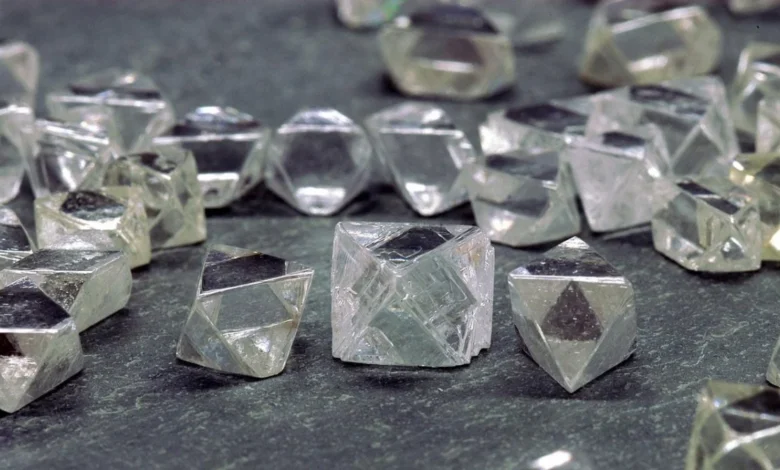
Rio Tinto, the world’s second-largest metals and mining corporation, has officially transitioned its Diavik Diamond Mine into a post-closure recovery phase, marking the end of an era for Canadian gemstone production. Following the formal cessation of mining operations in March 2026, the company reported the recovery of 33,000 carats of diamonds during the second quarter of the year, which ended June 30. These final stones were extracted from the processing of remaining ore stockpiles and the final cleanup of the facility’s recovery circuits. This late-stage output represents the "final hurrah" for a mine that has been a cornerstone of the Northwest Territories’ economy for over two decades.
The recovery of these 33,000 carats represents a significant 97% decline in production when compared to both the previous quarter and the same period in the prior year. This sharp drop was expected, as the mine had reached its geological and economic end-of-life earlier in the year. For the first half of 2026, total production at Diavik stood at 1.1 million carats, a 51% decrease from the first half of 2025. Despite the halt in active mining, Rio Tinto has confirmed that it will continue the manufacturing and sale of its final diamond inventory through at least the end of 2026, ensuring a gradual wind-down of its commercial presence in the diamond market.
The Evolution and Legacy of the Diavik Diamond Mine
The Diavik Diamond Mine, located on a 20-square-kilometer island in the Lac de Gras region of the Northwest Territories, approximately 300 kilometers northeast of Yellowknife, has long been regarded as one of the world’s premier sources of high-quality rough diamonds. Discovered in 1992, the deposit consisted of four diamond-bearing kimberlite pipes. Production officially commenced in 2003, and at its peak, the mine was a massive industrial feat, operating in a remote sub-arctic environment where temperatures frequently plummeted below minus 40 degrees Celsius.
For much of its history, Diavik was operated as a joint venture between Rio Tinto (60%) and Dominion Diamond Corporation (40%). However, following a series of corporate restructurings and the eventual insolvency proceedings of Dominion Diamond, Rio Tinto took full ownership of the asset in late 2021. This move allowed the Anglo-Australian miner to manage the final years of the mine’s life and oversee the complex environmental remediation process required in the sensitive Arctic ecosystem.
Diavik was particularly famous for its production of large, high-value white diamonds and occasional rare yellow stones. Its closure marks the removal of a significant portion of the global supply of "conflict-free" Canadian diamonds, which have historically commanded a premium in the retail market due to their ethical provenance and high clarity.
Strategic Realignment and the Exit from Diamonds
The closure of Diavik is not an isolated event but rather the culmination of a decade-long strategic pivot by Rio Tinto. The company has been systematically divesting or closing its diamond assets to refocus its capital and management efforts on "energy transition" minerals, such as copper, lithium, and high-grade iron ore.
The first major signal of this shift occurred in November 2020, when Rio Tinto closed the iconic Argyle mine in Western Australia. Argyle was the world’s primary source of rare pink and red diamonds and had produced over 865 million carats of rough diamonds during its 37-year lifespan. Following the Argyle closure, Diavik became Rio Tinto’s flagship and sole producing diamond mine.
In 2023, Rio Tinto further distanced itself from the sector by selling its 75% stake in the Fort à la Corne diamond exploration project in Saskatchewan to its joint-venture partner, Star Diamond Corporation. By exiting this project, Rio Tinto signaled to shareholders that it no longer viewed large-scale diamond mining in Canada as a core component of its future growth strategy.
Industry analysts suggest that the volatility of the diamond market, coupled with the rise of lab-grown diamonds and the high capital intensity of underground mining in remote regions, has made the sector less attractive to diversified mining giants. Instead, Rio Tinto is prioritizing massive projects like the Oyu Tolgoi copper mine in Mongolia and the Simandou iron ore project in Guinea, which are seen as more critical to the global shift toward electrification and green infrastructure.
Chronology of Diavik’s Final Years
The timeline of Diavik’s closure has been carefully managed to balance production goals with environmental responsibilities:
- 2021: Rio Tinto assumes 100% ownership of the mine, taking over Dominion Diamond’s share.
- 2022-2024: The mine transitions primarily to underground operations as open-pit resources are exhausted. The company begins implementing progressive reclamation projects.
- Late 2025: Rio Tinto announces the definitive schedule for the cessation of mining, citing the depletion of economically viable ore.
- March 2026: Active mining operations officially cease. The workforce begins the transition from extraction to decommissioning.
- June 2026: The processing of the final stockpiled ore is completed, yielding the 33,000 carats reported in the Q2 results.
- Late 2026: Rio Tinto expects to conclude the sale of its remaining rough diamond inventory.
Economic Implications for the Northwest Territories
The shutdown of Diavik is a profound economic milestone for the Northwest Territories (NWT). For over two decades, the diamond mining industry has been the largest private-sector contributor to the territory’s Gross Domestic Product (GDP). At its height, the industry accounted for nearly 25% of the NWT’s economy and provided thousands of jobs for both local residents and "fly-in, fly-out" workers from across Canada.
The closure poses several challenges for the regional government and Indigenous communities. Diavik was a leader in establishing Participation Agreements with local First Nations, ensuring that employment, training, and business opportunities were directed toward Indigenous groups. While the reclamation phase—which is expected to last several years—will provide some ongoing employment, the long-term loss of high-paying mining jobs and tax revenue is a significant concern for the territorial capital of Yellowknife and surrounding communities.
Furthermore, the closure of Diavik puts additional pressure on the remaining diamond mines in the region, such as the Ekati mine and the Gahcho Kué mine. The shared infrastructure of the North, including the Tibbitt to Contwoyto Winter Road—the ice highway that services these mines—relies on the collective contributions of all operators. As mines close, the per-unit cost of logistics for the remaining players tends to rise, potentially shortening the lifespans of other regional assets.
Environmental Remediation and Site Restoration
As a pioneer in sub-arctic mining, Rio Tinto’s handling of the Diavik closure is being closely watched as a blueprint for environmental stewardship. The closure plan involves the decommissioning of the processing plant, the sealing of underground tunnels, and the gradual flooding of the open pits to create a pit-lake system that integrates back into Lac de Gras.
One of the most innovative aspects of the Diavik closure is the "progressive reclamation" strategy the company has employed. Rather than waiting until the end of the mine’s life to begin cleanup, Rio Tinto has been reclaiming land and managing waste rock for years. A key focus is ensuring that the water quality of Lac de Gras is protected, as the lake is a vital habitat for local fish species and a water source for the region.
Rio Tinto has also engaged in extensive consultations with Indigenous Elders and community members to incorporate Traditional Knowledge into the closure plan. This includes ensuring that the land is returned to a state that allows for traditional activities such as caribou migration and hunting.
Global Market Impact and the Future of Rio Tinto Diamonds
On a global scale, the loss of Diavik’s production contributes to a tightening of the natural diamond supply. The global diamond industry has faced a supply crunch as older mines reach exhaustion and few new world-class deposits are discovered. The disappearance of Diavik’s output, which once accounted for several million carats annually, may provide some support for rough diamond prices, which have faced pressure from macroeconomic headwinds and competition from synthetic alternatives.
Interestingly, while Rio Tinto is exiting its major production hubs, it has not entirely abandoned the diamond sector. The company continues to maintain a diamond exploration program in Angola. This suggests that while Rio Tinto is moving away from its legacy assets, it remains open to high-potential, high-margin opportunities in emerging mining jurisdictions. Angola, which has seen significant regulatory reform and a push to attract foreign investment, represents a different risk-reward profile compared to the high-cost environment of the Canadian Arctic.
Conclusion
The recovery of the final 33,000 carats from Diavik is more than just a production statistic; it is the final chapter of a project that helped define Canada as a global leader in the diamond industry. As Rio Tinto shifts its gaze toward the minerals of the future, the legacy of Diavik will remain in the form of the infrastructure it built, the people it trained, and the standard it set for mining in one of the most challenging environments on Earth. For the diamond industry, the end of Diavik signifies a move toward a new reality where supply is increasingly scarce, and for Rio Tinto, it marks the successful execution of a long-term strategy to reshape its portfolio for a decarbonizing world.