Of the total shares being offered, approximately 9.5 million originate directly from Reformation, while the remaining shares are being made available by certain existing stockholders. This structure, combining newly issued shares with a secondary offering, allows the company to raise capital for its operational needs and strategic initiatives while also providing liquidity for early investors. Furthermore, the underwriting syndicate has been granted a 30-day option to purchase an additional 2.1 million shares of common stock from selling stockholders, a standard provision designed to stabilize the stock price post-IPO and accommodate potential excess demand. Assuming the shares are priced at the midpoint of the proposed range, $16 per share, Reformation anticipates netting approximately $134.5 million from the offering. This capital infusion is earmarked for strategic financial maneuvers, including the partial repayment of an existing loan, a move that is expected to strengthen the company’s balance sheet and improve its financial flexibility for future growth.
Strategic Allocation of IPO Proceeds and Financial Health
The net proceeds from the IPO are critical for Reformation’s immediate financial strategy. The company plans to allocate a substantial portion, around $125 million, towards partially repaying an outstanding loan. This debt reduction is a prudent financial decision, as it can lower interest expenses, improve creditworthiness, and free up cash flow for reinvestment into the business. Additionally, Reformation intends to utilize approximately $9.5 million of the net proceeds to purchase more outstanding shares and stock options. This action, detailed in an updated S-1 filing, can signal confidence from management in the company’s future prospects and can be a mechanism to manage dilution or incentivize employees through stock-based compensation programs. Post-offering, Reformation expects to have just over 59 million shares of common stock outstanding, reflecting its new capital structure as a publicly traded entity.
The decision to pursue an IPO follows a period of robust financial performance for Reformation, distinguishing it from many other direct-to-consumer brands that have struggled with profitability. The brand first publicly announced its proposed IPO in June, drawing attention to its healthy apparel business model. In the fiscal year 2025, Reformation reported an impressive net revenue of approximately $507 million, alongside a net income of $12.6 million. These figures are particularly noteworthy in an industry where many high-growth DTC companies prioritize market share and top-line growth over immediate profitability. Reformation’s ability to generate a positive net income underscores the efficiency of its operations and the strength of its brand appeal, validating its direct-to-consumer approach as a viable and profitable strategy.
The Rise of a Sustainable Fashion Powerhouse
Founded in 2009 by Yael Aflalo, Reformation emerged with a clear mission: to create fashionable clothing with a minimal environmental footprint. This ethos resonated deeply with a growing segment of consumers who were becoming increasingly conscious of the environmental and social impacts of fast fashion. From its inception as a small vintage clothing boutique in Los Angeles, Reformation rapidly evolved into a full-fledged brand, designing and manufacturing its own collections. Its commitment to sustainability is embedded in every aspect of its operations, from sourcing eco-friendly materials like Tencel, recycled cotton, and deadstock fabrics, to implementing water-saving technologies and investing in renewable energy for its manufacturing facilities. The brand transparently communicates its environmental impact, providing "RefScale" scores on its products, which quantify the water, carbon dioxide, and waste savings compared to conventional fashion items. This dedication to transparency and tangible impact has fostered a loyal customer base, particularly among younger, environmentally-aware demographics.
Reformation’s journey to an IPO is a testament to the increasing mainstream appeal and commercial viability of sustainable fashion. What was once considered a niche market has grown into a significant force, with consumers actively seeking out brands that align with their values. The company’s growth trajectory reflects this shift, demonstrating that profitability and purpose can indeed go hand-in-hand. Over the years, Reformation has expanded its product offerings beyond dresses and everyday wear to include categories like bridal, denim, and footwear, all while maintaining its core commitment to sustainability. This expansion has allowed it to capture a wider audience and increase its market share in various segments of the apparel market.
Innovating Retail: The "Retail X" Model and Omnichannel Success
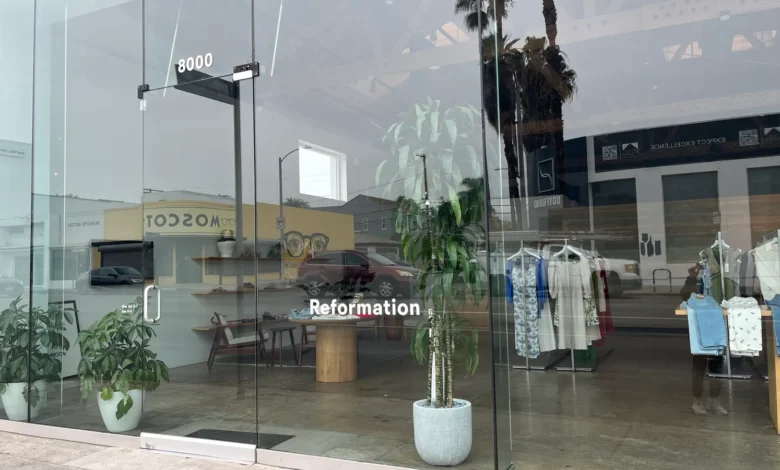
A key differentiator for Reformation, beyond its sustainable core, is its innovative approach to retail. While primarily a direct-to-consumer brand, the company has strategically invested in physical retail locations, recognizing the enduring value of in-person shopping experiences. Last year, over 30% of its new DTC shoppers were acquired through its retail stores, highlighting the powerful synergy between its online and offline channels. This data point challenges the traditional narrative that physical retail is declining in the face of e-commerce, instead demonstrating how brick-and-mortar can serve as a vital customer acquisition tool for digitally native brands.
Crucially, approximately 75% of Reformation’s 70 owned stores utilize its patented "Retail X" store model. This innovative concept integrates technology to enhance the customer experience and optimize inventory management. "Retail X" stores often feature large touchscreens in fitting rooms, allowing customers to browse additional styles, sizes, or colors, and request items directly from sales associates without leaving the room. This seamless integration of digital and physical elements not only streamlines the shopping process but also creates a more personalized and efficient experience. For the brand, "Retail X" reduces the need for extensive on-floor inventory, optimizes space, and provides valuable data on customer preferences and purchasing behavior. This omnichannel strategy allows Reformation to leverage the brand-building power of physical presence while maintaining the data-driven efficiency of its digital operations, creating a robust ecosystem that supports sustained growth.
Broader Market Context and Implications
Reformation’s IPO arrives at a fascinating juncture for both the direct-to-consumer sector and the broader IPO market. While many DTC darlings of the past decade have struggled post-IPO, often burdened by high customer acquisition costs and a lack of profitability, Reformation stands out due to its demonstrated financial health. Its positive net income and robust revenue growth present a compelling narrative to investors seeking sustainable and profitable growth. The fashion industry, too, is undergoing a profound transformation, with increasing pressure on brands to adopt more ethical and sustainable practices. Reformation’s success in this arena positions it as a leader and a potential benchmark for how purpose-driven brands can thrive commercially.
Industry analysts suggest that Reformation’s public offering could serve as a litmus test for investor appetite for profitable, mission-driven direct-to-consumer brands in a challenging economic climate. With inflation concerns and fluctuating consumer spending, investors are increasingly scrutinizing business fundamentals. Reformation’s strong financials and unique retail strategy are seen as key differentiators. The pricing range of $15 to $17 per share reflects a calculated approach to attract a broad investor base, balancing growth potential with a sustainable valuation that acknowledges both the brand’s strengths and the inherent risks of a new public offering.
For Reformation itself, going public will provide access to significant capital, which can be deployed to further scale its operations, expand its product lines, and invest more deeply in its sustainability initiatives. It will also elevate its brand profile on a global stage, attracting new customers and potentially new talent. However, becoming a public company also brings increased scrutiny, quarterly reporting pressures, and the need to balance long-term strategic goals with short-term investor expectations. Managing this transition effectively will be crucial for the brand’s continued success.
The IPO also holds broader implications for the sustainable fashion movement. By achieving a valuation of up to $1 billion as a public company, Reformation sends a powerful message that sustainable business models are not just ethically desirable but also financially viable. This could encourage more brands, both established and emerging, to invest in eco-friendly practices, driving systemic change across the industry. For investors, it offers a unique opportunity to participate in the growth of a company that aligns with environmental, social, and governance (ESG) principles, which are increasingly influential in investment decisions. As the fashion industry continues to evolve, Reformation’s journey into the public market could very well define the next chapter for conscious consumerism and responsible business growth.