Tencel | Circ with Refibra Technology Men’s Denim Collection Launches at H&M, Signaling Commercial Viability of Next-Generation Textile Recycling

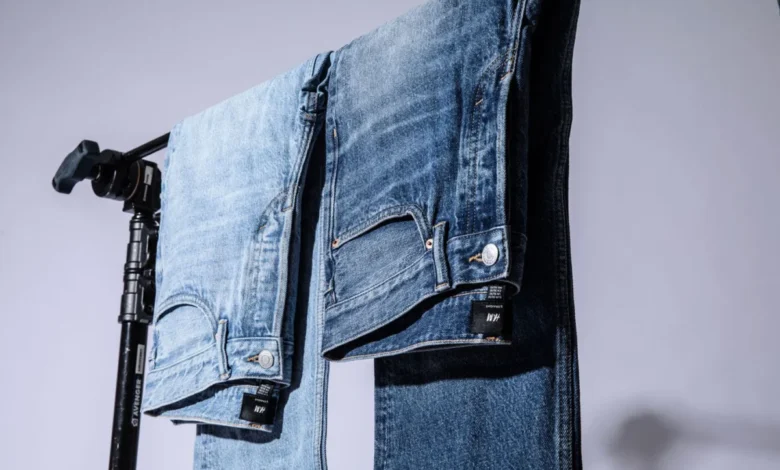
Stockholm, Sweden – July 24, 2026 – In a significant stride towards circularity in the fashion industry, H&M today announced the commercial availability of its Tencel | Circ with Refibra technology men’s denim collection. This launch marks the successful culmination of a pilot project, initially unveiled in October 2025, demonstrating that advanced textile-to-textile recycling technologies can be integrated into existing global supply chains to produce high-quality materials for mass-market consumption.
The collection represents a fully integrated approach, tracing a path from discarded textile waste all the way to the retail shelf. This ambitious endeavor brought together a consortium of innovative companies: Circ, a leader in textile recycling technology; Lenzing, renowned for its expertise in sustainable fiber production; Artistic Garment Industries (AGI Denim), a key manufacturing partner in Pakistan; and H&M, one of the world’s largest fashion retailers, providing the extensive global platform for distribution.
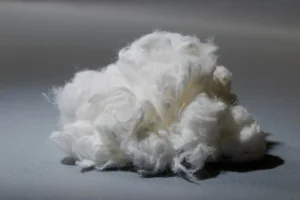
Each garment within this new collection is crafted using Tencel™ limited edition Lyocell fibers, which incorporate a substantial 30% of pulp recycled from post-consumer textile waste processed by Circ. This innovative fiber composition underscores the potential of repurposing discarded clothing into valuable new resources.
A Milestone for Circular Textiles
Peter Majeranowski, CEO of Circ, expressed optimism about the implications of this launch. "This launch is proof that recycled textile fibre is ready for mass-market supply chains," he stated. "Seeing the collection in H&M’s standard men’s denim assortment is a milestone the industry has been working towards. It is proof that next-generation recycled materials can move through existing supply chains at the quality that global retail demands."
The significance of this development lies in its demonstration of scalability and commercial viability. For years, the textile industry has grappled with the challenge of closing the loop on its waste. While various recycling technologies have emerged, integrating them seamlessly into the complex and high-volume global fashion supply chain has been a persistent hurdle. The H&M collection, by utilizing Circ’s advanced recycling process and Lenzing’s established fiber production, offers a tangible model for how these innovations can be translated into commercially successful products.
The Journey from Waste to Wear
The Tencel | Circ with Refibra technology men’s denim collection features two distinct styles, available in both light and dark wash finishes. These garments are now accessible to consumers across a broad geographical reach, including the UK, Scandinavia, Central Europe, Eastern Europe, Southern Europe, Turkey, North America, Mexico, Canada, and the Middle East. This wide distribution further emphasizes the successful integration of the recycled materials into H&M’s standard product lines.

Circ’s proprietary recycling technology plays a pivotal role in this innovation. It is engineered to efficiently separate blended textile waste into its core material streams: dissolving pulp and polyester monomers. This precise separation is crucial for creating high-quality recycled inputs. The resulting Circ pulp is then meticulously fed into Lenzing’s Lyocell production process. This process, which already utilizes wood sourced from certified or controlled forests, now incorporates the recycled pulp, yielding a fiber that proudly carries both the Tencel™ brand name and the Refibra™ technology designation. Lenzing’s Refibra™ technology is specifically designed to facilitate the incorporation of pre- and post-consumer textile waste into the creation of new, high-quality fibers.
Collaborative Synergy for Scalability
This collaborative project embodies a strategic approach long advocated by circular economy proponents: the synergistic integration of established infrastructure with emerging technologies. Rather than operating in parallel, these entities have worked in concert to overcome the multifaceted challenges of textile recycling.
Majeranowski elaborated on the complexities overcome: "Getting here required solving quality, supply, and commercial viability issues simultaneously. Every step in this chain, from Circ pulp to H&M’s shelves, had to work – and it has." This statement highlights the intricate coordination and problem-solving required to bring such an initiative to fruition, spanning R&D, material science, manufacturing logistics, and retail operations.
Background and Chronology of the Initiative
The genesis of this collaboration can be traced back to October 2025, when the pilot project was first announced. This announcement signaled a commitment from all participating parties to explore the commercial potential of Circ’s recycling technology within the fashion industry. The subsequent months would have been dedicated to intensive testing, process optimization, and supply chain integration.
- October 2025: Pilot project between Circ, Lenzing, AGI Denim, and H&M is announced, aiming to develop and integrate next-generation recycled textile fibers into a commercial product.
- Late 2025 – Early 2026: Intensive research, development, and piloting phases. Circ’s technology is refined for processing mixed textile waste into high-quality pulp. Lenzing integrates this pulp into its Lyocell production under the Refibra™ framework. AGI Denim works on the manufacturing of denim fabric and garments using the new Tencel™ Lyocell fibers. H&M assesses quality, scalability, and consumer appeal.
- Spring 2026: Production of the men’s denim collection commences, involving significant volumes to ensure adequate stock for a global retail launch. Supply chain logistics are finalized, and quality control measures are rigorously applied at each stage.
- July 24, 2026: The Tencel | Circ with Refibra technology men’s denim collection becomes available in H&M stores and online across multiple key markets.
The journey from announcement to retail launch in less than a year underscores the focused effort and shared vision of the partners involved.
Supporting Data and Industry Context
The textile industry is a major contributor to global waste. According to the United Nations Environment Programme (UNEP), the fashion industry is responsible for 8-10% of global carbon emissions, more than all international flights and maritime shipping combined. Furthermore, it is estimated that 85% of all textiles end up in landfills each year. The sheer volume of textile waste presents a colossal environmental challenge, but also a significant opportunity for resource recovery.
Circ’s technology addresses the critical issue of mixed textile waste. Historically, separating cotton and polyester blends – common in many garments – has been a significant barrier to effective recycling. Circ’s ability to cleanly separate these components is a key differentiator, enabling the creation of pure material streams suitable for high-value applications.

Lenzing’s Tencel™ Lyocell fibers are already recognized for their sustainable production processes, derived from renewable wood sources and manufactured in a closed-loop system that minimizes environmental impact. The integration of Circ’s recycled pulp into this established framework amplifies the sustainability credentials of the final product. Refibra™ technology, as a component of Lenzing’s offering, represents a significant advancement in utilizing recycled materials without compromising fiber quality.
AGI Denim’s role in Pakistan highlights the importance of established manufacturing hubs in scaling sustainable innovations. Their expertise in denim production ensures that the recycled fibers are translated into durable, aesthetically pleasing garments that meet consumer expectations.
H&M’s decision to include this collection in its standard denim assortment is a powerful signal to the broader retail market. By leveraging its vast global footprint, H&M can expose millions of consumers to products made from recycled textiles, thereby normalizing and popularizing such innovations. This move aligns with H&M’s stated sustainability goals, which include increasing the use of recycled and sustainably sourced materials.
Broader Impact and Implications
The successful commercialization of the Tencel | Circ with Refibra technology denim collection has several far-reaching implications for the textile and fashion industries:
- Proof of Concept for Scalable Recycling: This launch provides a concrete example that next-generation textile recycling is not merely a theoretical concept but a practical reality capable of integrating into mainstream production. It can serve as a blueprint for other brands and manufacturers looking to adopt similar circular models.
- Economic Viability of Circularity: By demonstrating that recycled materials can meet quality standards and be produced at a commercial scale, the project contributes to building a more robust business case for circular economy initiatives. This can attract further investment and innovation in the textile recycling sector.
- Consumer Education and Demand: The availability of stylish and accessible denim made from recycled materials educates consumers about the possibilities of textile recycling and encourages them to make more sustainable purchasing decisions. As consumer awareness and demand for eco-friendly products grow, such initiatives become increasingly crucial.
- Reduced Reliance on Virgin Resources: Each garment produced using Circ pulp reduces the demand for virgin cotton or polyester, thereby conserving natural resources, reducing water usage, and lowering carbon emissions associated with the production of new materials.
- Catalyst for Industry Transformation: This collaboration can act as a catalyst, encouraging other brands to invest in and partner with textile recycling innovators. It also puts pressure on raw material suppliers and manufacturers to develop and adopt more sustainable practices and technologies.
The challenges of textile waste are immense, but this launch offers a beacon of hope, showcasing a tangible path forward where innovation, collaboration, and existing industry infrastructure converge to create a more sustainable future for fashion. The continued success and expansion of such initiatives will be critical in transforming the industry from a linear "take-make-dispose" model to a truly circular one.
For more information, visit www.circ.earth.
Related posts: