Reimagining the American Wilderness: Photographer Josh Aronson Explores Identity, Belonging, and Youth in Florida Boys

The intersection of identity, landscape, and marginalized histories has long provided fertile ground for contemporary documentary photography. In his acclaimed multi-year project Florida Boys, Miami-based artist Josh Aronson interrogates the exclusionary legacy of the American wilderness while carving out a visual sanctuary for a demographic historically omitted from traditional narratives of outdoor coming-of-age. Born in Toronto in 1994 and raised in Florida, Aronson has established a prominent career capturing evocative, cinematic scenes for publications such as The New York Times, The Paris Review, Financial Times, Frieze, and Italian Vogue. Yet, it is his deeply personal exploration of Florida’s backwoods—inhabited by young, first-generation, queer, Black, and Brown men—that offers a profound redefinition of who gets to belong, roam, and rest within the American landscape.
Main Facts and Conceptual Framework
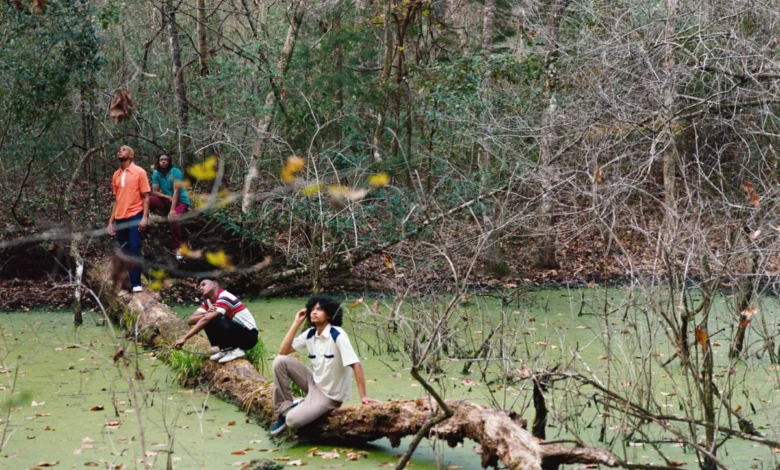
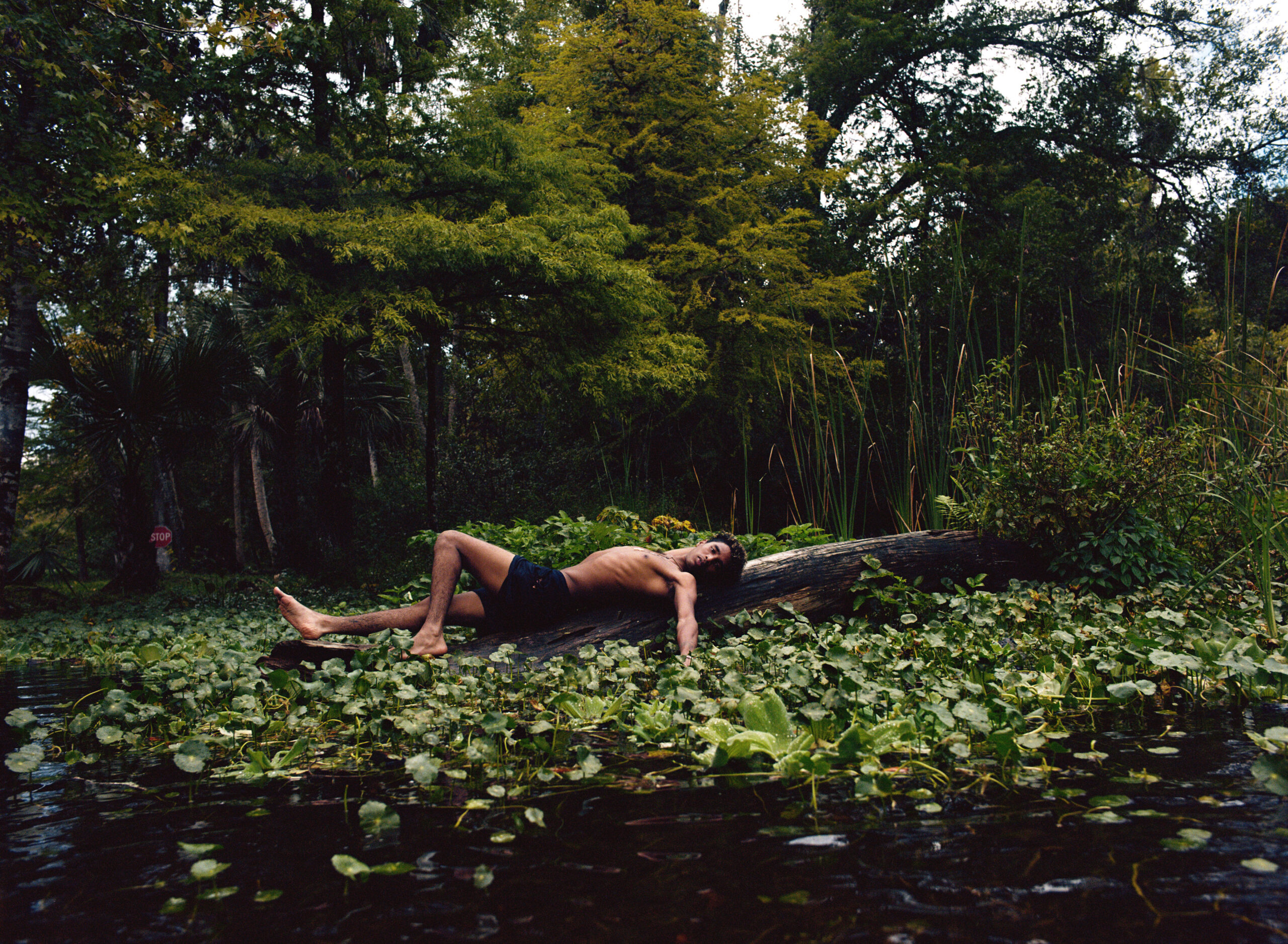
Florida Boys is a meticulously staged photographic series that challenges deeply ingrained tropes of classic Americana. Rather than documenting spontaneous encounters with rural youth, Aronson acts as a director, casting young men from the greater Miami area—many of whom are first-generation Americans or children of immigrants—and transporting them into the state’s forests, swamps, and remote outdoor settings.

The resulting images present young men swimming in secluded creeks, navigating cypress-lined waters, and showing mutual care in environments traditionally coded as white and exclusionary. Aronson’s work consciously subverts conventional visual frameworks of wilderness photography, functioning simultaneously as a personal love letter to his home state and a critique of the socio-historical constructs embedded within American nature conservation.
Chronology and Creative Process: The Five-Year Evolution

The genesis and execution of Florida Boys span a distinct timeline defined by extensive research, deliberate fieldwork, and a radical approach to post-production.
Phase 1: Research and Digital Scouting (Pre-Production)
Because Aronson did not grow up exploring the broader expanse of Florida outside of urban centers, the project began as an archival and digital excavation. He spent years combing through digital platforms using location-based tags such as #VisitFlorida and #FloridaWild, alongside historical travel guides, vintage postcards, and state brochures. This foundational research culminated in multi-day road trips where Aronson scouted remote locations alone, mapping out access points, testing compositions, and collecting ephemera that would later accompany his gallery exhibitions at venues like Baker–Hall.

Phase 2: Fieldwork and Staged Collaborations (2019–2024)
Over a five-year period, Aronson coordinated excursions into the Floridian interior, traveling with groups of collaborators into state parks reachable only by boat, deep cypress swamps, and rural backdrops peppered with markers of contemporary political and cultural divides—from isolated diners to partisan flags. Eschewing the impulse to instantly review his work, Aronson implemented an unusual technical constraint: he left his film undeveloped for three entire years. Operating strictly in "maker mode" rather than "editor mode," he avoided analytical judgment during production, allowing him to maintain creative momentum and sustain a five-year diary of staged boyhood without second-guessing individual frames.
Phase 3: Development and Exhibition (2025–Present)
When Aronson finally developed the rolls of film, the discovery brought immense relief and validation. The resulting archive materialized into major exhibitions, expansive museum installations featuring assemblage walls, large outdoor pieces, and grid layouts. The work quickly gained critical attention, punctuated by a prominent feature in Vogue and inclusion in contemporary art discourse.

Historical Context and Environmental Justice
Aronson’s critique of the American landscape is rooted in a growing body of environmental and sociological scholarship regarding public lands. Historically, the American conservation movement—championed figures like John Muir and policies that established the national park system—was frequently intertwined with the displacement of Indigenous populations and the exclusion of Black, Brown, and marginalized communities.

"I used to think nature was universal—that anyone could find peace there," Aronson notes regarding his conceptual shift. "The American landscape, as we know it, was built on systems of exclusion. The early conservation movement displaced Indigenous people and centered whiteness as the default steward of the land. That history still shapes who feels safe outdoors."
By placing queer, Black, and Brown urban youth into pastoral and wilderness settings, Aronson actively addresses these historical exclusions. The subjects become surrogate figures representing Aronson’s own feelings of being an "insider-outsider"—a Canadian-born resident raised in a state where his family held no historical roots. Through collaborative play-acting, the subjects enact a sense of belonging that physical and cultural barriers have historically denied them.

Artistic Lineage and Critical Reception
Florida Boys does not exist in a vacuum; it is explicitly situated within a lineage of contemporary portraiture that uses the camera to challenge social boundaries. Aronson acknowledges a profound debt to foundational photographers such as Justine Kurland—whose seminal 1990s series Girl Pictures depicted adolescent girls roaming free as outlaws in the American wilderness—and Ryan McGinley, whose depictions of youth culture celebrate radical freedom, bodily autonomy, and performative joy.

Critics and viewers have responded strongly to the cinematic quality of Aronson’s imagery. Rather than reading as traditional documentary photography, the images function as narrative film stills. The ambiguity of the scenes—oscillating between scripted performance and genuine human connection—invites viewers to project their own coming-of-age memories onto the frame.
Furthermore, the public response has bridged generational divides. Floridians who grew up in the region during the 1960s, 1970s, and 1980s have reported deep resonances with the atmospheric humidity, lighting, and mood of the photographs, proving that Aronson’s constructed fantasy successfully taps into a collective memory of the Florida ecosystem.

Broader Implications and Cultural Impact
The cultural footprint of Florida Boys extends beyond the confines of gallery walls, entering broader conversations about representation in the arts, environmental equity, and queer visibility in the American South.

By demonstrating that public lands and natural sanctuaries can be visually claimed and re-authored by diverse populations, Aronson’s work challenges institutional norms within environmentalism and fine art photography. The project suggests that belonging is not merely a passive state inherited by birthright or demographic dominance, but an active, imaginative practice that can be forged through art, community, and shared vulnerability. As Aronson continues to expand his practice—balancing high-profile editorial assignments with conceptual public projects like Photo Book Speed Date—Florida Boys stands as a testament to the power of photography to heal, connect, and rewrite the geographic imaginary of the American South.