Capturing the Sacred: Lev L. Spiro on Photography, Wilderness, and the Celtic Tradition of Thin Places

The contemporary landscape of fine art photography is increasingly crowded with technically flawless images that, while visually striking, often struggle to evoke a deeper emotional resonance. In response to this aesthetic fatigue, a growing movement among photographers seeks to bridge the gap between mere documentation and emotional resonance. At the center of this movement is acclaimed film and television director turned fine art photographer Lev L. Spiro, whose work explores the ethereal concept of "thin places"—locations where the boundary between the ordinary world and the spiritual realm dissolves. Through his evocative imagery and highly sought-after workshops with the Santa Fe Workshops, Spiro is redefining how modern artists approach nature, perception, and the sacred.
Origins and Evolution of the Thin Places Concept
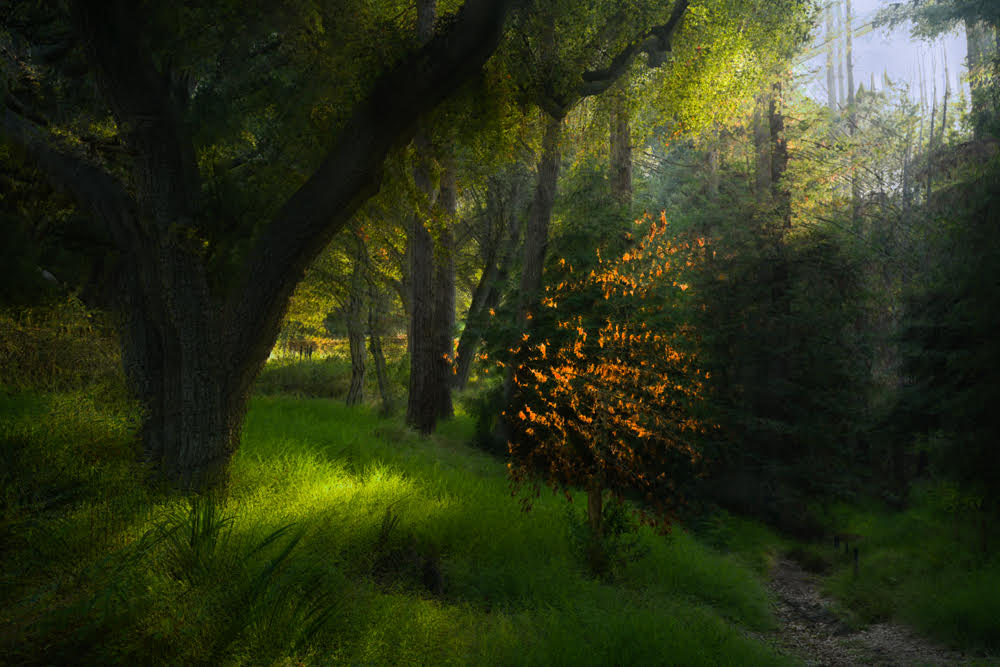
Rooted deeply in Celtic spiritual tradition, the term "thin place" historically describes geographic locations where the physical world and the divine or otherworldly feel intimately close. While the concept originated in ancient folklore and Celtic Christianity, its application has expanded in contemporary psychological and artistic discourse to describe environments that command profound awe, contemplation, and a distinct alteration in the perception of time.
For Spiro, the journey toward understanding these liminal spaces began long before he picked up a professional camera with the intent of documenting them. Formative memories from his youth—specifically spending his summers between the ages of 11 and 13 at a wilderness camp in Vermont akin to Outward Bound—planted the seeds for his future artistic trajectory. Immersed in the natural world far from the distractions of urban and suburban environments, Spiro experienced the unarticulated awe that mountain summits and dense forests naturally evoke. Though he lacked the vocabulary to categorize these encounters at the time, these childhood exposures laid the psychological groundwork for his later photographic series.
The Intersection of Technique and Receptivity in Modern Photography

Spiro’s transition into photography was heavily influenced by the philosophies of legendary photographic masters such as Minor White and Paul Caponigro. Central to their teachings—and, by extension, to Spiro’s pedagogical approach—is the transition from ordinary, functional seeing to heightened perception in the field. Rather than approaching nature as a static subject to be captured, Spiro instructs his students to cultivate deep receptivity, allowing the subject matter to reveal itself organically.
This methodology requires a deliberate deceleration of pace. In his classes, students are taught to quiet their minds and open their senses to subtle environmental shifts: the play of changing light, the mechanics of movement, organic forms, shifts in time, color palettes, micro-textures, and the spatial relationships between natural elements. This foundational step shifts the photographer’s objective from merely describing a location to conveying the visceral feeling of being present within it.
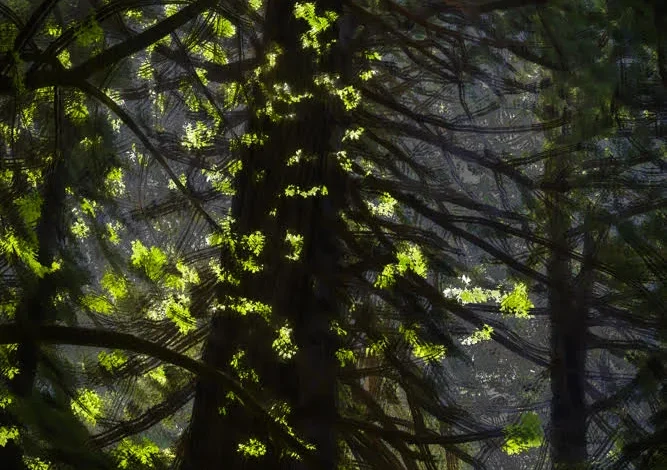
Drawing inspiration from renowned photographer Sam Abell, Spiro emphasizes the importance of allowing oneself to be "stopped" by the environment. This phenomenon occurs when a photographer notices an arresting visual element—such as a distant waterfall glimpsed through dense timber or striking light filtering through a dark canopy—without immediately intellectualizing the attraction. Because natural phenomena are transient, capturing these moments often requires split-second adaptation before the lighting changes or environmental movement ceases.

Chronology of a Creative Practice: From Series to Series
Spiro’s body of work demonstrates a deliberate evolution in how he engages with liminal landscapes. His previous major project, appropriately titled Thin Places, focused heavily on the interplay of natural light. During this period, the vast majority of his images were captured during the golden hours—the two hours immediately following sunrise and the two hours preceding sunset. During these windows, the quality of light is at its most evocative, lending an otherworldly atmosphere to forests, clearings, and waterways.
In contrast, his more recent portfolio, Elemental, adopts a different technical and temporal approach. Designed around long exposures, Elemental centers on dynamic natural elements such as rushing water and shifting cloud formations. This requires meticulous planning, often involving heavy tripods, specialized lenses, and substantial neutral density (ND) filters ranging from six to ten stops to manipulate exposure times.

Despite such rigorous technical preparation, Spiro frequently encounters moments that disrupt his initial plans. It is precisely these serendipitous interruptions—where a photographer must abandon preconceived notions of what they set out to capture to respond to an unexpected visual stimulus—that form the core of his artistic philosophy.
Impact and Industry Reception: The Santa Fe Workshops Phenomenon
The demand for instruction in this specialized niche has far exceeded traditional educational capacity. Spiro’s collaborative course with the Santa Fe Workshops, titled Thin Places: Photography and the Sacred in Nature, has sold out multiple consecutive offerings, maintaining an extensive waiting list of professional and advanced amateur photographers.

Industry analysts attribute the workshop’s exceptional popularity to a broader cultural shift within the photographic community. Many practitioners have achieved technical mastery over digital camera systems, exposure triangles, and post-processing software, yet feel unfulfilled by images that function solely as travel logs or botanical records. By addressing the psychological and philosophical dimensions of image-making, Spiro’s curriculum provides a roadmap for photographers seeking to forge a more profound emotional connection with their audiences.
The primary takeaway for students is both simple and demanding: the sacred is not a physical commodity hidden in remote, exotic locations, but rather a perceptual state that emerges through sustained attention, unhurried curiosity, deep presence, and the vulnerability required to let the natural world leave a lasting imprint on the observer.
Broader Implications for Environmental Art and Conservation

Beyond its aesthetic and educational merits, the artistic exploration of thin places carries significant implications for environmental stewardship and conservation discourse. By framing natural landscapes not merely as economic resources or recreational backdrops, but as repositories of the sacred and the liminal, photographers like Spiro reinforce an ethic of profound respect for the earth.
Spiro adheres strictly to a "leave no trace" philosophy during his field expeditions, ensuring that his artistic pursuits do not compromise the physical integrity of the environments he documents. Furthermore, his work underscores the necessity of respecting the cultural and spiritual significance that various indigenous communities and local populations attribute to specific natural sites.
As modern society becomes increasingly digitized and urbanized, the cultural appetite for art that reconnects humanity with the natural world is projected to grow. Through his exhibitions, his writing, and his mentorship at the Santa Fe Workshops, Lev L. Spiro continues to chart a course where technical excellence and spiritual attentiveness converge, offering a compelling template for the future of landscape photography.