RWTH Aachen University pioneers the future of physical therapy with a washable smart rehabilitation jacket

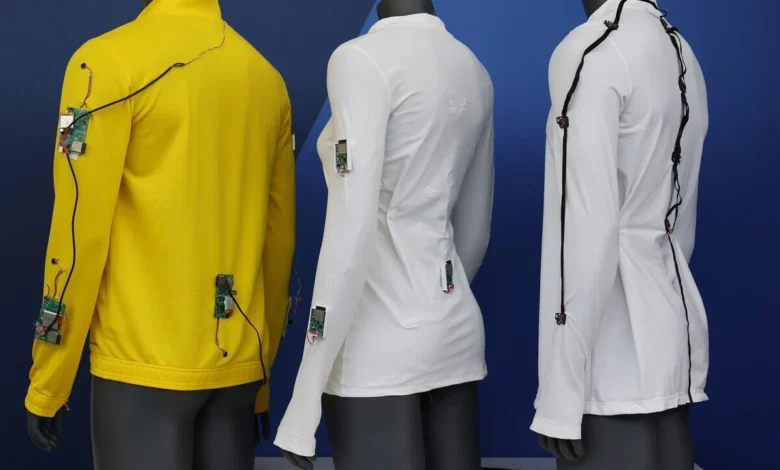
The landscape of modern physiotherapy is undergoing a significant transformation as researchers at the Institute for Technical Textiles (ITA) at RWTH Aachen University unveil a breakthrough in wearable medical technology. The PhysioTaix project, an initiative centered in Aachen, Germany, has developed a sophisticated, washable smart jacket integrated with textile sensors designed to monitor and optimize patient rehabilitation exercises. By bridging the gap between clinical appointments and home-based recovery, this innovation addresses one of the most persistent challenges in orthopedic and neurological rehabilitation: ensuring the accuracy and consistency of patient-performed movements.
The Problem of Compliance and Form in Rehabilitation
Physical rehabilitation is inherently iterative. Whether a patient is recovering from a major surgery, managing chronic joint pain, or undergoing post-stroke movement therapy, the efficacy of treatment is almost entirely dependent on the patient’s ability to perform prescribed movements with precision. However, clinical oversight is often limited to brief weekly or bi-weekly sessions. Between these appointments, patients are largely left to their own devices, often relying on printed sheets or memory to guide their movements.
Studies in movement science consistently show that improper execution of exercises—often referred to as "compensatory movement"—not only limits recovery speed but can lead to secondary injuries. The PhysioTaix project identifies this "monitoring vacuum" as the primary barrier to successful home-based recovery. While the market has been saturated with consumer-grade wearables such as smartwatches and fitness trackers, these devices lack the clinical-grade accuracy required for rehabilitation. Furthermore, they are often cumbersome to set up, requiring the user to attach multiple disparate sensors to various body parts, which discourages long-term adherence.
Technical Architecture of the PhysioTaix Jacket
The core innovation of the PhysioTaix jacket lies in its seamless integration of sensing technology into standard apparel. By weaving sensors directly into the fabric, the ITA team has eliminated the friction associated with traditional motion-capture setups.

The jacket operates as an intelligent interface between the patient and the physiotherapist. As the patient moves, the textile sensors capture kinematic data in real time. This information is transmitted wirelessly to a companion application, which utilizes artificial intelligence to perform an immediate biomechanical analysis. The system provides instantaneous haptic or visual feedback to the patient, signaling if a limb is being overextended, if the posture is incorrect, or if the rhythm of the exercise deviates from the prescribed protocol.
For the clinician, the system acts as a digital logbook. Instead of relying on a patient’s subjective report of their exercise frequency or intensity, the therapist can access objective, data-driven reports during the next in-person session. This allows for a more personalized adjustment of the recovery plan, shifting the model of care from general advice to precision-based intervention.
Project Timeline and Development Milestones
The development of the PhysioTaix jacket is part of a structured research lifecycle, reflecting the rigor required for medical-grade hardware.
- Initial Concept and Prototyping (2024–2025): ITA researchers began by identifying the specific kinetic requirements for common rehabilitation exercises. Early prototypes focused on sensor durability and washability, ensuring that the integration of electronics did not compromise the garment’s functionality as clothing.
- Integration and AI Training (2025–2026): The project moved into the Digital Innovation Centre Europe (DICE) in Aachen, where the focus shifted to the software architecture. Researchers trained the artificial intelligence models on thousands of movement variations to ensure the app could distinguish between correct and incorrect execution across different body types.
- Current Testing Phase (September 2026): As of mid-September 2026, the project is deep into testing with rehabilitation centers. This phase is critical for user experience optimization, ensuring that the jacket is not only medically effective but also comfortable enough for elderly or physically compromised patients to put on and remove independently.
- Project Conclusion and Implementation (February 2027): The current funding and development cycle is set to culminate in February 2027. The final months will be dedicated to clinical validation studies and discussions with health insurance providers regarding the potential for medical device certification and reimbursement.
Supporting Data and Market Implications
The global market for wearable medical devices is projected to continue its aggressive growth, yet the "abandonment rate" for these devices remains high. Industry data suggests that nearly 30% of users stop wearing fitness trackers within the first six months due to complexity or lack of perceived value.
PhysioTaix attempts to subvert this trend by positioning the jacket as a "medical tool" rather than a "lifestyle accessory." By targeting a finite recovery period—usually three to nine months for most orthopedic cases—the project frames the device as a necessity for recovery rather than a permanent fixture in the user’s life.

Furthermore, the economic implications for healthcare systems are profound. If the PhysioTaix system can reduce the need for repeat clinical visits caused by poor recovery outcomes, the potential for cost savings for national health services and private insurance providers is significant. By shortening the recovery window and preventing re-injury, the jacket effectively increases the throughput of rehabilitation clinics without requiring additional staff.
Expert Perspectives and Stakeholder Engagement
While the official rollout of the project is ongoing, the response from the rehabilitation community has been cautiously optimistic. Industry experts note that the "washability" factor is a game-changer. Historically, textile-integrated electronics were fragile, often requiring specialized cleaning or failing after a few cycles in a standard laundry machine. By achieving industrial-standard durability, ITA has moved the technology from the laboratory to the living room.
"The goal is not to replace the physiotherapist," noted a representative involved in the DICE testing workshops. "The goal is to extend the therapist’s reach into the patient’s home. We are creating a bridge that ensures the professional expertise of the therapist is present in the patient’s daily routine."
Future Challenges: From Prototype to Clinical Standard
Despite the technological success, the road to widespread adoption faces significant regulatory and practical hurdles. For the PhysioTaix jacket to become a standard tool in clinics, it must undergo rigorous clinical trials to satisfy European medical device regulations. These trials will need to provide empirical evidence that the jacket’s data is not only accurate but that its usage leads to statistically better patient outcomes compared to standard, non-monitored rehabilitation.
Furthermore, there is the challenge of data privacy and patient acceptance. As the device collects high-resolution movement data, the secure transmission and storage of this information will require a robust cybersecurity framework that meets the stringent requirements of the GDPR and medical data protection standards.

Broader Impact on Digital Health
The PhysioTaix project serves as a microcosm for the larger trend toward "precision physiotherapy." As wearable technology becomes more sophisticated, we are moving away from the era of "counting steps" and toward an era of "analyzing movement quality."
If successful, the implications extend beyond traditional rehabilitation. The underlying technology—the textile sensor arrays and the AI-driven movement analysis—could eventually be adapted for elite athletic training, ergonomic monitoring in industrial workplaces to prevent musculoskeletal disorders, or even remote care for the aging population, helping to detect early signs of gait instability and fall risks.
As February 2027 approaches, the stakeholders in Aachen are preparing for the final phase of their work. They are currently soliciting input from insurance providers to map out a path for reimbursement, recognizing that even the most revolutionary technology will fail to reach the patients who need it most if it is not financially accessible.
By prioritizing usability, clinical integration, and data-driven feedback, the ITA team at RWTH Aachen University has provided a compelling blueprint for the next generation of medical wearables. Whether this jacket becomes a staple in rehabilitation clinics across Europe remains to be seen, but the PhysioTaix project has undoubtedly moved the needle on what is possible when textile engineering meets artificial intelligence. For now, the researchers continue their work at the Digital Innovation Centre Europe, refining the sensors and the software that may one day change the way we recover from injury, one movement at a time.
Related posts: