Outlast Technologies Reports Positive Initial Testing of Ultra-Lightweight Aersulate Material with Prospective Customers

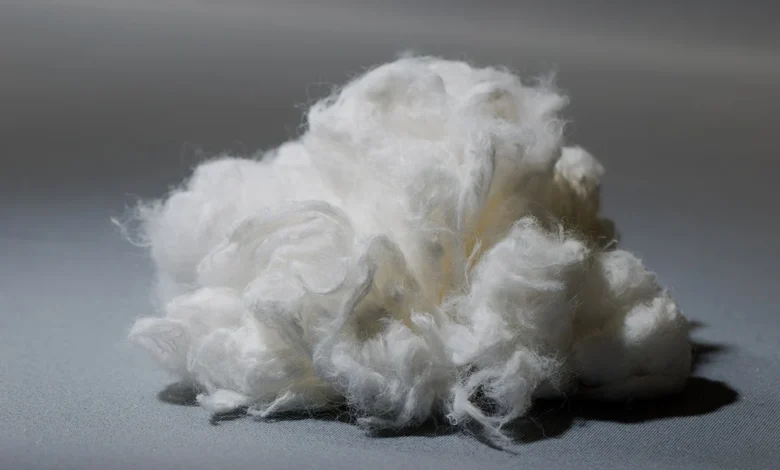
Outlast Technologies, the Heidenheim-based leader in advanced temperature-regulating materials, has officially entered a new phase of commercial development for its proprietary Aersulate insulation technology. Following a series of rigorous performance evaluations, the company confirmed on September 11, 2026, that initial testing with prospective partners in the sportswear and military sectors has yielded highly promising results. By integrating high-performance Naerogel—a sophisticated aerogel material supplied by the Swedish innovator Svenska Aerogel—Outlast is positioning itself to disrupt the traditional thermal insulation market, which has long struggled to balance extreme thermal protection with the need for reduced garment bulk.
The transition of Aersulate from a laboratory-based proof-of-concept to a commercially viable textile solution marks a significant milestone in the evolution of high-tech insulation. As global demand for high-performance apparel grows, particularly in sectors where agility and weight reduction are mission-critical, the deployment of aerogel-based technologies is increasingly viewed as the next frontier in material science.
A Chronology of Innovation and Strategic Scaling
The journey toward Aersulate’s current market readiness did not happen in a vacuum. It is the culmination of years of R&D and strategic supply chain alignment. The chronology of this development underscores a deliberate, phased approach to market entry:
- 2023–2024: Outlast Technologies initiates exploratory research into integrating aerogels into textile substrates. The primary challenge identified was maintaining the structural integrity of the aerogel particles while ensuring the textile remains flexible, breathable, and durable enough for active use.
- Late 2025: Outlast places a significant ramp-up order for Naerogel with Svenska Aerogel. This move signaled a shift in strategy from small-scale prototyping to preparing for industrial-level manufacturing.
- Early 2026: Outlast begins distributing test samples of the Aersulate material to select industry partners within the performance sportswear and military procurement sectors.
- September 2026: Formal reports indicate that initial testing has surpassed performance benchmarks, leading to expanded commercial discussions with prospective clients.
This timeline reflects a disciplined maturation process. By securing a reliable supply of Naerogel in 2025, Outlast ensured that it could move rapidly once the performance characteristics of the material were validated by end-users, thereby minimizing the lag time between successful testing and potential product launch.
The Science of Aersulate and the Aerogel Advantage
To understand the significance of Aersulate, one must understand the unique physical properties of aerogel. Often referred to as "frozen smoke," aerogel is a synthetic, highly porous, ultralight material derived from a gel in which the liquid component has been replaced with a gas. It is widely recognized as one of the most effective thermal insulators in existence.
In traditional textile applications, insulation is achieved through the loft of synthetic fibers or down, which trap air. However, these materials require significant volume—or "bulk"—to provide high levels of warmth. In contrast, Naerogel allows for a radical reduction in thickness. Because the aerogel structure is so efficient at preventing thermal conductivity, Aersulate can provide equivalent or superior warmth to traditional insulation while utilizing a fraction of the physical mass.

For the military and professional sports industries, this offers a twofold advantage. First, it allows for greater freedom of movement, as the garments are less restrictive. Second, it reduces the overall weight burden on the wearer, whether that person is a soldier carrying heavy equipment or an alpine athlete navigating a steep ascent. The ability to maintain core body temperature without the "Michelin-man" effect of traditional cold-weather gear represents a major leap forward in ergonomic design.
Industry Implications: Military and Sports Sectors
The focus on military and sportswear applications is not coincidental. Both industries are under constant pressure to enhance performance through material innovation.
In the military sector, the requirements for personal protective equipment (PPE) are increasingly stringent. Modern combat gear must be lightweight to reduce fatigue during extended missions while providing extreme cold-weather protection for deployments in arctic or high-altitude environments. Furthermore, as the nature of warfare shifts toward more mobile, rapid-response operations, the modularity and weight of a soldier’s kit become critical variables. Aersulate’s thin profile allows for better layering strategies, where the insulation layer does not interfere with the range of motion required for operating weaponry or tactical communication equipment.
Similarly, in the premium sportswear market—specifically high-altitude mountaineering, ski-touring, and cold-weather endurance sports—the "warmth-to-weight" ratio is the gold standard by which performance is measured. Athletes are constantly seeking ways to shed grams without sacrificing protection against the elements. If Aersulate can successfully bridge the gap between heavy-duty thermal insulation and lightweight base-layer technology, it could fundamentally alter the construction of winter apparel, allowing for thinner, more streamlined designs that do not compromise on survival-critical thermal properties.
Official Responses and Strategic Vision
Martin Bentz, CEO of Outlast Technologies, has emphasized that the recent positive test results serve as a catalyst for deeper market integration. "Sportswear and military products are areas where thin, lightweight insulation could offer valuable benefits," Bentz noted in a recent company statement. "We are exploring potential applications with companies in these sectors, and the positive initial test results encourage us to pursue these opportunities further."
The enthusiasm from leadership suggests that Outlast is confident in the scalability of the production process. A critical challenge for any emerging material is the transition from pilot testing to mass production; however, the partnership with Svenska Aerogel provides a solid foundation. By leveraging the expertise of a specialized supplier, Outlast is insulating itself against supply chain volatility, which is a common pitfall for companies attempting to introduce new, high-tech materials into traditional manufacturing ecosystems.
The Broader Impact: Sustainability and Efficiency
Beyond the immediate performance benefits, the integration of Aersulate carries implications for the broader textile industry. As consumer and regulatory demand for sustainable manufacturing grows, the ability to create thinner, longer-lasting, and more versatile insulation could potentially reduce the raw material footprint of cold-weather garments.

Furthermore, Outlast’s history of innovation—which includes high-profile collaborations with NASA for the Orion spacecraft—lends significant credibility to their current efforts. The firm has a proven track record of transferring aerospace-grade thermal management technologies into commercial textiles. This pedigree suggests that Aersulate is not merely a theoretical exercise but a product with a clear path to market adoption.
Analysis of Future Challenges
While the initial results are promising, the company faces several hurdles as it moves toward mass-market deployment. The primary challenge remains the cost of production. Aerogel-based materials are historically more expensive to produce than conventional polyester insulation or down. For Outlast to achieve widespread adoption, they must demonstrate to their partners that the performance benefits—such as increased garment longevity, reduced weight, and superior thermal regulation—justify the premium cost.
Additionally, the durability of aerogel particles under the stresses of repeated washing, mechanical friction, and compression must be continuously monitored. Textile products endure significant wear and tear that industrial materials do not, and ensuring that Aersulate retains its insulating properties after dozens of wash cycles will be a key metric for success in the next phase of commercial evaluation.
Conclusion: A New Standard for Thermal Management
The reports emerging from Heidenheim indicate that Outlast Technologies is well-positioned to lead the next generation of performance insulation. By successfully navigating the complexities of integrating Naerogel into textile structures, the company has cleared the most significant technical barrier to entry. As discussions with military contractors and global sportswear brands intensify, the industry will be watching closely to see how quickly Aersulate can move from prototype to the retail shelves and into the field.
The successful implementation of this technology would signify more than just a new product; it would represent a fundamental shift in how the textile industry approaches thermal regulation, proving that the future of warmth lies not in adding bulk, but in smarter, more efficient material engineering. As 2026 progresses, the market awaits further updates on specific partnerships and the timeline for the first commercial Aersulate-equipped products to reach the end consumer.