Arma Charts Its Next Chapter: How the Dutch Leather Label Scaled Success Through Smart Pricing and Family Heritage

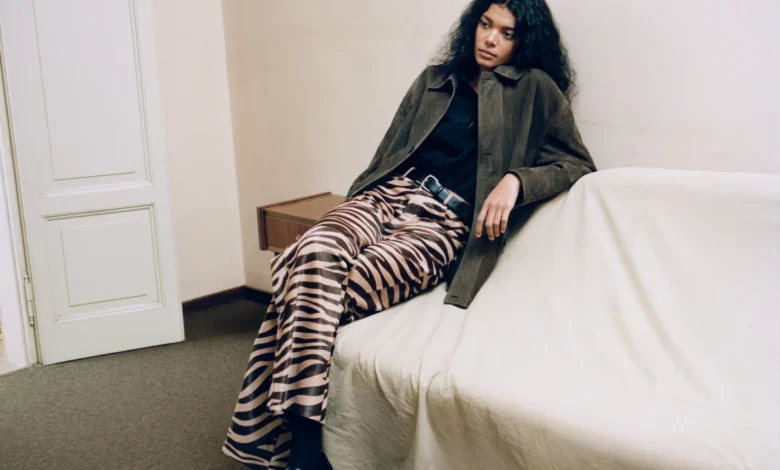
NEW YORK — In an era where the global luxury market has continuously recalibrated following years of aggressive price hikes and post-pandemic economic adjustments, a distinct niche has opened for contemporary apparel brands that successfully balance elevated craftsmanship with accessible pricing. Browsing the women’s contemporary and designer sections at major retailers and premier specialty stores on both sides of the Atlantic, discerning shoppers are increasingly likely to encounter Arma, a Dutch leather specialist renowned for its contemporary apparel and refreshingly reasonable price point. While traditional luxury labels push outerwear deep into multi-thousand-dollar territory, Arma has steadfastly remained committed to its established lane, offering premium leather and suede outerwear safely anchored between $700 and $1,700.
This deliberate pricing strategy, combined with an uncompromising approach to quality and vertical integration, has transformed the Amsterdam-based brand into a quiet powerhouse in contemporary fashion. As of the fall 2026 season, the collection commands prominent floor space at elite global destinations including Mytheresa, Nordstrom, Net-a-Porter, Bergdorf Goodman, Selfridges, and Le Bon Marché, the latter of which notably doubled its order volume for the year. Net-a-Porter has likewise significantly increased its financial and inventory commitment for fall 2026, building upon an outstanding debut season the year prior that proved consumer appetite for the brand’s unique value proposition is robust and sustained.
The Roots of a Family Enterprise
The story of Arma began more than four decades ago, long before the brand became a staple of modern European and American wardrobes. Founded in 1985 by Aram Aykaz alongside three business partners in Amsterdam, the company was envisioned as a bridge between traditional leather craftsmanship and contemporary European design. In its earliest iterations, the enterprise primarily focused on menswear, establishing a reputation for durability, clean lines, and meticulous construction. Over time, however, the shifting tides of consumer preferences steered the brand toward the women’s sector, which now firmly occupies center stage.
Today, the company is helmed by the second generation of the Aykaz family. Aram’s daughter, Maral Aykaz, oversees all creative direction, steering the aesthetic evolution of the brand, while his son, Arden Aykaz, leads production and operations. Serving jointly as co-CEOs, the siblings have meticulously charted Arma’s next chapter of growth, balancing commercial expansion with the core family values instilled by their father.

It has always been a family affair at Arma, defined as much by deep-seated personal bonds as by formal corporate structure. In addition to Maral and Arden, their mother has played an integral role throughout the company’s history, and various cousins currently occupy key positions within the organization. Even Aram Aykaz, despite stepping back from daily executive duties, remains closely involved as an informal advisor and mentor. This tight-knit operational philosophy has dictated how the company approaches partnerships, customer relations, and long-term business strategy.
As Maral Aykaz frequently recalls of her father’s foundational teachings: “What my father always told us from the beginning is that having a good partnership — if your stores are happy and your customers are happy — then we are going to be happy. Otherwise, you will not succeed.” This philosophy has woven its way into every facet of the business since inception, serving as a guiding compass through various shifts in the global retail landscape.
Mastering the Wholesale and Specialty Store Channel
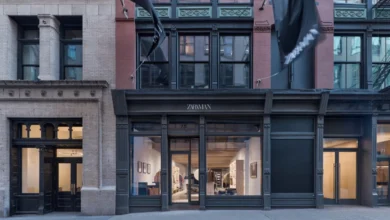
While department stores and premier e-commerce platforms provide Arma with invaluable global visibility and scale, the brand’s success with independent specialty stores remains a cornerstone of its commercial strategy. Specialty boutiques and multibrand retailers account for an impressive 85 out of the 100 physical doors that currently carry the brand within the United States. Consequently, maintaining tight control over product assortment and nurturing close, collaborative relationships with independent buyers are pivotal to the company’s ongoing health.
The brand’s performance within U.S. specialty stores has been exceptionally strong, consistently generating higher-than-average order values driven by rapid sell-throughs, in-season reorders, and agile replenishment. This supply chain agility is largely made possible by Arma’s unique manufacturing setup, which relies on its own dedicated factory rather than outsourcing to third-party contractors subject to rigid production schedules.
Detailing the mechanics of this operational advantage, Arden Aykaz explains how the company manages in-season demand without incurring excessive waste or delays. “We always add extra orders from the skin, which we keep as let’s say stock, and then at the moment when we see a specific item or color running well, we try to reproduce from the leftover stock skins that we have,” he notes. Within Europe, this responsive infrastructure enables the brand to deliver reorders directly to stores within an impressive window of two weeks. While logistics for the United States involve a slightly more complex supply chain and extended transit times, replenishment typically takes between two to four weeks—a remarkably swift turnaround for international leather goods.

To further support its rapidly expanding U.S. wholesale business, Arma is slated to begin direct shipping from a dedicated U.S. warehouse starting in October. This strategic logistical upgrade is expected to streamline fulfillment, reduce shipping times for American retail partners, and solidify the U.S. position as the brand’s fastest-growing market, closely trailing the DACH region (Germany, Austria, and Switzerland), which historically remains its largest market overall.
Global Momentum and Strategic Partnerships
Arma’s international footprint is expanding well beyond its core European and North American strongholds. In Milan, a global capital of fashion and retail innovation, leading multibrand boutique Antonia recently introduced the label, promptly selling through its entire initial inventory within weeks of the launch. This rapid consumer adoption underscores the broad, cross-border appeal of Arma’s design ethos.
A key facilitator of this recent wave of international expansion has been Parrot, Arma’s dedicated international sales agency. Reflecting on the partnership’s impact, Arden Aykaz notes that collaborating with an external sales agency proved to be a major catalyst for growth. “Once we started working with our international agent, it just went so fast, and I think it’s because the product was working so well and we had a good foundation already,” Aykaz observes. “We had our factory and good product.”
Product Evolution and the Sourcing Advantage
Product-wise, Arma has carved out a distinct identity through its mastery of leather and suede outerwear, particularly its diverse iterations of the classic bomber silhouette. Over recent seasons, the product range has expanded thoughtfully into sophisticated shearling coats, as well as a growing assortment of separates, including tailored leather skirts and trousers crafted from buttery-soft leather and rich suede textures. While the brand initially built its reputation on men’s tailoring back in the 1980s, women’s apparel has definitively taken center stage, driving the vast majority of contemporary revenue and retail excitement.

Beyond distribution networks and commercial partnerships, Arma’s ultimate competitive edge lies in its uncompromising approach to material sourcing and vertical manufacturing. Maral and Arden’s father, who grew up in Turkey, spent decades cultivating deep, long-standing relationships with local tanneries before eventually establishing the brand’s proprietary factory in Safranbolu, located approximately 400 kilometers from Istanbul.
The choice of Safranbolu was unconventional. Situated several hours away from the country’s primary international aviation and shipping hubs, the location was not selected out of cold logistical calculation. Rather, it was a profoundly people-first decision driven by the company’s longtime general manager, who expressed a strong desire to return to his hometown. That personal connection ultimately fostered a manufacturing environment defined by loyalty, generational skill, and stability. The general manager’s meticulous oversight and expert craftsmanship proved instrumental in building a production facility fully capable of meeting Arma’s exacting international standards.
Market Implications and Economic Analysis
The trajectory of Arma offers a compelling case study in contemporary fashion economics. Amid a broader macroeconomic climate characterized by inflationary pressures, shifting consumer spending habits, and widespread retail fatigue, luxury conglomerates have faced significant pushback after pushing price points to exclusionary heights. By intentionally occupying the contemporary "sweet spot" between mass-market retailers and ultra-luxury houses, Arma has captured a lucrative demographic of consumers who refuse to compromise on material quality yet demand rational pricing.
Furthermore, the brand’s hybrid operational model—combining family-owned manufacturing roots with modern digital wholesale partnerships and agile local warehousing—mitigates many of the supply chain vulnerabilities that frequently plague independent labels. By maintaining ownership over its production facilities and retaining raw material reserves, Arma retains the flexibility to pivot quickly in response to retail trends, minimizing dead stock while maximizing sell-through efficiency.
As Arma approaches its fourth decade in business, the brand demonstrates that sustainable growth does not necessarily require sacrificing heritage for rapid corporate scaling. By blending the operational wisdom of its founder with the modern strategic vision of its second-generation co-CEOs, Arma has positioned itself to navigate the complexities of the global fashion market while remaining faithful to the simple, enduring principle that happy partners and satisfied customers are the ultimate benchmarks of lasting success.