Retailers Warn of Impending Price Hikes Ahead of Chancellor John Healey’s Critical Autumn Budget

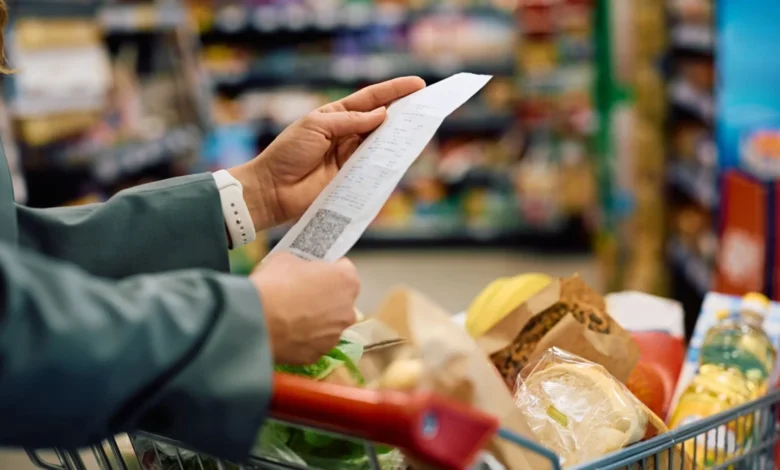
The British retail sector stands at a precarious juncture as Chancellor John Healey prepares to deliver his inaugural Autumn Budget, with industry leaders warning that the current economic climate is reaching a breaking point. Following a significant uptick in shop price inflation to 2.1% in October—a sharp rise from 1.4% in September—the British Retail Consortium (BRC) has issued an urgent call for government intervention to prevent a sustained period of rising costs for consumers. This inflation surge, confirmed by data from the BRC and NielsenIQ (NIQ), serves as a bellwether for the broader financial health of the UK high street, which is currently grappling with the highest levels of distress seen in two decades.
The economic landscape heading into the Budget is characterized by a confluence of rising operational expenses, including soaring energy bills, packaging taxes, and increased employment costs. Retailers argue that they have reached the limit of their ability to absorb these expenses, meaning that any further fiscal burdens imposed by the government will inevitably be passed on to the public.
The Anatomy of an Inflationary Spike
The transition from 1.4% to 2.1% inflation in a single month is not merely a statistical fluctuation; it reflects the reality of supply chain pressures and labor market tightness. For months, retailers have been operating on thin margins, attempting to shield households from the full force of rising costs. However, the BRC’s leadership suggests that the “cushion” provided by the retail sector has evaporated.
Helen Dickinson, Chief Executive of the BRC, has been vocal in her assessment of the situation. “Retailers cannot endlessly swallow higher business rates, employment costs, energy bills, and packaging taxes,” she stated. The BRC’s proposed solution is a three-pronged fiscal strategy: a reduction in employment costs, the cancellation of a scheduled 3.5% business rates increase, and the removal of physical retail outlets from the high-value surtax. Should these measures fail to materialize in the Chancellor’s address, the BRC warns that October’s inflation figure is likely only the beginning of a longer upward trend.
A Two-Decade High in Financial Distress
The urgency of the retailers’ plea is underscored by alarming data from insolvency experts at BTG, which reveals that 738,000 British businesses are currently experiencing significant financial distress—a figure that represents a 20-year high. This widespread instability is not confined to large corporations; in fact, the small business sector is arguably facing the most severe existential threat.
According to research conducted by Novuna Business Finance, 86% of small business owners believe that the forthcoming Budget holds the potential to cause further damage to their financial stability and long-term growth prospects. This sentiment is echoed by Jacyn Heavens, CEO of Epos Now, who highlighted the human cost of the current economic environment.
“Every day we see what running a small business in the UK really looks like,” Heavens observed. She painted a picture of a sector populated by individuals who are sacrificing their own wages to ensure their staff are paid, working extreme hours, and serving as the bedrock of local communities. For these entrepreneurs, the accumulation of increased National Insurance contributions, energy tariffs, and business rates has left them with no financial breathing room. The emotional and financial exhaustion within the sector is palpable, raising questions about the future of the high street if support is not forthcoming.
Chronology of the Crisis
The road to this week’s Budget has been marked by several key developments that have escalated tensions between the retail sector and the Treasury:
- Q1 2024: Retailers report initial signs of margin compression as energy prices remain persistently high despite the tapering of the Energy Bill Relief Scheme.
- Summer 2024: The BRC and other trade bodies begin lobbying the government for a reform of the business rates system, labeling the current structure as "outdated" and "anti-growth."
- September 2024: Shop price inflation is recorded at 1.4%, a period of relative stability that raised hopes for a softening of the cost-of-living crisis.
- Early October 2024: New insolvency data from BTG highlights the scale of business distress, bringing the issue to the forefront of national policy discussions.
- Late October 2024: Inflation figures jump to 2.1%, prompting the BRC to issue a public warning to the Chancellor just 48 hours before the Budget announcement.
Policy Implications and Structural Challenges
The central conflict for Chancellor Healey involves balancing the need to plug a multi-billion-pound deficit with the imperative to stimulate economic growth. The retail sector, which is the UK’s largest private-sector employer, maintains that the government’s approach to business taxation is self-defeating. By increasing the cost of operation, the government risks suppressing the very tax revenues it seeks to generate.
Industry experts point to the "business rates multiplier" as a critical point of failure. A 3.5% increase in business rates, often based on outdated property valuations, disproportionately affects physical stores compared to online-only retailers who have smaller footprints. Critics argue that the government’s failure to rebalance this system incentivizes the decline of the high street.
Furthermore, there is a growing debate regarding the implementation of a potential online sales tax. While some advocate for this as a way to level the playing field, others fear it could lead to higher prices for consumers who have become increasingly reliant on e-commerce during the post-pandemic period. The pressure on the Chancellor to "slash employment costs" is particularly acute, given that any increase in employer National Insurance contributions would act as an immediate tax on hiring, further discouraging job creation in an industry that traditionally offers entry-level opportunities for young people.
Regional and Community Impact
The retail sector serves as a barometer for regional health. When a shop closes, the impact is rarely confined to a single balance sheet. It often ripples through local supply chains, reduces footfall for neighboring businesses, and diminishes the tax base for local councils. As Jacyn Heavens noted, the small business owners who are struggling are the same individuals who sponsor local sports teams and provide first-job opportunities.
If the Budget fails to provide "breathing space"—such as an increase in the Small Business Rates Relief threshold or a reduction in hospitality VAT—the risk is a "hollowing out" of city centers. Retail analysts suggest that we are entering a phase of consolidation where only those businesses with significant capital reserves will be able to survive, while independent traders and smaller chains may be forced into liquidation. This shift would not only damage the diversity of the UK retail landscape but would also result in a loss of community cohesion.
Broader Economic Outlook
Beyond the immediate concerns of the retail sector, the Chancellor’s decisions will be scrutinized by the Bank of England and global financial markets. If the government’s fiscal policy is perceived as inflationary, it could complicate the Bank of England’s efforts to manage interest rates. The "price tag" mentioned by the BRC is a direct reference to the transmission mechanism of inflation: when businesses can no longer absorb costs, they increase prices, which in turn fuels the Consumer Price Index (CPI), potentially keeping interest rates higher for longer.
The question of whether retailers can invest in growth or are merely "fighting to stand still" is the defining narrative of this Budget. Investment requires a stable regulatory and fiscal environment, something that the retail sector argues has been absent for the better part of the last decade. Without a coherent long-term strategy that addresses the structural inequities of business taxation and the rising costs of employment, the retail sector faces a period of stagnation that could hamper the UK’s broader economic recovery.
The Path Forward
As the clock ticks down to the Chancellor’s statement, the retail sector remains in a state of cautious apprehension. The message from the BRC, Epos Now, and other stakeholders is clear: the current trajectory is unsustainable. Whether the government chooses to heed these warnings and provide targeted relief or proceeds with planned tax increases will define the commercial landscape for the coming year.
For the millions of households already feeling the squeeze, the outcome of this Budget will be felt in the aisles of their local supermarkets and the windows of their high street shops. The government faces a difficult balancing act, but the consensus among industry leaders is that failing to support the retail sector will carry a much heavier cost in the long run. The resilience of the British high street has been tested repeatedly over the last few years; however, as businesses face record levels of financial distress, the capacity for further endurance is rapidly reaching its limit. The Chancellor’s choices this week will likely determine the survival of thousands of businesses and the future trajectory of consumer prices across the nation.