The Evolution of the ID Bracelet from Personal Keepsake to Iconic Modern Jewelry Staple

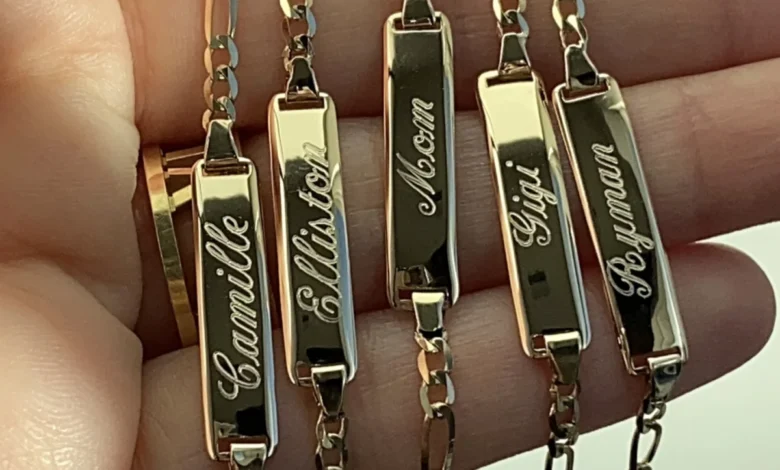
The identity bracelet, commonly referred to as the ID bracelet, has maintained a consistent presence in the jewelry market for over a century. Originally rooted in functional military applications, the accessory has transitioned into a highly personalized fashion statement. This shift is highlighted by the recent market trends involving customizable fine jewelry, where the ID bracelet has re-emerged as a core component of both luxury and accessible jewelry collections. The history of this accessory, its technical specifications, and the current resurgence in consumer demand reflect broader shifts in the jewelry industry toward pieces that offer both durability and individual sentiment.
Historical Context and Military Origins
The ID bracelet gained significant prominence during the early 20th century, specifically through its utility in military conflicts. During World War I and World War II, identity tags were essential for personnel identification, often worn as dog tags or engraved bracelets to ensure medical information and personal identity could be verified under duress. Following the conclusion of these conflicts, the design language of the military ID bracelet—characterized by a flat metal plate attached to a sturdy chain—was adopted by the civilian market.
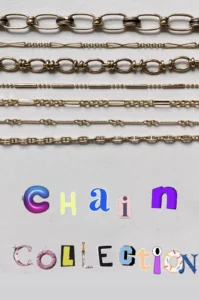
By the mid-20th century, the ID bracelet had become a fixture in youth culture, often gifted as a rite of passage or a token of romantic commitment. The structural design typically utilizes a curb or Figaro link chain, chosen for its durability and ease of wear. This historical trajectory explains the item’s enduring appeal; it occupies a space between a functional tool and a sentimental heirloom.
Technical Evolution and Design Standards
In contemporary jewelry manufacturing, the design of an ID bracelet requires a focus on metallurgy and clasp engineering. The standard ID bracelet consists of three primary components: the plate, the links, and the closure mechanism.
Modern iterations, such as those integrated into high-end e-commerce lines, often utilize 14k or 18k gold to ensure longevity. The Figaro chain, which features a repeating pattern of two or three small circular links followed by one elongated oval link, is favored for its aesthetic balance and resistance to twisting. From a technical standpoint, the width of the links is critical; industry data suggests that a 3mm to 5mm width provides the optimal balance between a delicate, feminine aesthetic and the structural integrity required for daily wear.
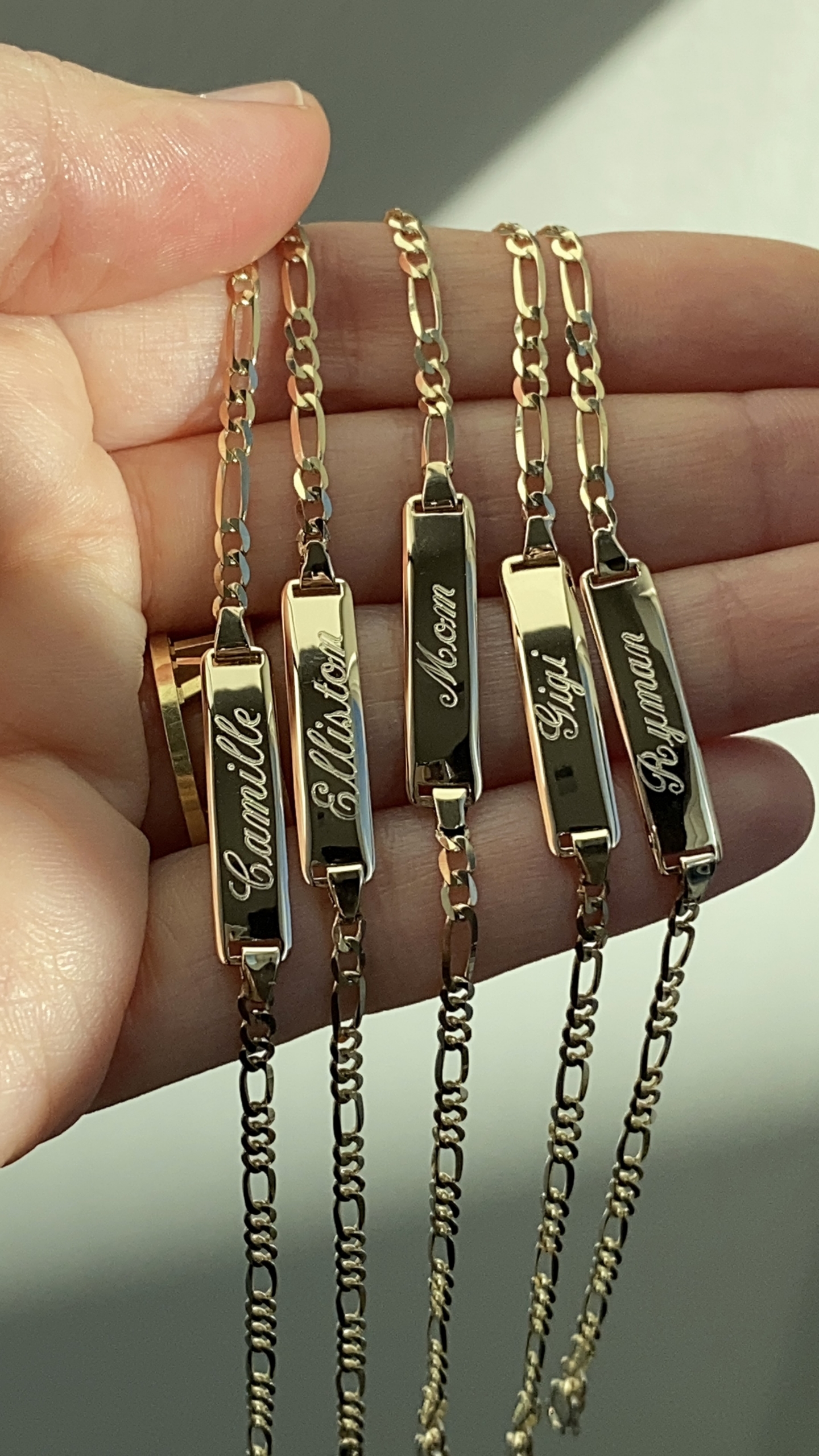
The plate itself serves as the primary canvas for personalization. Engraving techniques have evolved from manual hand-engraving to laser-engraving, which allows for intricate fonts and high-precision symbols. This evolution has made the ID bracelet a preferred vehicle for commemorative jewelry, allowing consumers to mark significant life milestones, such as the birth of a child or an anniversary, directly onto the piece.
Industry Trends in Personalized Fine Jewelry
The jewelry industry has seen a marked increase in demand for "customized luxury" over the past decade. Market research indicates that consumers are increasingly prioritizing pieces that signify personal narratives. According to jewelry retail analysis, personalized items—specifically those involving monograms, names, or dates—outperform generic inventory by approximately 22% in mid-market segments.
This trend is driven by a shift in consumer behavior where purchasers prioritize long-term utility. The "buy-it-for-life" philosophy has led to a decline in the purchase of low-quality costume jewelry in favor of higher-quality, heirloom-grade pieces. Retailers have responded by expanding their engraving services and offering custom-length chains, effectively turning the ID bracelet into a bespoke product. The durability of the item, when crafted from solid gold rather than plated base metals, allows for decades of continuous wear, a characteristic that resonates with modern sustainability-conscious shoppers.
Case Study: The Lifecycle of a Personal Collection
The transition of the ID bracelet from a youth-market accessory to a sophisticated jewelry staple is best observed through the lens of retail development. Many industry professionals note that their early exposure to jewelry sales—often characterized by exposure to diverse stock and the mechanics of retail—shapes their later design philosophies.
When a jewelry brand integrates a classic ID bracelet into its lineup, it often draws upon historical design specifications that have proven successful over time. For example, the incorporation of the Figaro link, a design element dating back to the mid-century, remains popular due to its ergonomic fit. Testing these items for long-term durability involves assessing how the clasp and the plate withstand daily exposure to elements, friction, and moisture. Current industry feedback shows that when an ID bracelet is constructed with a secure, heavy-duty clasp, the loss rate decreases significantly, reinforcing the item’s status as a daily-wear staple.
The Significance of Engraving and Sentiment
Engraving is the defining feature that differentiates the ID bracelet from standard chain bracelets. Historically, this was restricted to names or blood types. Today, the scope of engraving has expanded to include coordinates, symbolic dates, and minimalist iconography. This personalization serves a dual purpose: it creates an emotional attachment to the piece and increases its value as an heirloom.

Retailers who offer integrated engraving services report that customers frequently choose inscriptions that serve as "anchors" for their daily lives. The psychological impact of wearing a personalized piece of jewelry is often cited by consumers as a primary reason for high customer satisfaction rates. Unlike other forms of fashion, which are subject to rapid trend cycles, the personalized ID bracelet remains largely immune to the volatility of fashion seasons, cementing its place as a permanent fixture in the jewelry box.
Broader Market Implications
The resurgence of the ID bracelet is part of a larger trend of "new vintage" jewelry, where classic silhouettes are reimagined with modern production standards. This has significant implications for the jewelry sector:
- Supply Chain Focus: Retailers are now more focused on sourcing high-quality, solid metals to meet the demand for items that can be worn "24/7."
- Retail Strategy: There is an increasing reliance on digital interfaces for the customization process, allowing customers to preview their engravings before finalizing an order.
- Consumer Expectations: The expectation for "durable luxury" has forced manufacturers to improve the quality of findings—the functional parts of jewelry such as clasps and jump rings—to ensure that the product does not fail under the strain of continuous wear.
The ID bracelet serves as a microcosm for the jewelry industry at large. It is a piece that bridges the gap between historical utility and modern luxury. As consumers continue to seek out items that offer personal meaning, the demand for high-quality, customizable jewelry is projected to maintain its upward trajectory. The ID bracelet, with its simple but effective design, remains a testament to the fact that the most enduring items in fashion are often those that serve both a functional purpose and a personal, emotional role in the wearer’s life.
By analyzing the lifecycle of such pieces—from the initial acquisition in a retail setting to the long-term maintenance and personalization—the jewelry industry can better understand the factors that drive repeat business and brand loyalty. The shift toward permanent, everyday jewelry indicates that the market is moving away from disposable fashion and toward a model of investment and legacy, a shift that the ID bracelet is uniquely positioned to occupy for the foreseeable future.