Luk Fook Holdings Reports Resilient Second-Quarter Growth Driven by Surging Gold Demand and International Expansion

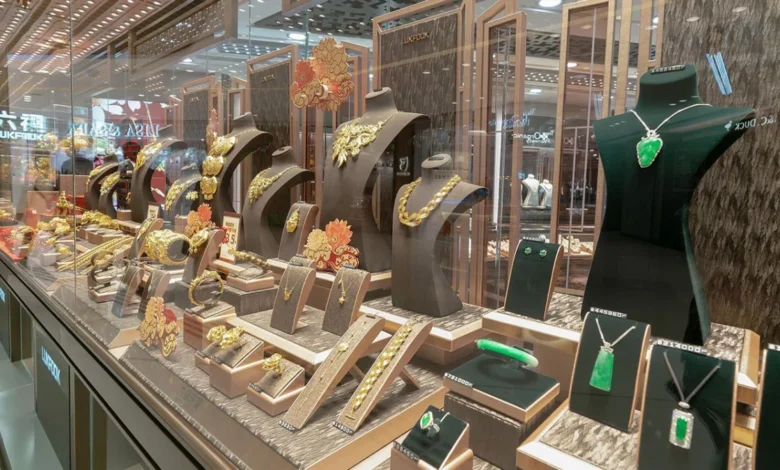
Luk Fook Holdings International Limited, one of Hong Kong’s premier retail jewelers, has reported a solid financial recovery for the second quarter of its fiscal year. Driven primarily by a robust consumer appetite for weight-based gold products across its key markets in Hong Kong, Macau, and mainland China, alongside a notable stabilization in the demand for diamond jewelry, the company managed to post positive overall revenue growth. This performance underscores the brand’s resilience in navigating a complex macroeconomic landscape characterized by shifting consumer preferences and regional economic headwinds.
According to financial disclosures released by the company last week, total group revenue for the three-month period ending September 30 improved by 8% compared to the same period in the previous fiscal year. This upward trajectory was further reflected in the group’s retail metrics, notably same-store sales—a critical metric measuring the performance of self-operated retail locations that have been open for at least twelve months—which climbed by 12%. The results signal a stabilizing retail environment in core urban centers, even as broader consumer spending habits undergo structural shifts.
Regional Performance Disparities: Hong Kong, Macau, and Mainland China
A closer examination of the geographic breakdown reveals distinct regional trends that shaped Luk Fook’s quarterly performance. In the core markets of Hong Kong and Macau, retail sales experienced a significant rebound, increasing by 17% year on year. This growth was largely propelled by a staggering 24% surge in same-store sales of weight-based gold products, as local consumers and inbound tourists increasingly turned to gold as both a traditional adornment and a secure store of value amid global economic uncertainty.
Conversely, the performance of fixed-price jewelry in Hong Kong and Macau told a different story. Same-store sales for fixed-price jewelry categories fell by 13% overall. Within this segment, fixed-price gold products experienced a 10% drop, while fixed-price diamond goods demonstrated a modest recovery, rising 7%. This divergence highlights a consumer preference for weight-based bullion and traditional gold items over designer or branded fixed-price pieces, influenced by fluctuating precious metal valuations and tighter discretionary spending budgets.
On the mainland China front, overall sales slipped by 2% during the quarter. However, the underlying product categories mirrored the trends observed in the special administrative regions. Same-store sales of weight-based gold products on the mainland managed a 6% increase year on year, reflecting the enduring cultural and financial appeal of gold across Greater China. Meanwhile, the broader fixed-price jewelry category on the mainland slipped by 14%. A closer look at the fixed-price segments in mainland stores reveals that fixed-price gold items dipped by 3%, whereas fixed-price diamond goods recorded a strong 17% rebound, signaling pockets of resilient demand for high-end diamond pieces among mainland luxury buyers.
Chronology of Strategic Milestones and Retail Footprint Optimization
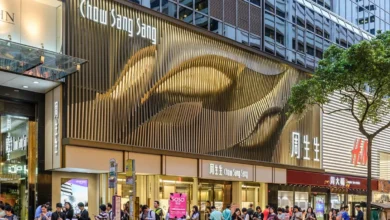
The second quarter also marked a period of aggressive strategic realignment and international milestone achievements for Luk Fook. During the first half of the financial year, the jeweler successfully re-entered the Singaporean market and inaugurated its very first retail storefront in London, representing a major step forward in its long-term globalization strategy. These strategic openings allowed the group to achieve its full-year international expansion targets well ahead of schedule.
Despite these global triumphs, the company continued to optimize its expansive retail network in response to shifting domestic market dynamics and rising operational costs. During the second quarter alone, the jeweler executed a net closure of 69 stores, primarily within mainland China. This rationalization of its retail footprint left the group with a total of 2,788 operating locations globally at the close of September. Management noted that this optimization is part of a deliberate strategy to prune underperforming outlets and focus capital on high-traffic, high-yield retail locations.
Macroeconomic Context and Industry Implications
The broader retail jewelry sector has faced a myriad of challenges over the past several years, ranging from volatile gold and diamond commodity prices to a sluggish economic recovery in mainland China. High interest rates, persistent geopolitical tensions across Eastern Europe and the Middle East, and fluctuating foreign exchange rates have further complicated the operating environment for luxury goods retailers operating in Asia.
Despite these persistent hurdles, retail analysts point out that traditional safe-haven assets like gold continue to act as a vital cushion for legacy jewelers. Luk Fook’s heavy reliance on weight-based gold products has historically insulated the company from steep downturns in discretionary spending. When equity markets show volatility and currency values fluctuate, consumers routinely pivot toward tangible assets, a behavior pattern that directly benefited Luk Fook’s bottom line during the reported quarter.
At the same time, the stabilization of diamond jewelry sales—highlighted by the 7% increase in Hong Kong and Macau and the 17% jump in mainland China for fixed-price diamond goods—offers an encouraging sign that consumer appetite for bridal and luxury gift items may be finding a cyclical floor after prolonged post-pandemic contractions.
Management Outlook and Future Projections
Looking ahead, the leadership team at Luk Fook remains cautiously optimistic regarding the group’s long-term commercial prospects. While acknowledging the ongoing risks posed by geopolitical instability and a softer-than-expected economic recovery on the mainland, the company’s strategic roadmap emphasizes aggressive international diversification.
Management has forecasted a net increase of 30 new shops in overseas markets outside of Greater China for the remainder of the financial year. At the same time, the brand plans to selectively continue its expansion on the mainland while accelerating its broader international growth trajectory. By balancing disciplined domestic store rationalization with targeted overseas expansion, Luk Fook aims to insulate itself from localized economic slowdowns while capturing new market share across the global diaspora and emerging luxury hubs.