Beijing Declaration Signed to Forge Stronger Economic Ties Between African Diamond Producers and China

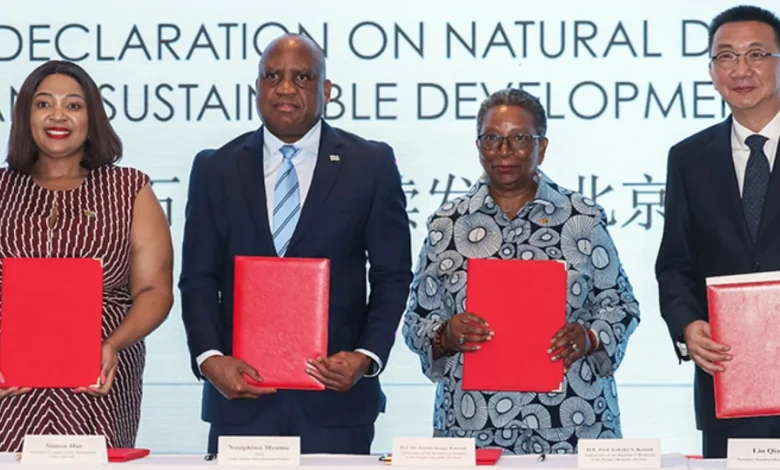
The global diamond industry entered a new phase of strategic alignment this week following the historic signing of the Beijing Declaration in China’s capital. The landmark agreement, forged between the Shanghai Diamond Exchange (SDE) and key representatives from major African diamond-producing nations, is designed to establish a direct and robust pipeline connecting mineral-rich African territories directly with the burgeoning Chinese jewelry retail market.
The high-profile event drew an array of dignitaries, government emissaries, and industry titans. Among those in attendance were official representatives from the southern African nations of Botswana, Namibia, and South Africa—regions that form the bedrock of the global diamond supply. They were joined by senior executives from China’s domestic jewelry trade, alongside a powerful contingent of leaders from the international natural-diamond sector. The convergence of these diverse stakeholders underscored the critical importance of transcontinental cooperation in maintaining the long-term viability, economic health, and consumer appeal of natural diamonds in an evolving global economy.
Background Context and the Genesis of the Beijing Declaration
The genesis of the Beijing Declaration can be traced back to years of shifting trade dynamics within the luxury goods sector and an increasing desire among producing nations to capture a greater share of the diamond value chain. Historically, rough diamonds mined in Africa have traveled through complex, circuitous routes involving multiple cutting and polishing centers—predominantly in India and Antwerp—before finally reaching retail shelves in major consumer hubs like mainland China.
While these traditional trading routes remain vital, African governments and industry leaders have increasingly emphasized the necessity of forging direct bilateral relationships with end-consumer markets. China represents one of the most critical consumer bases for luxury diamonds outside of the United States. By establishing a direct bridge between the Shanghai Diamond Exchange—China’s sole diamond bourse, which provides comprehensive customs, tax, and certification services—and African mining nations, the Beijing Declaration seeks to streamline supply chains, enhance transparency, and foster mutually beneficial economic partnerships.
Furthermore, the declaration is deeply anchored in broader geopolitical and developmental frameworks. It explicitly aligns with the United Nations Sustainable Development Goals (SDGs) and the African Union’s Agenda 2063. Agenda 2063 serves as Africa’s overarching master plan and blueprint for socioeconomic transformation, aiming to position the continent as a dominant global economic force by ensuring that its vast natural wealth directly fuels domestic industrialization, infrastructure development, and poverty alleviation rather than merely serving as an export commodity for foreign processing.
Chronology of the Beijing Summit
The road to the Beijing Declaration involved extensive diplomatic and commercial consultations between Chinese trade officials and African delegations, culminating in the formal proceedings this week.
Day One of the summit commenced with closed-door roundtable discussions focusing on global macro trends within the natural-diamond industry. Delegates analyzed the post-pandemic recovery of the luxury market, shifts in discretionary spending among urban middle-class consumers in China, and the growing consumer demand for ethical sourcing and supply chain traceability. Special attention was paid to the socioeconomic footprint of diamond mining in southern Africa, where revenues from the gemstone sector heavily fund national healthcare, education, and public infrastructure.
On Day Two, the formal plenary sessions opened to international industry observers. Representatives from Botswana, Namibia, and South Africa presented case studies detailing how diamond revenues have transformed their respective economies over the past several decades. They also outlined the modern challenges facing the industry, including regulatory pressures, synthetic diamond competition, and the necessity of ensuring that mining practices meet rigorous environmental standards.
The summit reached its climax with the official signing ceremony of the Beijing Declaration. The document was executed in the presence of an elite group of international diamond sector leaders who served as official witnesses to the historic pact. Among these high-ranking industry figures were Al Cook, Chief Executive Officer of De Beers Group; Amber Pepper, Chief Executive Officer of the Natural Diamond Council (NDC); and Emma Wade-Smith, participating on behalf of the World Diamond Council (WDC).
Supporting Data and Market Dynamics
The timing of the Beijing Declaration coincides with a transformative period for both the African mining sector and the Chinese consumer market. According to recent trade data, China remains the world’s second-largest market for diamond jewelry, surpassed only by the United States. Although the Chinese retail market has faced macroeconomic headwinds in recent years, including real estate sector adjustments and cautious consumer spending, the underlying long-term demand for genuine luxury goods remains resilient.
Market research highlighted during the Beijing summit indicates a profound evolution in Chinese consumer psychology. Modern buyers—particularly Millennials and Generation Z—are placing an unprecedented premium on authenticity, provenance, and the ethical narrative behind their purchases. Unlike previous generations of luxury consumers who prioritized brand name and sheer carat weight above all else, today’s Chinese buyers are increasingly inquisitive about where a diamond was mined, the environmental stewardship exercised by the mining company, and the tangible benefits the diamond discovery brought to the host country.
The Shanghai Diamond Exchange plays a pivotal role in this ecosystem. Established to regulate and promote the domestic diamond trade, the SDE acts as the gateway for all imported rough and polished diamonds entering China. By integrating customs facilitation, tax optimization, and rigorous gemological certification under one roof, the SDE ensures that the diamonds reaching Chinese storefronts are fully compliant with international standards, such as the Kimberley Process Certification Scheme, thereby reassuring conscientious consumers.
Official Responses and Industry Reactions
The signing of the Beijing Declaration drew widespread praise from international mining executives, government officials, and trade representatives, all of whom emphasized its potential to reshape the global diamond narrative.
Al Cook, CEO of De Beers Group, delivered a keynote address during the summit in which he underscored the moral and commercial imperative of sustainable diamond mining. "We want every diamond discovered to bring real, positive impact for the people and the land where we find these precious stones," Cook stated. He enthusiastically endorsed the newly minted agreement, adding, "We welcome the Beijing Declaration as a new framework to help us better link African diamond-producing countries with Chinese consumers."
Representatives from Botswana and Namibia echoed these sentiments, noting that the agreement provides a platform to tell the authentic story of African diamonds directly to the world’s most dynamic retail audience. For decades, the contribution of the diamond industry to nations like Botswana—where diamonds account for a significant portion of gross domestic product and export earnings—has been profound, transforming a developing nation into one of Africa’s most stable economies. African leaders at the summit stressed that establishing closer ties with Chinese consumers helps protect and promote this vital developmental narrative against the backdrop of rising competition from laboratory-grown diamonds.
The Natural Diamond Council and the World Diamond Council also lauded the initiative. Amber Pepper of the NDC emphasized that consumer trust is the absolute lifeblood of the natural diamond industry. By reinforcing transparency and showcasing the positive socioeconomic footprint of natural diamonds in Africa, the Beijing Declaration directly supports the NDC’s ongoing global marketing efforts to educate consumers on the irreplaceable emotional and intrinsic value of natural stones.
Broader Impact and Strategic Implications
The long-term implications of the Beijing Declaration extend far beyond bilateral trade statistics, touching upon geopolitical realignment, sustainability benchmarks, and the future marketing of luxury goods.
First, by creating a direct conduit between African producers and the Shanghai Diamond Exchange, the agreement has the potential to optimize supply chain logistics. Reducing intermediary handling can lead to greater cost efficiencies and allow producing nations to retain a larger portion of the value chain. This directly aligns with the objectives of African Union Agenda 2063, shifting the paradigm from raw material extraction to holistic economic partnership.
Second, the declaration establishes a unified front in the face of competitive pressures from the burgeoning synthetic (laboratory-grown) diamond sector. As man-made diamonds capture a growing share of the global jewelry market due to their lower price point, natural diamond stakeholders are increasingly relying on differentiation strategies. By emphasizing the unique heritage, geological rarity, and—crucially—the life-changing socioeconomic benefits that natural diamonds fund in African communities, the industry can better position natural stones as an ethical and emotionally resonant luxury choice.
Finally, the agreement signals a deepening of South-South economic cooperation. As traditional Western luxury markets mature, trade bridges between African resource holders and Asian consumer superpowers like China are becoming the defining corridors of 21st-century commerce. The Beijing Declaration serves as a blueprint for how primary producers and major consumer markets can collaborate institutional frameworks to ensure sustainable growth, mutual prosperity, and enduring consumer confidence for generations to come.