Ilford Pan F Plus Remains a Sharp, Dramatic, and Fine-Grained Staple for Analog Photographers

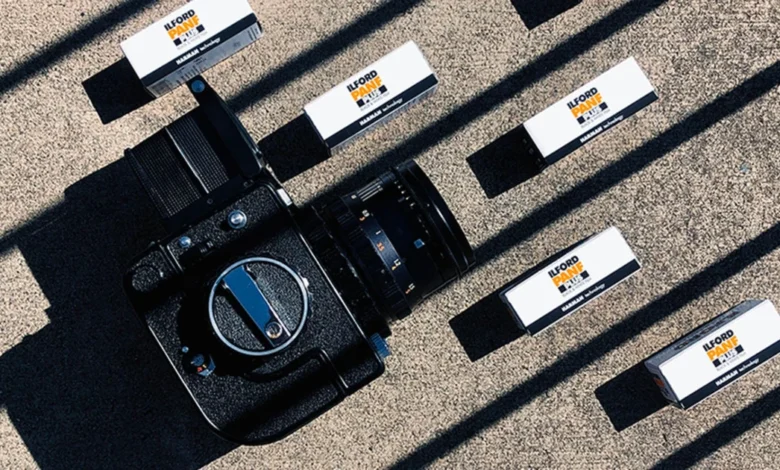
In the contemporary landscape of analog photography, where high-speed emulsions like Kodak Tri-X, Ilford HP5 Plus, and various ultra-sensitive 3200 ISO films frequently dominate commercial discussions, a specialized segment of the community remains dedicated to the opposite end of the sensitivity spectrum. Informally referred to by enthusiasts as the "Sub-100 Club," this group comprises low-speed, fine-grained panchromatic films engineered for applications where maximum resolution, tonal gradation, and structural clarity supersede low-light adaptability. Among these emulsions, Ilford Pan F Plus stands as a historically significant artifact and a continuing technical benchmark.
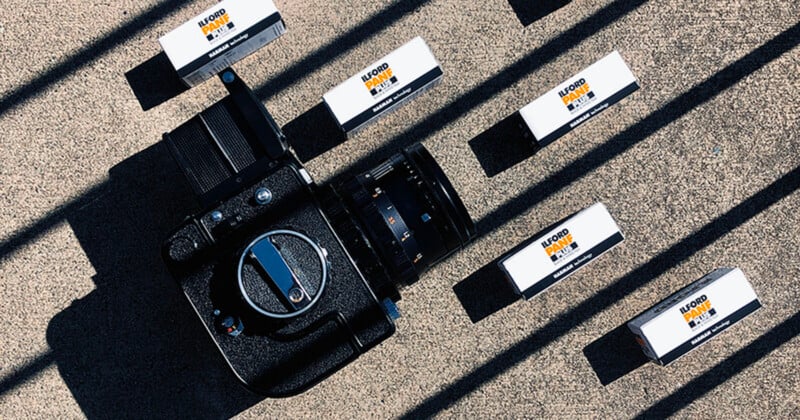
With a lineage tracing back to the post-World War II era, Pan F Plus occupies a distinct position in monochrome photography. While modern digital sensors and high-speed silver halide alternatives have shifted mainstream workflows toward convenience and instantaneous results, this slow-speed emulsion continues to attract architectural, landscape, and fine-art practitioners. Recent developments, including expanded format availability, have renewed interest in an emulsion that has quietly persisted through nearly eight decades of photographic evolution.

Historical Evolution and Emulsion Longevity
The origins of the Pan F emulsion date back to 1948, when Ilford introduced the film to meet the demands of photographers requiring an ultra-fine-grained medium for highly detailed work. In the decades that followed, the formula underwent iterative refinements to improve sharpness, contrast stability, and manufacturing consistency.

A significant milestone occurred in 1992, when the film was officially designated as Pan F Plus, reflecting updates to its chemical structure and emulsion coating techniques. Subsequent minor tweaks into the 2000s further stabilized its performance characteristics. Despite these technological updates, the film has maintained its core identity: a demanding, high-contrast medium that rewards precise exposure and meticulous darkroom technique.

While many legacy black-and-white films have been discontinued amid fluctuating global supply chains and the economic shifts of the digital transition, Ilford’s continued manufacturing of Pan F Plus highlights a persistent demand from traditionalists and institutions dedicated to silver-gelatin processes.

Technical Characteristics: Grain, Acutance, and Contrast
The primary appeal of Ilford Pan F Plus lies in its exceptional technical profile. Rated officially at ISO 50 for daylight conditions, the film yields virtually imperceptible grain structure, even when compared to standard 100 ISO alternatives. This characteristic enables 35mm shooters to achieve a level of clarity and detail traditionally associated with medium-format photography, while medium-format users can produce mural-sized enlargements without encountering distracting grain degradation.

Beyond grain size, Pan F Plus is engineered for high acutance—the subjective perception of sharpness created by enhanced local contrast at the boundaries of light and dark areas. This high edge contrast yields crisp separation between visual elements, making the film a historical favorite among architectural photographers who require precise architectural rendering and structural definition.

Conversely, this unforgiving clarity has historically divided portrait photographers. Because the emulsion accentuates surface textures, skin blemishes, and fine lines, it is rarely chosen for conventional portraiture unless the practitioner specifically intends to emphasize stark, dramatic facial topography.
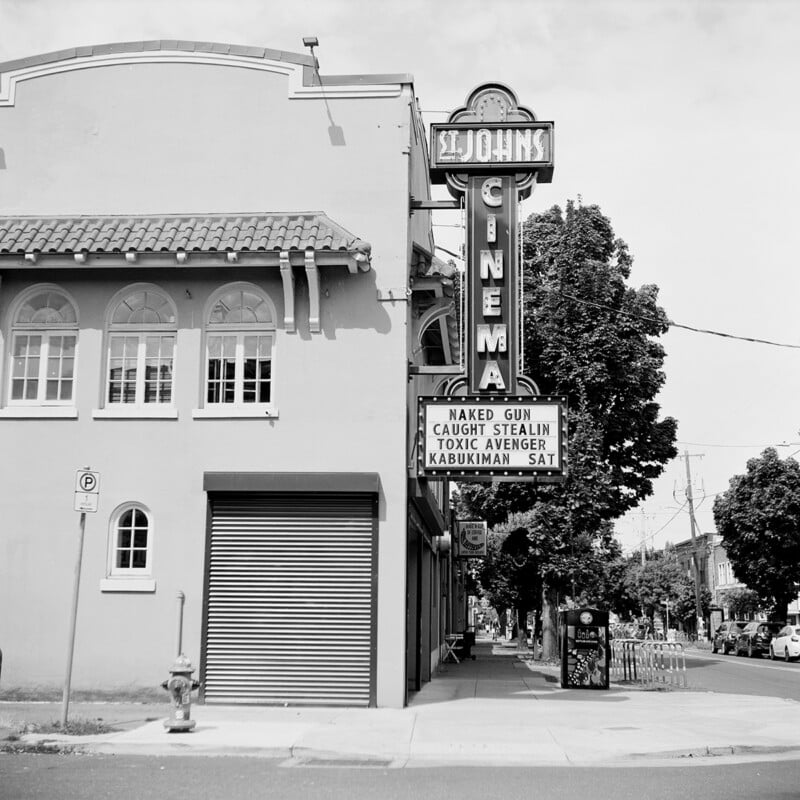
The tonal signature of Pan F Plus is frequently described as film noir-inspired. The emulsion produces deep, saturated blacks and brilliant, clean highlights, accompanied by midtones that lean toward a brooding, atmospheric character. Rather than offering a flat, neutral grayscale rendering, the film inherently favors high-contrast compositions, generating a distinct visual mood that distinguishes it from more forgiving, continuous-tone films like Ilford Delta 100 or Kodak T-Max 100.

Practical Considerations: Exposure, Reciprocity, and Latent Image Stability
Operating an ISO 50 film introduces distinct operational constraints. Photographers utilizing Pan F Plus must contend with limited exposure latitude in variable lighting conditions, typically necessitating bright daylight, tripod-mounted long exposures, or ultra-fast lenses (such as f/1.4 or f/1.2 primes) to achieve shallow depths of field outdoors.
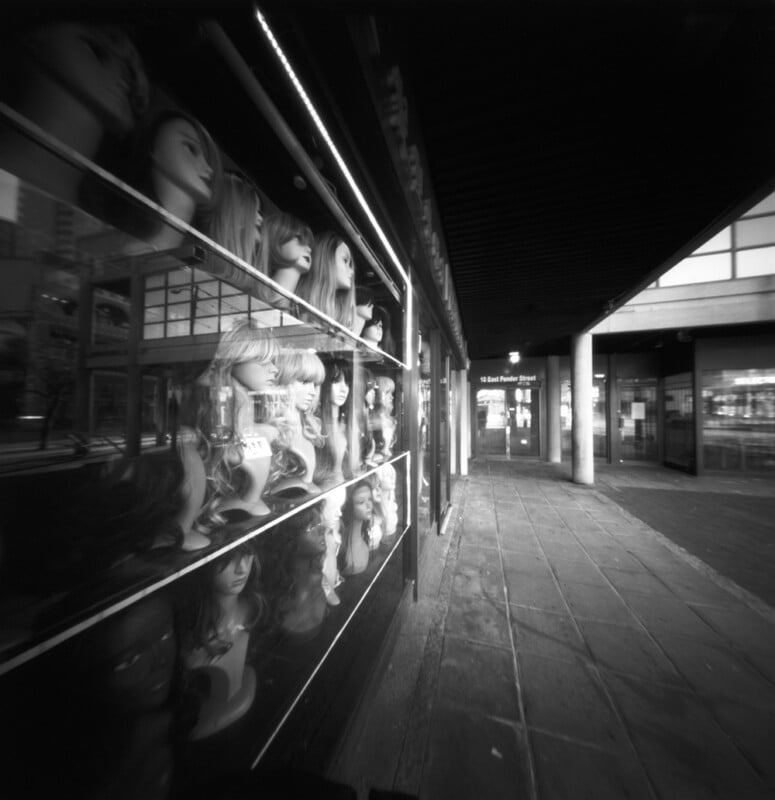
Furthermore, mastering Pan F Plus requires navigating specific physical limitations inherent to its chemical formulation:

- Reciprocity Failure: Like many slow-speed films, Pan F Plus experiences reciprocity failure during extended exposures. For exposures ranging from one to 10 seconds, manufacturers recommend adding an extra half-stop to one full stop of light. As exposure times increase toward 60 seconds, compensation requirements rise to approximately two full stops. While modern iterations of the emulsion exhibit improved reciprocity characteristics compared to formulations from the early 2000s, precise calculation remains essential for nighttime and long-exposure daytime photography.
- Latent Image Retention: A critical operational parameter for Pan F Plus is its sensitivity to delayed processing. The emulsion is known for poor latent image stability; exposed film that sits undeveloped for several months frequently yields thin, under-exposed-appearing negatives. Ilford’s official technical documentation recommends processing Pan F Plus within three months of exposure to preserve maximum density and tonal range.
Format Expansion and Market Availability
For decades, large-format photographers voiced a demand for Pan F Plus to be made available in sheet film configurations, restricted as it was primarily to 35mm cassettes and 120 roll film. Addressing this persistent market request, Ilford introduced Pan F Plus in 4×5 and 8×10 sheet film formats, broadening its utility for technical view camera operators seeking maximum resolution for landscape and studio architectural documentation.

Industry analysts note that the continued production and format expansion of niche analog products reflect a resilient, multi-generational market for traditional photography. Specialty laboratories, independent camera retailers, and dedicated film manufacturers continue to support these legacy workflows, driven by a consumer base that values tactile processes and archival physical media.

For practitioners willing to master its strict operational boundaries, Ilford Pan F Plus remains an enduring tool—one that offers unmatched sharpness, deep tonal contrast, and a distinct visual signature rooted in the foundational decades of modern photography.