Ilford Pan F Plus: A Deep Dive into the Grandparent of Ultra-Low ISO Black and White Film

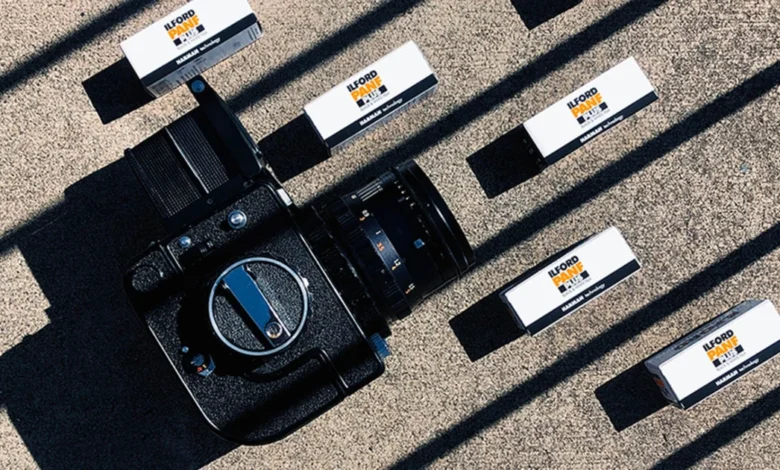
Within the specialized community of analog photography, a distinct category of emulsions commands a dedicated following: the "Sub-100 Club." Comprising photographic films with ultra-low ISO ratings falling below 100, these emulsions stand in stark contrast to high-speed counterparts like Ilford Delta 3200 or Kodak T-Max P3200. While high-speed films are engineered to capture action in dimly lit environments, ultra-low ISO stocks demand deliberation, bright illumination, and deliberate framing. Among these slow-speed classics, Ilford Pan F Plus stands out as a foundational pillar. Offering exceptional sharpness, virtually imperceptible grain, and a brooding, high-contrast aesthetic, Pan F Plus remains a staple for practitioners of fine-art and architectural photography.
Historical Evolution and Longevity
The lineage of Ilford Pan F dates back nearly eight decades, establishing it as one of the enduring survivors of the analog era. Introduced initially in 1948 by the Ilford company in the United Kingdom, the panchromatic black-and-white emulsion was designed to provide photographers with a tool capable of rendering extraordinary detail. Through the subsequent decades, the formula underwent iterative modernization to meet changing chemical and manufacturing standards.

A significant milestone occurred in 1992, when the emulsion was formally updated and designated with the "Plus" suffix, becoming Ilford Pan F Plus. Throughout the late 1990s and into the 2000s, Ilford continued to refine the emulsion to improve its physical characteristics and exposure latitude. Despite shifts in the photographic market—particularly the digital revolution of the early 21st century that forced many manufacturers to discontinue legacy stocks—Pan F Plus survived. Its longevity speaks to a resilient, albeit niche, demographic of photographers who continue to value the unique physical properties of traditional silver-halide materials.

A notable expansion in the film’s availability arrived recently in 2026, when Ilford responded to decades of lobbying from large-format practitioners by introducing Pan F Plus in 4×5 and 8×10 sheet film formats, joining the long-standing 35mm and 120 roll film options.

Technical Characteristics: Grain, Acutance, and Contrast
Evaluating Ilford Pan F Plus requires an examination of its three defining visual traits: micro-fine grain, high acutance, and dramatic tonal range.

Unmatched Fine Grain
As a low-speed film, Pan F Plus delivers some of the finest grain structures available on the commercial market. When exposed correctly, 35mm negatives shot on Pan F Plus can yield an overall cleanliness and resolution that rivals larger medium-format systems. This characteristic makes the film an ideal candidate for mural-sized enlargements, where maintaining edge integrity and avoiding pixelation or grain degradation is paramount.

High Acutance and Sharpness
Beyond grain size, the film’s perceived sharpness is amplified by its high acutance—the measure of local contrast at the boundaries separating light and dark areas within an image. While actual optical resolution is governed by the optics of the camera lens and the resolving power of the silver halide crystals, high acutance creates the visual illusion of enhanced crispness. Historically favored by architectural photographers who require precise delineation of brickwork, structural lines, and fine textures, this property also dictates its use in portraiture. Because Pan F Plus accentuates fine lines, wrinkles, and skin blemishes, portrait photographers often divide into two camps: those who avoid it for its unforgiving rendering, and those who embrace it for its ability to convey raw character and emotional intensity.

Dramatic Tonality and the Film Noir Aesthetic
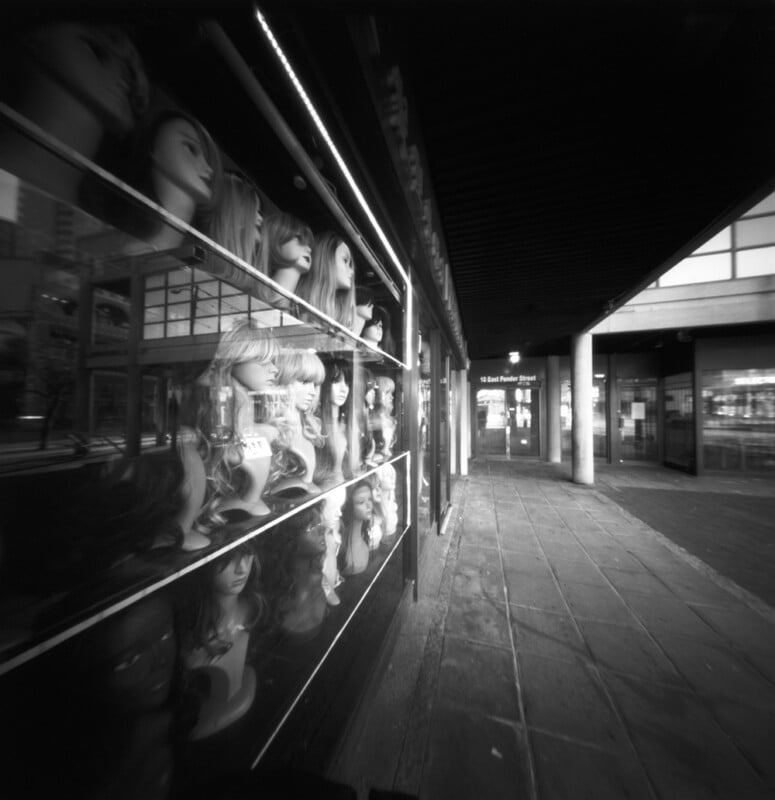
Pan F Plus is characterized by a naturally high-contrast response. Images produced on this stock typically feature deep, inky shadows and crisp, brilliant highlights. Midtones frequently lean toward a darker, more moody atmosphere, occasionally evoking the cinematic qualities of classic film noir. While the film retains a wide tonal scale filled with nuanced gradations, its baseline contrast is inherently steep, requiring careful metering to preserve shadow detail or blow highlights.

Practical Considerations: Exposure, Reciprocity, and Latent Image Stability
Working with an ultra-low ISO emulsion introduces distinct technical challenges that require careful workflow management. Because the film is slow—typically rated at ISO 50 for daylight conditions—photographers must adapt their shooting techniques to compensate for restricted light sensitivity.

Creative Opportunities Through Slow Speeds
The inherent slowness of Pan F Plus is frequently leveraged to achieve creative effects that prove difficult with faster emulsions. Photographers frequently pair the film with fast prime lenses (such as f/1.4 or f/1.2 apertures) to achieve exceptionally shallow depths of field even under harsh midday sunlight. Alternatively, the slow shutter speeds necessitated by the low ISO allow for intentional motion blur, water smoothing, or panning techniques during daylight hours without the immediate need for neutral density filters.
Reciprocity Failure Dynamics
When lighting conditions require prolonged exposures exceeding one second, photographers must account for reciprocity failure—a phenomenon where photographic emulsions lose efficiency during extended exposures. Pan F Plus exhibits moderate reciprocity characteristics compared to other specialized films.

For exposures ranging between 1 and 10 seconds, manufacturers recommend adding between one-half to one full stop of additional exposure. As exposure times increase toward 60 seconds, the required compensation rises to approximately two full stops, meaning a metered 60-second exposure actually requires an on-film duration of roughly 240 seconds. Historical data indicates that modern formulations of Pan F Plus handle long exposures more predictably than iterations produced in the early 2000s, reflecting subtle chemical optimizations by Ilford engineers.

Latent Image Retention
A critical operational factor for users of Pan F Plus is its behavior following exposure but prior to development. The film is known for poor latent image stability, meaning that exposed frames left undeveloped for extended periods can suffer from image degradation. Specifically, latent images left sitting for several months often manifest as thin, underdeveloped negatives. Technical literature provided by Ilford advises that exposed rolls of Pan F Plus should be processed within three months of exposure to ensure optimal density and contrast retention.

Market Availability and Industry Impact
Distributed widely through specialty photographic retailers—such as Blue Moon Camera and Machine in Portland, Oregon—Ilford Pan F Plus remains an essential offering for traditional darkroom practitioners. The 2026 introduction of large-format sheet options (4×5 and 8×10) alongside traditional 35mm cassettes and 120 rolls underscores the enduring viability of traditional black-and-white processes in an increasingly digital imaging landscape.

As younger generations of creators continue to explore analog methodologies, films within the "Sub-100 Club" like Pan F Plus offer an educational and artistic counterweight to automated capture systems. Requiring precision, patience, and deliberate post-processing discipline, Pan F Plus secures its ongoing relevance through uncompromising optical performance and a distinct artistic signature.