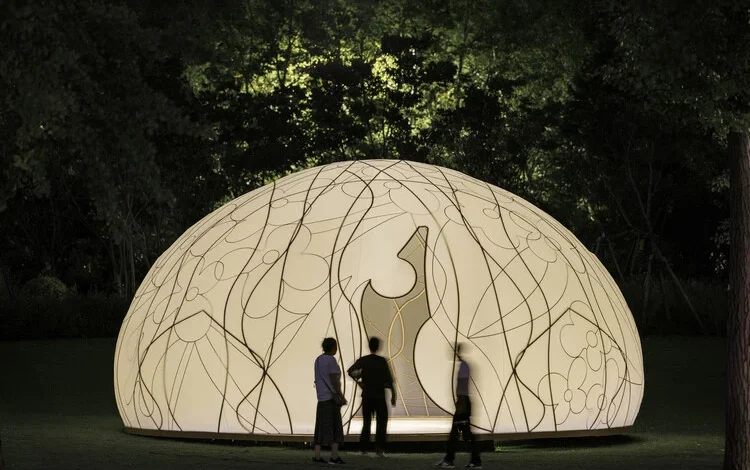
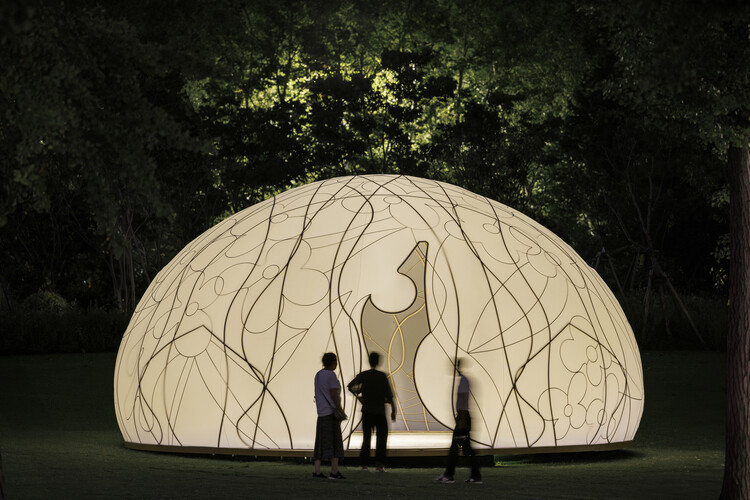
The Osmanthus Moon installation, a transient public art intervention conceptualized by the architectural practice HCCH Studio, stands as a sophisticated fusion of traditional Chinese cultural heritage and contemporary spatial design. Unveiled to coincide with the Mid-Autumn Festival—a period of significant lunar observation and cultural gathering—the project serves as a physical manifestation of autumnal symbolism. By integrating the iconic osmanthus flower motif with the expressive techniques of "Zao Hua" (stove flower) folk art, the project transcends simple decoration, functioning instead as a structural dialogue between intangible heritage and modern architectural expression.

Context and Cultural Significance of the Mid-Autumn Festival
The Mid-Autumn Festival, known as Zhongqiu Jie, is one of the most important cultural celebrations in East Asia. Historically falling on the 15th day of the eighth month of the lunar calendar, the festival is intrinsically linked to the full moon, which is traditionally viewed as a symbol of prosperity, reunion, and completeness.
The selection of the osmanthus flower as the primary visual theme for the HCCH Studio project is deeply rooted in regional botanical and culinary traditions. Osmanthus, which blooms during the autumn months, is renowned for its intoxicating fragrance and its frequent use in traditional pastries, teas, and wines. By elevating this floral motif to an architectural scale, HCCH Studio anchors the installation in the sensory landscape of the season, creating an environment that feels both familiar and transformative to the local public.
The Integration of Zao Hua Folk Art
A central pillar of the Osmanthus Moon installation is its tribute to "Zao Hua," or stove flower art. This traditional craft, recognized as an intangible cultural heritage, involves the intricate painting or carving of floral and auspicious motifs onto the surfaces of traditional wood-burning stoves. These stoves were historically the heart of the Chinese domestic space, symbolizing warmth, family survival, and the presence of the Kitchen God.
HCCH Studio’s collaboration with this folk tradition represents a deliberate effort to bridge the gap between rural, domestic aesthetics and urban, public-facing architecture. The installation interprets the spontaneous, expressive brushwork of the Zao Hua artists through a modern lens, translating fluid, organic patterns into a scale that allows for public interaction. The resulting aesthetic is one of layered complexity, where the historical "stove flower" becomes a canopy or a surrounding texture, framing the visitor’s experience of the moonlight.

Chronology of the Project Development
The development of the Osmanthus Moon installation followed a rigorous timeline, typical of high-impact, temporary public interventions.
- Pre-Conceptual Phase (Early 2026): HCCH Studio conducted a series of site surveys to determine a location capable of maximizing the visual impact of the installation during the lunar peak. The design team focused on material studies, seeking mediums that would interact effectively with both daylight and artificial nocturnal illumination.
- Design and Prototype (Spring 2026): The design team consulted with local Zao Hua artisans to ensure the authenticity of the motifs. During this period, the structural framework was engineered to be both durable enough for public interaction and sufficiently lightweight for rapid assembly and dismantling.
- Execution and Installation (September 2026): The assembly occurred in the days leading up to the Mid-Autumn Festival. The site was prepared to accommodate the lighting infrastructure, which was critical for the "Moon" aspect of the installation.
- Unveiling (September 27, 2026): The installation was officially opened to the public, coinciding with the peak of the festival period, allowing the design to serve its intended function as a site for public gathering and reflection.
Structural and Material Analysis
The physical form of Osmanthus Moon utilizes a combination of traditional patterns and contemporary structural materials. The architects employed high-contrast visual elements to mimic the interplay of moonlight filtering through flora. By manipulating light and shadow, the structure creates a "projection" of patterns onto the surrounding pavement, effectively extending the architectural footprint beyond the physical boundaries of the installation.

From an engineering perspective, the project prioritizes modularity. Because the installation is a short-term intervention, the architects focused on a "leave-no-trace" philosophy, utilizing materials that can be recycled or repurposed. The structural nodes were designed to be easily disconnected, allowing for a swift installation and removal process that minimizes the disruption to the public space it occupies.
Official Responses and Design Philosophy
While HCCH Studio has kept the project focus largely on the visual and experiential output, the design philosophy behind the installation reflects a broader trend in Chinese contemporary architecture: the "re-enchantment" of public space.

In statements regarding their design process, representatives from HCCH Studio have emphasized that architecture should not merely be a container for human activity, but a medium for cultural memory. By selecting the osmanthus flower—a symbol of the season—and the Zao Hua tradition—a symbol of domestic history—the architects are challenging the sterile, minimalist tendencies often found in modern urban planning. They argue that public spaces, particularly those in rapidly urbanizing environments, require "cultural anchors" that allow citizens to connect with their regional heritage in an immediate, tactile way.
Broader Impact and Urban Implications
The implications of the Osmanthus Moon project extend beyond the duration of the installation itself. As cities continue to struggle with the challenge of maintaining cultural identity amidst rapid modernization, temporary art installations like this offer a low-risk, high-reward method for urban activation.

- Public Engagement: The installation serves as a proof-of-concept for how heritage can be utilized to drive foot traffic and foster community interaction. During the Mid-Autumn Festival, the site became a focal point for social media interaction and communal celebration, demonstrating the power of "Instagrammable" architecture to draw populations into public squares.
- Cultural Preservation: By incorporating Zao Hua motifs into a contemporary design, HCCH Studio has effectively brought a niche, fading craft into the public consciousness. This exposure can have a tangible impact on the survival of such crafts, potentially sparking new interest among younger generations or researchers.
- Sustainable Urbanism: The success of the modular approach highlights a path forward for sustainable public art. By moving away from permanent, concrete-heavy installations, architects can create dynamic environments that evolve with the cultural calendar, reducing long-term maintenance costs and environmental impact.
Conclusion
Osmanthus Moon by HCCH Studio is a testament to the potential of architectural design to synthesize the past and the present. By grounding their work in the specificities of the Mid-Autumn Festival and the delicate artistry of Zao Hua, the architects have created a project that resonates on both an emotional and intellectual level.
As the architectural community continues to explore the intersection of technology, heritage, and public space, the Osmanthus Moon provides a blueprint for how to approach temporary urban interventions. It demonstrates that when architects listen to the cultural pulse of a society, they can create spaces that are not only functional but deeply significant. The project stands as a reminder that even the most transient structures can leave a lasting mark on the cultural fabric of a city, provided they are built with intention, respect for history, and an eye toward the future.