Scotland’s Quiet Revolution: 11 Sustainable Fashion Brands Shaping the Future of Ethical Style

Scotland is quietly emerging as a powerhouse in the global transition toward a sustainable and circular fashion industry. Despite having a population of approximately 5.4 million people, the nation boasts a dense ecosystem of responsible clothing manufacturers, heritage textile mills, and innovative independent designers who are systematically challenging the dominance of the fast fashion model.

The global fashion sector is widely recognized as one of the most environmentally damaging industries in the world, responsible for substantial carbon emissions, water pollution, and textile waste. In response, independent Scottish labels are championing localized manufacturing, zero-waste design principles, and transparent supply chains. By utilizing natural fibers, reviving historic mills, and pioneering circular economy models, these eleven enterprises demonstrate how modern apparel production can prioritize both human welfare and planetary health.
The Economic and Environmental Imperative of Slow Fashion
The rise of sustainable fashion in Scotland is not merely a localized aesthetic trend; it represents a structural realignment with international environmental targets. Fast fashion relies heavily on synthetic materials derived from fossil fuels, intensive chemical dyeing processes, and long, opaque supply chains that externalize environmental costs. In contrast, Scottish brands are leveraging the country’s rich textile heritage—particularly in wool, cashmere, and tartan production—to build durable, high-quality garments designed for longevity.

Industry analysts note that consumer demand for transparency has accelerated significantly over the past decade. Regulatory pressures across the United Kingdom and the European Union are also tightening, with increased scrutiny on greenwashing and waste management. Scotland’s sustainable fashion sector is positioning itself ahead of these regulatory shifts by integrating circularity directly into business models, from localized spinning mills to comprehensive repair and take-back schemes.
Heritage Meets Innovation: Established Leaders in Sustainable Knitwear
Several of Scotland’s most prominent slow fashion brands combine centuries-old manufacturing traditions with rigorous contemporary environmental standards.

Brora
Founded over 30 years ago, Brora operates on the foundational principle that style and sustainability are mutually inclusive. The brand specializes in garments crafted from natural fibers, including Scottish cashmere, wool, linen, and organic cotton, while keeping synthetic materials to a strict minimum. Brora prioritizes local production by partnering with skilled artisans who utilize traditional techniques passed down through generations. For manufacturing that must occur abroad, the company enforces a strict code of conduct addressing worker health and safety, labor welfare, and environmental impact. In 2025, Brora achieved B-Corp certification, an independent validation of its high standards of social and environmental performance, transparency, and accountability.
ERIBÉ Knitwear
Established in 1986, ERIBÉ is a prominent Scottish knitwear house dedicated exclusively to natural fibers, including British wool and guaranteed non-mulesed Responsible Wool Standard (RWS) merino lambswool. ERIBÉ produces its collections responsibly within Scotland and the European Union under strict labor regulations. To mitigate waste, the company manufactures in smaller batches, makes items to order, and repurposes faulty textile panels into yarn. Furthermore, ERIBÉ has replaced traditional plastic packaging with biodegradable alternatives across its distribution network.

Hilary Grant
Based in the Orkney Islands, Hilary Grant operates a textile design studio and knitwear production facility specializing in cold-weather accessories such as scarves, hats, and mittens. The brand sources high-grade lambswool exclusively from farms adhering to high animal welfare standards and progressive land management practices. These yarns are certified by the Responsible Wool Standard and are free from mulesing. Dyeing and spinning processes are conducted within Scotland using environmentally friendly dyes designed to minimize aquatic pollution and chemical runoff.
Circular Economy Pioneers: Reducing Waste Through Innovation
A core pillar of Scotland’s sustainable fashion movement is the adoption of circular economic principles, which aim to eliminate waste and keep products and materials in use for as long as possible.

Second Cashmere
Operating from Glasgow, Second Cashmere champions a fully circular economic model by transforming waste cashmere garments—otherwise destined for landfill or basic recycling—into reclaimed, refurbished apparel and accessories. Sourced from UK textile recyclers, each garment is professionally cleaned, reconditioned, and restored. Items that cannot be directly restored are unraveled to produce reclaimed cashmere yarn used in new designs and a dedicated repair service. This hands-on mending service utilizes reclaimed yarn to extend the lifecycle of consumer knitwear, aligning with a strict zero-waste philosophy.
Beira
Beira approaches sustainable fashion through the utilization of high-end deadstock materials sourced from luxury manufacturers. By rescuing discarded fabrics, trims, zips, and buttons, Beira manufactures limited-edition technical raincoats and knitwear designed for durability. Notably, the brand has introduced an unprecedented level of supply chain transparency: every product listing on Beira’s website details the specific maker, their hourly wage, a video of the manufacturing process, and the origin of the fabric. This level of granular disclosure sets a new benchmark for corporate accountability within the apparel industry.

Prickly Thistle
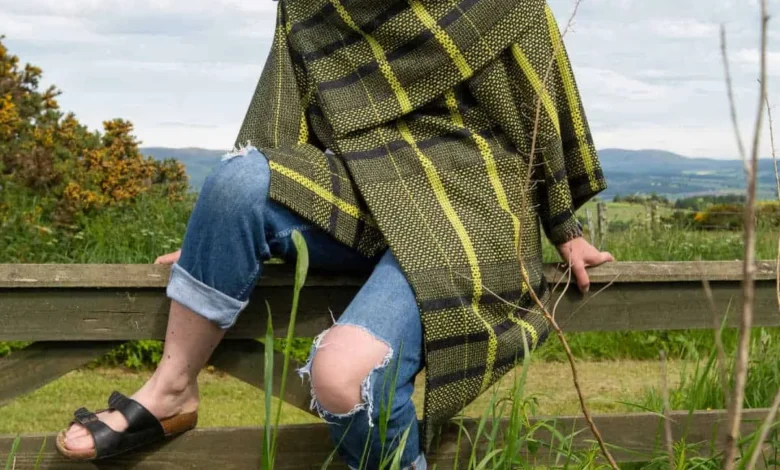
Located in Dingwall, Prickly Thistle operates a mill powered by renewable energy, utilizing century-old traditional looms to weave 100% natural, plastic-free tartan textiles. As a certified B-Corp, the company sources wool exclusively through ethical Scottish spinners and dyers. Prickly Thistle’s design philosophy explicitly rejects the use of zips and buttons, which complicate textile recycling and impose rigid sizing constraints. Instead, the brand incorporates adjustable straps and buckles, allowing garments to accommodate a three-inch sizing variation and ensuring long-term wearability without generating fabric waste during production.
Technical Performance and Contemporary Design
Sustainable fashion in Scotland extends beyond traditional knitwear into activewear, tailoring, and contemporary everyday apparel.

Findra
Based in the Scottish Borders, Findra produces ethical activewear for women, including cycling apparel, base layers, and outerwear constructed from natural and recycled technical fabrics. Over half of Findra’s collection is manufactured within the United Kingdom, while international manufacturing partners are held to stringent environmental and labor certifications. To ensure product longevity, Findra provides a comprehensive garment repair service for damaged items.
Kestin
Edinburgh-based Kestin focuses on sustainable menswear, emphasizing local production and durable construction. The brand maintains a transparent supply chain, partnering exclusively with suppliers and factories that guarantee fair wages, safe working conditions, and strong community ties. Kestin’s collections—ranging from tailored suits to casual overshirts—are designed with timeless aesthetics to discourage seasonal obsolescence.

Godiva
Operating near Edinburgh’s Grassmarket for over two decades, Godiva functions as both a curated vintage boutique and an active production studio. Alongside hand-picked vintage garments, Godiva operates an in-store studio that repurposes legacy clothing into modern lifestyle pieces under its "Reworked" collection. The boutique also serves as a platform for local independent designers and sustainable accessories.
Totty Rocks
Also based in Edinburgh, Totty Rocks specializes in bespoke women’s occasion wear, tailored coats, and wedding attire. Operating on a slow fashion model, each garment is hand-made to order within the brand’s studio using locally sourced fabrics. The studio’s commitment to artisanal craftsmanship has attracted international attention and a notable clientele while maintaining a localized, low-volume production footprint.

The Croft House
Headquartered in Peterhead, The Croft House produces natural-fiber knitwear for men and women. The brand designs and manufactures all garments within Scotland while sourcing raw materials exclusively within the United Kingdom. With the exception of certain socks that incorporate a minimal percentage of synthetic nylon for structural integrity and durability, The Croft House products are entirely plastic-free. Many items are knitted seamlessly to eliminate textile cutting waste, and the company offers a dedicated line crafted from pure, undyed yarns to further reduce environmental impact.
Broader Implications and Industry Outlook
The collective trajectory of Scotland’s sustainable fashion sector underscores a broader shift in consumer behavior and industrial policy. As international scrutiny intensifies regarding the carbon footprint of global supply chains, the operational frameworks demonstrated by these eleven brands offer a viable blueprint for regional, decentralized manufacturing.

By anchoring production in local craftsmanship, rigorous material traceability, and circular design, Scotland’s ethical fashion movement proves that small-scale enterprises can exert meaningful influence on a global industry. The ongoing success of these brands suggests that the future of fashion lies not in mass-market acceleration, but in deliberate, transparent, and environmentally accountable production.