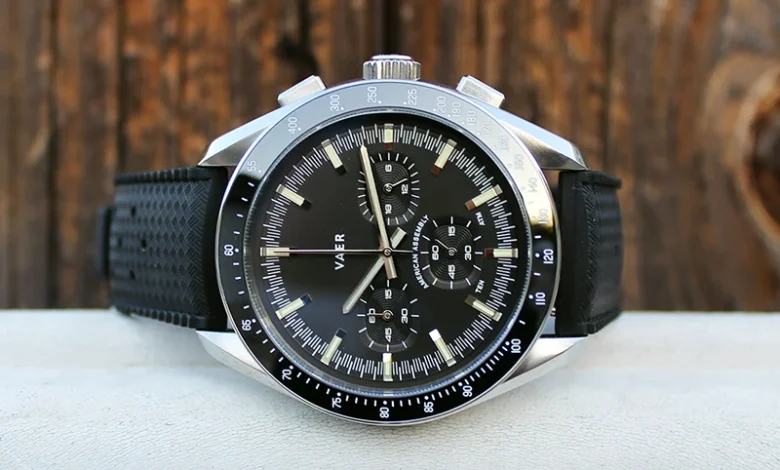
The horological industry is currently witnessing a significant shift in consumer preferences, particularly within the mid-tier market, where the demand for robust, high-performance chronographs is increasingly being met by independent brands rather than traditional luxury houses. A prime example of this trend is the release of the VAER R1 Oceanracer V2, a meca-quartz timepiece that has sparked a broader debate regarding the value proposition of iconic luxury watches versus modern, accessible alternatives. As part of a promotional engagement, an opportunity has been provided for readers to acquire the specific unit utilized for testing purposes, highlighting the brand’s commitment to community engagement and transparent product evaluation.
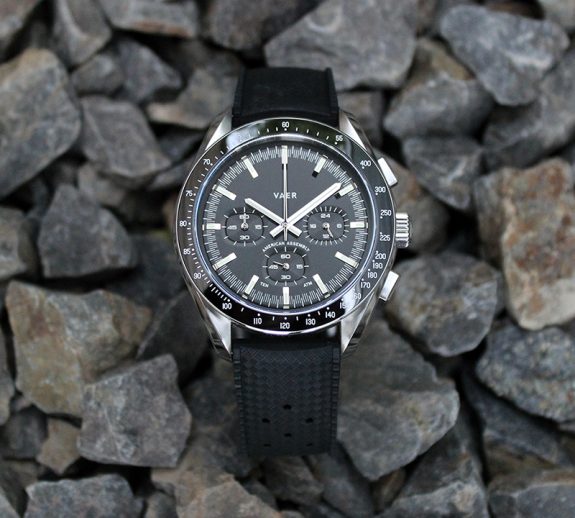
Chronology and Development of the Oceanracer Series
VAER, a California-based watchmaker, has steadily carved out a reputation for producing durable, field-tested timepieces that prioritize utility and assembly quality. The R1 Oceanracer series represents a departure from their primarily field-watch-centric catalog, signaling an attempt to capture the aesthetic and functional appeal of racing-inspired chronographs.
The development of the V2 iteration follows a period of rapid growth for the brand. Since its inception 17 years ago—a period that has seen massive consolidation in the watch market—the company has focused on "USA-assembled" credentials as a core pillar of its identity. The R1 Oceanracer V2 was designed to address common criticisms of entry-level chronographs, specifically the lack of structural integrity and tactile feedback often found in standard quartz-powered models. By integrating the Seiko VK63 meca-quartz movement, VAER has bridged the gap between the precision of quartz and the mechanical satisfaction of traditional horology.

Technical Specifications and Performance Data
The technical foundation of the R1 Oceanracer V2 rests upon the Seiko VK63 movement. Unlike standard quartz calibers that drive the chronograph hand via a simple stepper motor, the VK63 employs a mechanical module to manage the chronograph functions. This results in a sweeping seconds hand that moves at approximately five beats per second, closely mimicking the aesthetic of a mechanical chronograph.
Key specifications for the R1 Oceanracer V2 include:

- Movement: Seiko VK63 Meca-Quartz.
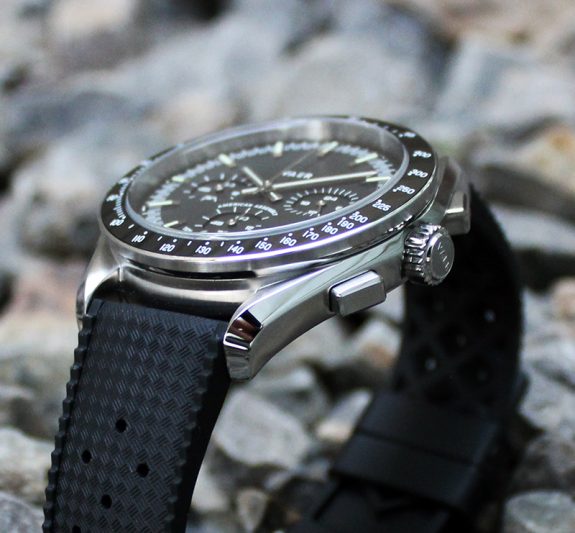
- Case Construction: 316L stainless steel, 11mm thickness.
- Crystal: Domed sapphire with anti-reflective coating.
- Water Resistance: 100 meters, supported by a screw-down crown.
- Bezel: Ceramic tachymeter insert for increased scratch resistance.
- Dial: Multi-layered construction with recessed sub-dials.
From an engineering perspective, the 11mm case thickness is notable, as it is significantly slimmer than many mechanical chronographs, which often balloon to 14mm or 15mm due to the complexity of automatic chronograph movements. This profile contributes to the watch’s wearability, a factor that is frequently cited as a primary advantage over high-end alternatives like the Omega Speedmaster, which, while historically significant, occupies a larger footprint on the wrist.
Market Implications and Comparative Analysis
The comparison between the VAER R1 Oceanracer and the Omega Speedmaster is a frequent topic in contemporary watch journalism. The Omega Speedmaster, colloquially known as the "Moonwatch," holds a legendary status due to its flight-certified history with NASA. However, the price gap—with the Speedmaster often retailing for nearly 15 times the price of the VAER—forces a rigorous analysis of what a consumer is paying for in the luxury segment.

Industry analysts note that while the Speedmaster offers high-horology pedigree, precious metal components, and an elaborate mechanical movement, the VAER offers superior practical utility for the average user. Factors such as "daily-driver" durability, ease of maintenance (battery-powered quartz vs. high-cost mechanical servicing), and the inclusion of versatile quick-release strap systems are becoming increasingly decisive factors for modern buyers.
The movement toward "accessible luxury" reflects a broader trend in the watch industry, where consumers are less concerned with brand heritage and more focused on price-to-performance ratios. The inclusion of a ceramic tachymeter bezel—a feature usually reserved for watches priced above $2,000—demonstrates a commitment to material quality that challenges the traditional tiered pricing structure of the watch industry.

Sustainability and Consumer Outreach
The promotional event regarding the VAER R1 Oceanracer V2 emphasizes a direct-to-consumer philosophy. By offering the review unit as a giveaway, the organizers aim to foster a sense of community. This approach is reflective of how independent brands now manage their marketing; rather than relying solely on traditional advertising, they utilize "earned media" and community engagement to build brand loyalty.
The contest, which closes on October 1, 2026, requires only basic contact information, adhering to a strict privacy policy that forbids the sale or unauthorized use of participant data. This policy is an essential element of modern digital brand management, acknowledging that trust is a commodity as valuable as the products themselves.

Future Outlook for Independent Chronographs
The success of the R1 Oceanracer V2 suggests a sustained market appetite for watches that provide a "luxury look" without the prohibitive cost of entry. As manufacturing technology in the Asia-Pacific region continues to improve and assembly standards in the United States become more transparent, the barriers to entry for high-quality, mid-tier chronographs are lowering.
For the watch-loving community, the takeaway is clear: the definition of a "serious" watch is expanding. While the historical significance of brands like Omega remains unchallenged, the functional superiority of modern meca-quartz movements in terms of accuracy and maintenance-free operation provides a compelling argument for the everyday consumer. The R1 Oceanracer V2 stands not as a replacement for luxury heritage, but as a pragmatic alternative for a generation of enthusiasts who value technical efficiency and robust design above all else.
As the industry moves toward 2027, it is likely that more independent brands will adopt the VAER model—leveraging high-spec quartz movements, modular design, and transparent, community-focused marketing to disrupt established market segments. Whether these brands will eventually challenge the long-term equity of legacy watchmakers remains to be seen, but the current data suggests that the "Moonwatch" level of market dominance is facing its most significant challenge in decades.
Related posts: