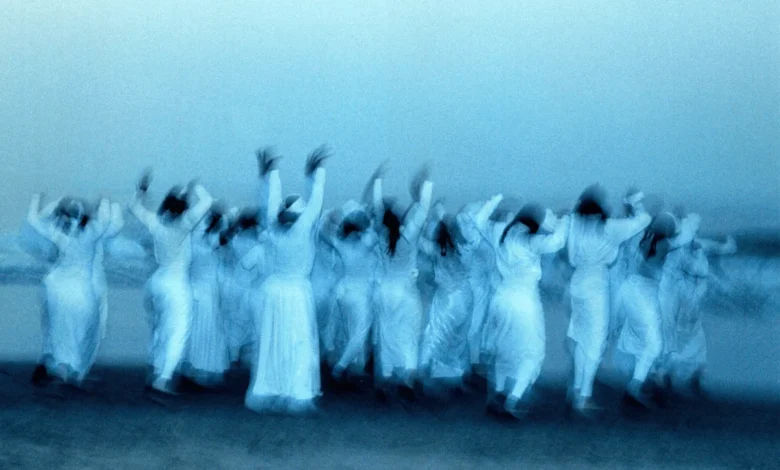
The Bruce Silverstein Gallery in New York City currently serves as the cultural backdrop for a profound retrospective titled Chester Higgins: Shared Memories. Running through June 20, 2026, the landmark exhibition captures the extraordinary six-decade career of renowned photojournalist Chester Higgins. Spanning his early days as a student activist in the American Civil Rights movement through nearly forty years of documenting the global African diaspora as a staff photographer for The New York Times, Higgins’ work challenges conventional visual narratives. By focusing on dignity, universal humanity, and the intrinsic spirit of his subjects, the collection offers viewers a vital corrective to decades of historical misrepresentation and visual stereotyping in mainstream media.

Formative Years and the Birth of a Visual Historian
Chester Higgins was raised in rural southern Alabama during the height of the American Civil Rights movement, an era defined by profound social upheaval, systemic oppression, and the courageous fight for racial equality. These formative years instilled in him a deep awareness of the sociopolitical forces shaping the lives of Black Americans.
His journey into photography began while he was a student at Tuskegee University, a historically Black institution founded by Booker T. Washington. It was there that Higgins first recognized the immense power—and potential danger—of the camera. A defining moment in his early development occurred the day after he participated in a peaceful political protest at the Alabama State Capitol in Montgomery against the segregationist policies of Governor George Wallace.

When Higgins examined the mainstream newspapers the following morning, the reality of the protest had been entirely subverted. Rather than depicting the students as legitimate American citizens peacefully petitioning their government, the published photographs framed them as agitators, thugs, and potential criminals. This early disparity between lived reality and media representation left an indelible mark on Higgins, teaching him a foundational lesson that would guide his entire career: "The photograph never lies about the photographer." In Higgins’ view, the internal sentiments, biases, and sociological contracts of the photographer inevitably bleed into their imagery, dictating whether a subject is approached with empathy or exploitation.
Transforming the Visual Diet at The New York Times
In 1975, Higgins began a nearly four-decade tenure as a staff photographer for The New York Times. During an era when major journalistic institutions routinely marginalized communities of color or relied on narrow, deficit-based tropes—such as focusing on poverty exclusively through the lens of pity, class division, or criminality—Higgins fought to broaden the visual vocabulary of the newspaper of record.

His assignment was not merely to take pictures, but to act as an agent of cultural and perceptual expansion. Working within an institution read by America’s primary political, economic, and cultural decision-makers, Higgins utilized his position to introduce imagery that challenged pre-existing biases. When photographing impoverished communities, he deliberately bypassed the standard motifs of victimization, instead centering the innate humanity, resilience, and complex emotional lives of his subjects.
Higgins often speaks of human desires in universal terms, emphasizing that regardless of economic standing or social hierarchy, people share fundamental commonalities: the pursuit of happiness, the experience of struggle, and the rhythms of aging, family, and celebration. By capturing ceremonies, spiritual gatherings, and everyday joys, Higgins bridged cultural divides, presenting data and human narratives in a digestible artistic format. Upon his retirement, the managing editor of The New York Times acknowledged this profound impact, noting that Higgins had fundamentally altered how predominantly white newsrooms and readers perceived Black individuals, effectively expanding the horizons of the nation’s most influential publication.

The Philosophical and Spiritual Underpinnings of Higgins’ Work
Beyond his photojournalism, Higgins has dedicated decades to exploring the roots of African heritage, traveling extensively across the continent—particularly to Egypt, Ethiopia, and West Africa—to document ancient spiritual traditions and cultural continuities. His artistic philosophy is deeply rooted in a metaphysical worldview shaped by an out-of-body experience during his youth.
This early experience left Higgins with the enduring perception that reality operates in parallel, multi-layered dimensions supported by invisible, shifting forces of nature. Describing himself as an "ortovert" who has learned to harness his ego, Higgins views his photography as an act of spiritual alignment. He conceptualizes everyday reality as a performance driven by behind-the-scenes natural behaviors, wherein his task as a photographer is to capture what he calls the "Signature of the Spirit." This philosophy explains the timeless, ethereal quality of his portraits, which frequently transcend mere documentation to evoke a sense of sacred history and interconnectedness.

Cultural Relevance and Contemporary Implications
The staging of Chester Higgins: Shared Memories at the Bruce Silverstein Gallery arrives at a critical juncture in contemporary public discourse regarding representation, historical memory, and visual media literacy. In an era saturated with digital imagery, algorithmic biases, and polarized cultural debates, the demand for authentic, nonjudgmental storytelling remains acute.
Cultural critics and art historians note that Higgins’ retrospective offers a timely balm against daily miseducation and the persistent circulation of reductive stereotypes. By maintaining a stance of respect and embracing curiosity rather than judgment, Higgins demonstrates how visual art can act as a bridge for societal healing. The exhibition not only honors a legendary career but also establishes a benchmark for ethical documentary photography, reminding contemporary image-makers of their profound ethical responsibility to the individuals and communities they place before the public eye.