Dutch Design Week 2026: Exploring Rebel Authentic Worth and 11 Standout Projects

The 26th edition of Dutch Design Week (DDW) officially commenced in Eindhoven, convening more than 2,500 established designers, emerging talents, and major international brands for Europe’s largest design event. Operating under the central theme Rebel Authentic Worth, abbreviated as R.A.W., this year’s festival focused squarely on the social, cultural, and economic value of design practices that intentionally carve out space for unpolished experimentation, rigorous material research, and radical imagination. Against a backdrop of rapid technological advancement—where artificial intelligence and automation increasingly prioritize visual perfection, systemic optimization, and algorithmic efficiency—DDW 2026 positioned itself as a critical counter-narrative. The festival’s overarching curatorial thesis confronted the growing societal uncertainty surrounding emerging technologies, actively exploring how contemporary design can challenge corporate tech hegemony, offer alternative perspectives, and help humanity navigate an increasingly complex global landscape.
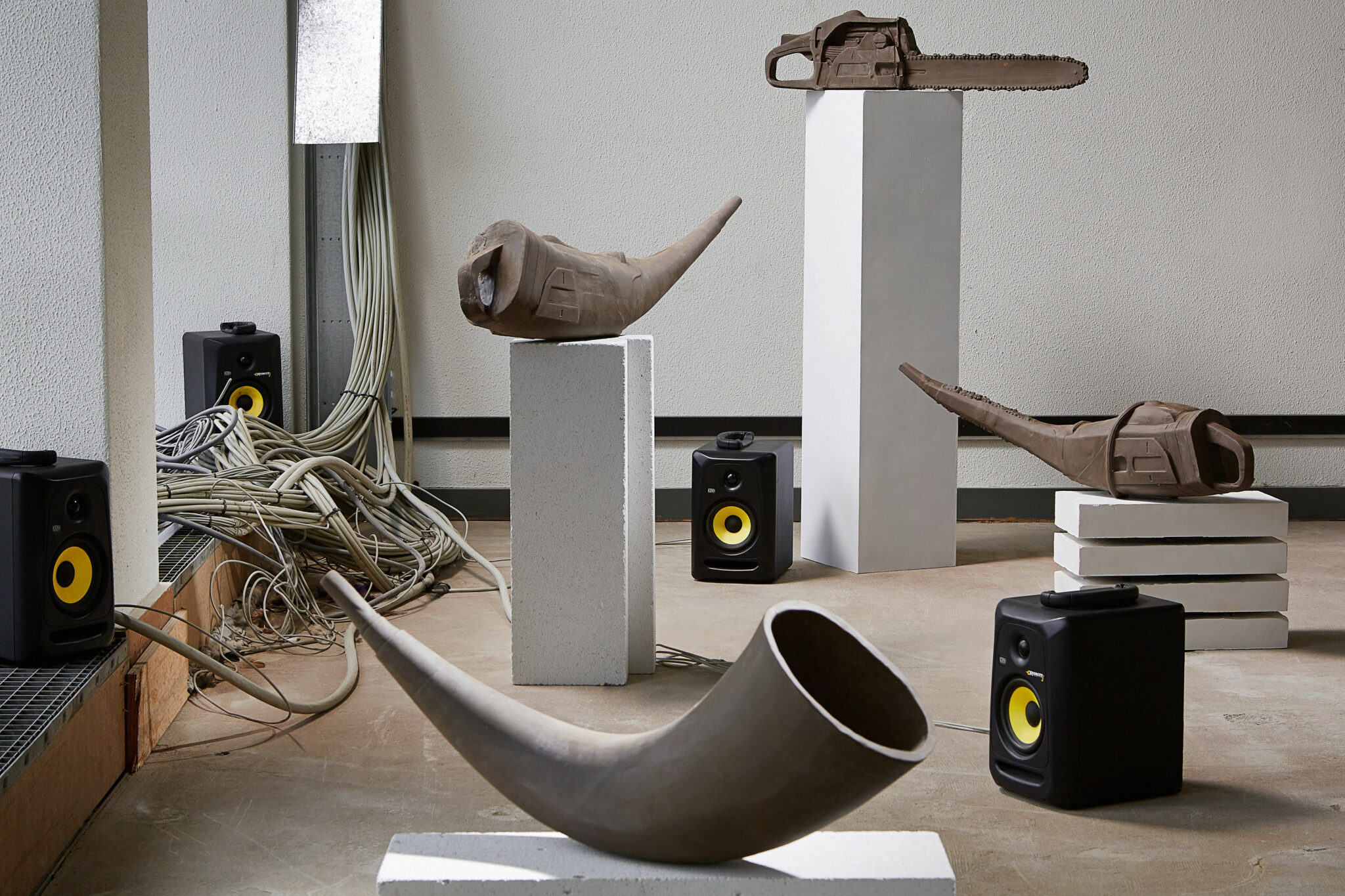
Chronology and Historical Context of Dutch Design Week
Established in 1998, Dutch Design Week has evolved over more than two decades from a modest regional event into a globally recognized institution on the international design calendar. Historically known for championing conceptual design, circular economies, and Dutch minimalism, DDW has consistently served as an incubator for experimental practices that merge art, science, and industry. The 26th edition arrives at a critical juncture in the design industry’s history. As generative artificial intelligence reshapes creative workflows and global supply chain disruptions force a re-evaluation of material sourcing, DDW 2026 reflects a broader paradigm shift away from slick, mass-produced digital aesthetics toward tactile, material-driven, and socially conscious interventions. The R.A.W. theme encapsulates this tension, urging creators to embrace imperfections, honor traditional craft lineages, and interrogate the invisible infrastructures governing modern life.
- Design Academy Eindhoven: Navigating Institutional Contradictions
The annual Graduation Show hosted by Design Academy Eindhoven (DAE) remains one of the most anticipated anchor exhibitions of Dutch Design Week, offering a comprehensive snapshot of the next generation of international design talent. The 2026 showcase featured a sprawling array of objects, immersive installations, and experimental research projects that grappled with systemic contradictions. According to Nadine Botha, head of the Social Design Master’s program at DAE, the graduation projects function effectively as navigational maps. Students addressed how rapid societal change brings both tangible gains and severe unintended consequences, how cultural traditions can simultaneously sustain a sense of belonging while carrying heavy colonial or nationalist histories, and how emerging professions create novel economic possibilities without guaranteeing stable livelihoods.
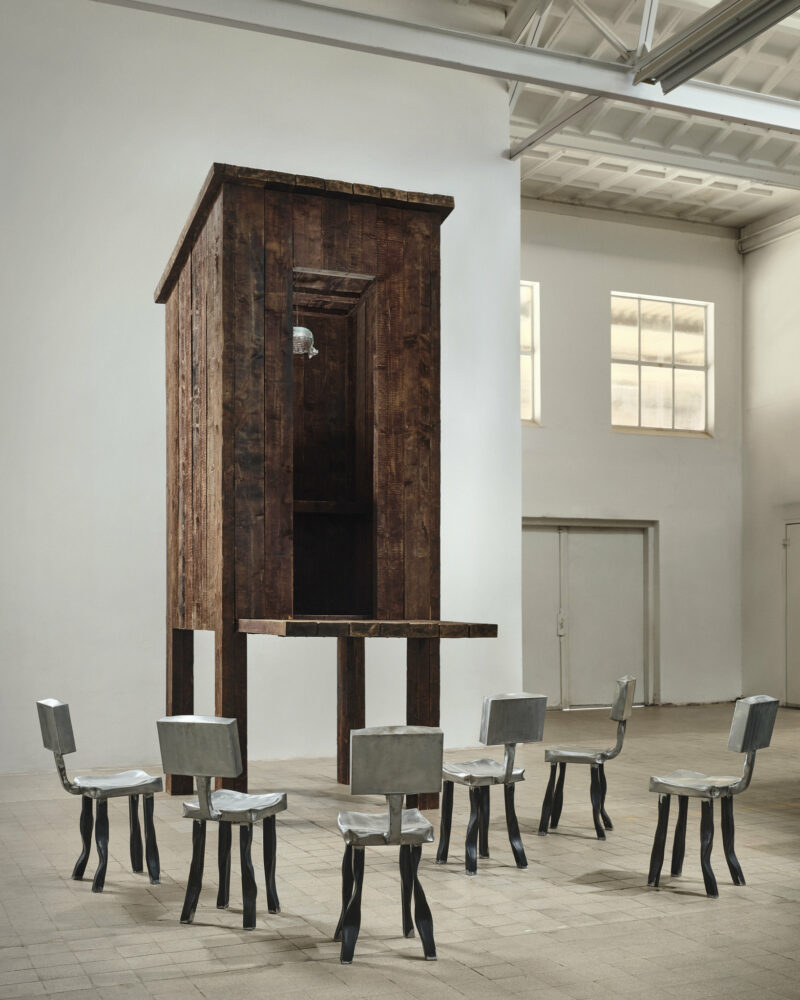
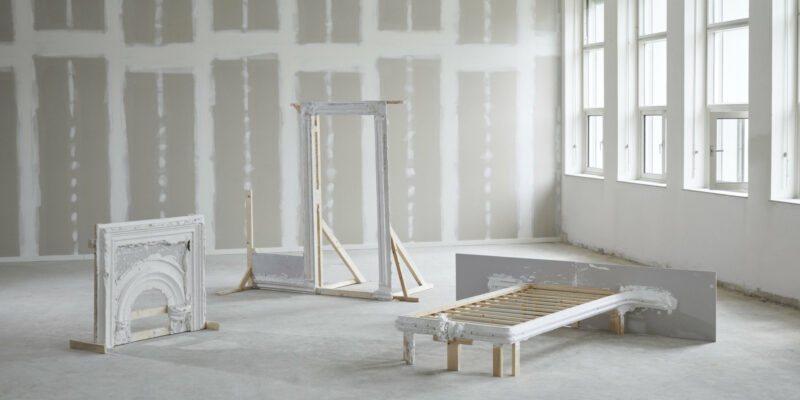
This critical examination of institutional systems carried profound resonance this year, unfolding against the backdrop of recent student protests at DAE concerning severe overcrowding, inadequate studio spaces, and limited access to institutional manufacturing facilities. Notable student works included Dirk Duif’s Safe House, a towering wooden structure that invited spatial reflection, and Yann Thiel’s Excess Cornice, which investigated the surplus of architectural elements within unfinished spatial environments.
- Fairspace, Shruthi Venkat, and Sagitta Creatives: Blind Spots
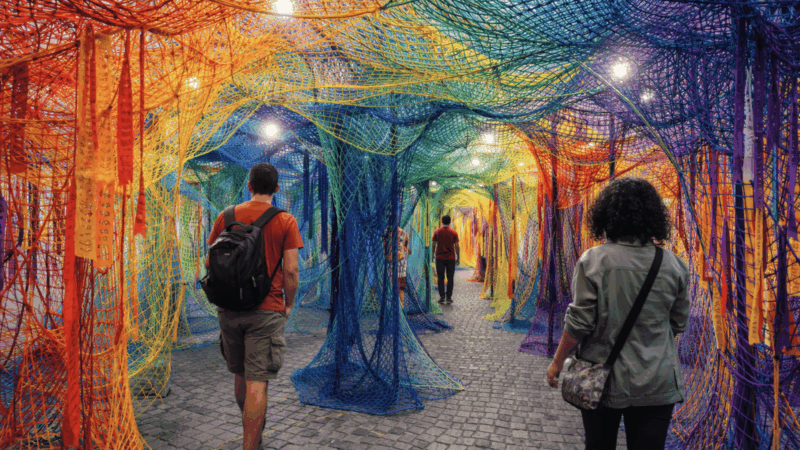
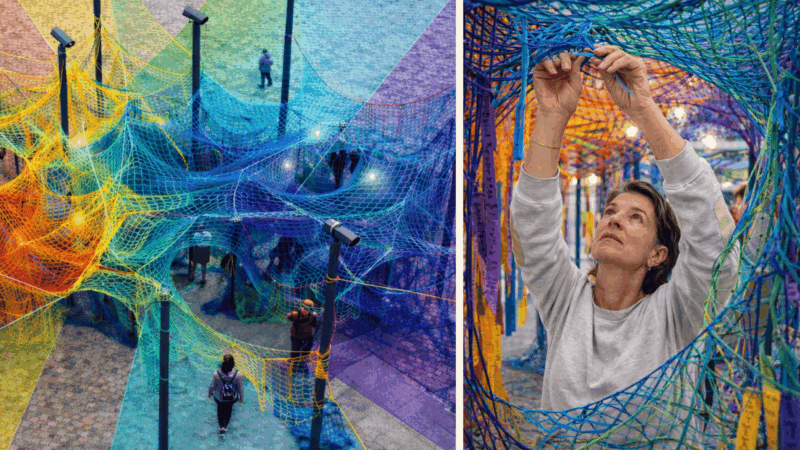
Public art and large-scale interactive installations are integral to the experiential fabric of Dutch Design Week, transforming Eindhoven’s public plazas into living laboratories. Among the most prominent public interventions was Blind Spots, a collaborative project developed by advocacy group Fairspace, designer Shruthi Venkat, and Sagitta Creatives. Posing the foundational question, "Who is safety built for?", the installation utilized familiar urban security apparatuses—including surveillance cameras, digital display screens, and heavy construction netting—to interrogate the fragile boundary between physical protection, state surveillance, and civic control.
Visitors navigated through a labyrinth of overlapping, multicolored mesh tunnels that deliberately obstructed sightlines, accompanied by an ambient soundscape of recorded voices sharing diverse personal narratives regarding urban safety. Participants were further invited to write their own experiences on paper and tie them directly to the netting. As the festival progressed, the installation transformed into a powerful, collective archive documenting the vast disparities in how different demographics experience public security.
- Ori Orisun Merhav: Woven Landscapes and Biological Design
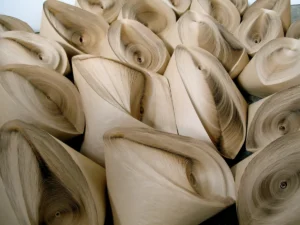
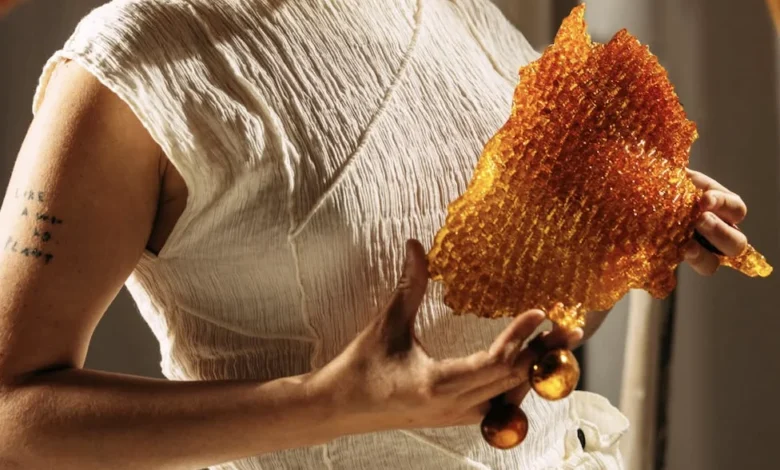
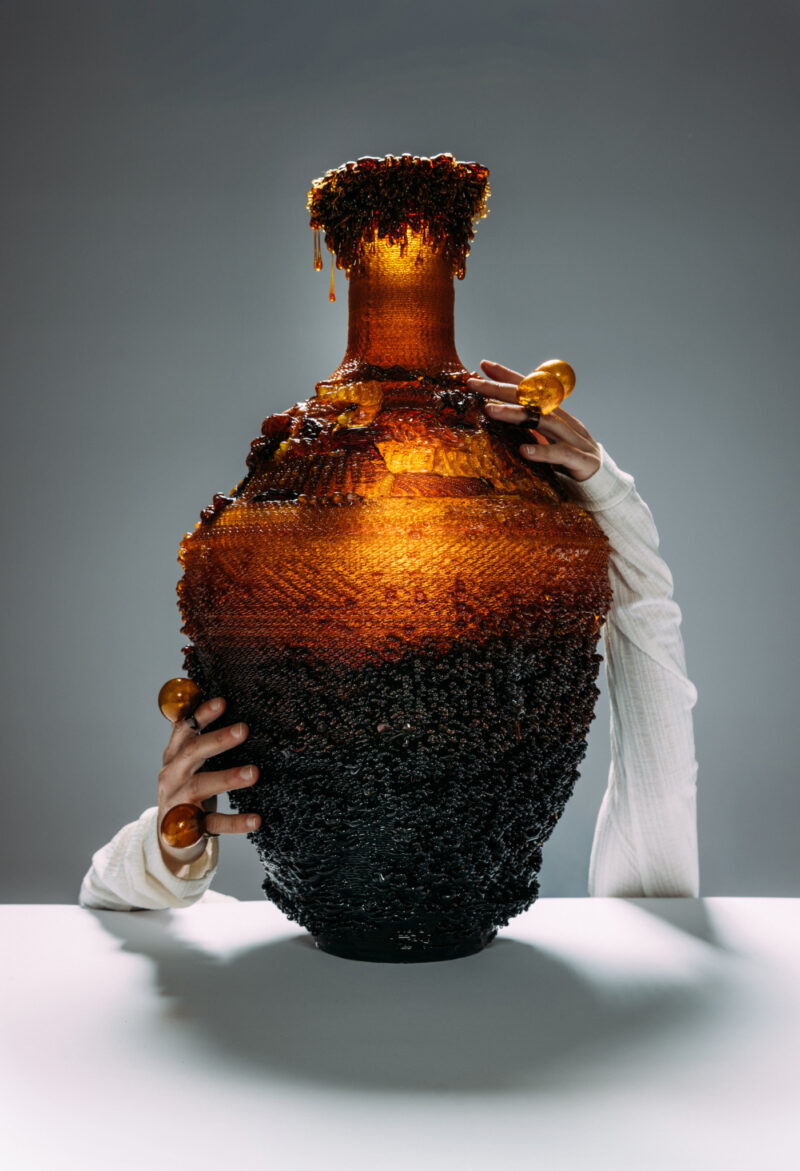
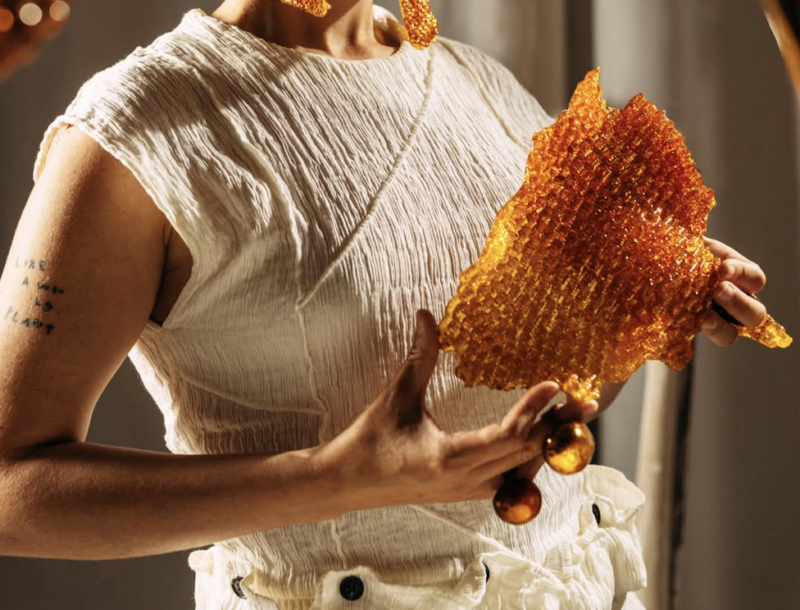
Material research took center stage in Woven Landscapes, an evocative installation by artist and researcher Ori Orisun Merhav, founder of the ongoing research studio Made by Insects. Merhav presented a series of sculptural vessels that fostered a direct dialogue between humans, natural landscapes, and non-human organisms. Combining woven palm fibers with lac—a natural resin secreted by specific insects—the organic structures demonstrated how biological processes can directly inform industrial manufacturing and object design.
Rather than treating finished objects as the primary output, Merhav describes the physical sculptures as mere "leftovers and segments of the time and journey of our research." By merging traditional weaving and binding techniques with insect-derived biomaterials, the project proposes a symbiotic relationship between human-made artifacts and the natural world, pointing toward sustainable manufacturing alternatives that bypass petrochemical plastics.
- Yinka Ilori and Brabantia: There Is Magic in Joy
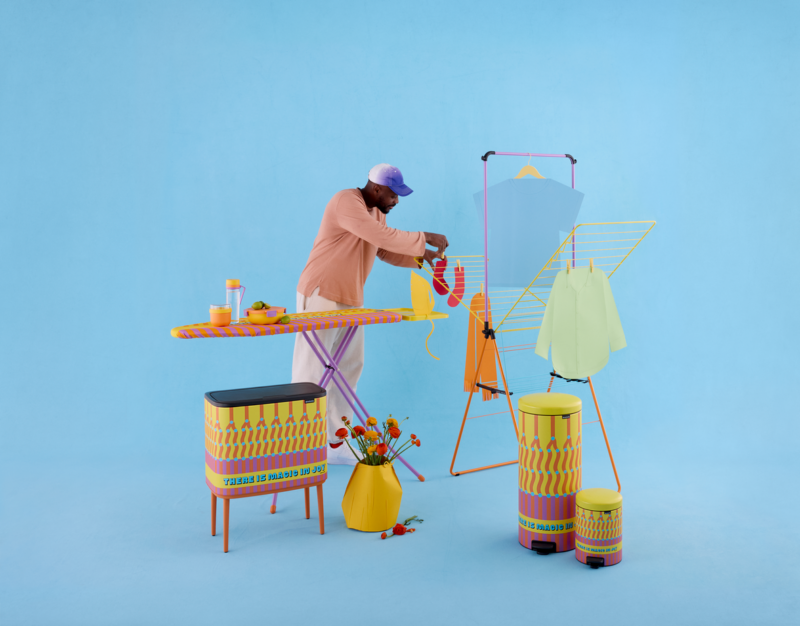
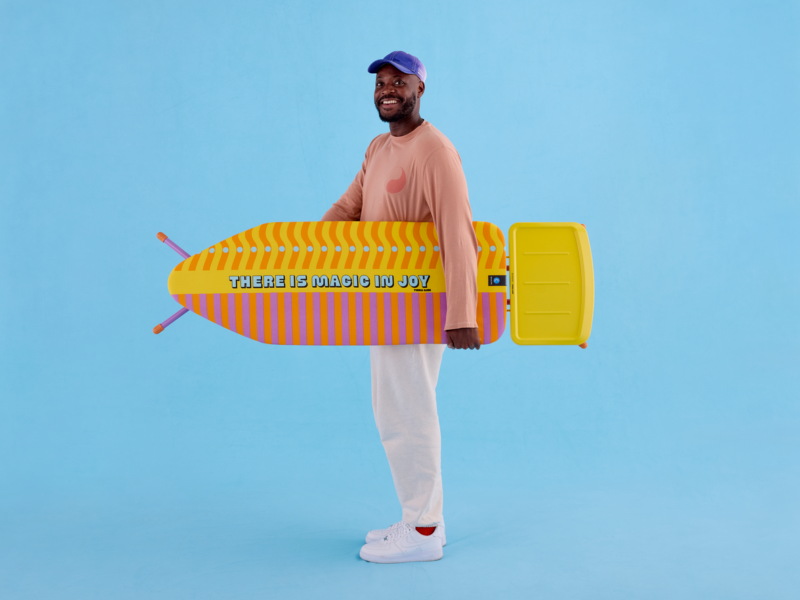
Injecting vibrant color and socio-cultural commentary into everyday domestic routines, British-Nigerian multidisciplinary artist and designer Yinka Ilori partnered with Dutch housewares manufacturer Brabantia for a limited-edition collection titled There Is Magic in Joy. Known globally for his exuberant use of pattern and architecture, Ilori applied his signature aesthetic to mundane household items, including ironing board covers, storage containers, and waste bins.
Utilizing a sherbet-inspired palette of lemon yellow, raspberry, orange, and aqua accents, the collection transforms utilitarian chores into moments of sensory delight. "At the heart of my work is a belief that art and design should be accessible to all, with projects that bring communities together and create a positive social impact," Ilori stated during the launch. The collaboration underscores a growing commercial appetite for emotional resonance within mass-market consumer goods.
- TAM Industries: House of Lights and 3D-Printed Architecture
Prefabricated housing has historically suffered from rigid standardization and a lack of architectural expression. However, Eindhoven-based TAM Industries challenged this paradigm with House of Lights, an experimental installation demonstrating the architectural freedom afforded by industrial 3D printing. Utilizing proprietary robotic machinery, TAM printed the structure entirely from recycled plastic, integrating color directly into the raw material stream to eliminate the need for secondary coatings or paint.
Illuminated from within by integrated lighting systems, the structure showcased how automated construction can yield expressive, organic forms without sacrificing the structural efficiencies of prefabrication. Furthermore, the project prioritized circularity, ensuring that the entire building envelope can be fully dismantled, melted down, and re-extruded at the end of its structural lifecycle.
- Rive Roshan: Beacons of Hope
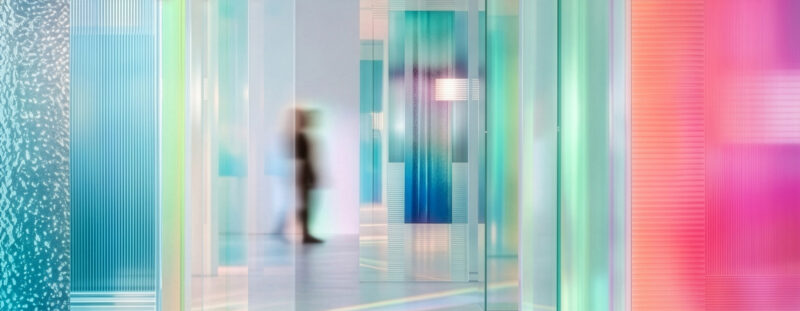
Responding to collective anxieties surrounding global instability, the Amsterdam-based design duo Rive Roshan (Ruben de la Rive Box and Golnar Roshan) unveiled Beacons of Hope. The immersive installation combined textured architectural glass, highly reflective metal surfaces, and kinetic lighting choreography to create an ambient sanctuary within the festival grounds.
Treating light as a tangible building material, the designers sought to offer visitors psychological reassurance and a moment of quiet pause. "We believe design has a responsibility to foster connection and offer sanctuary," the duo noted in their artist statement. "By choreographing kinetic light, we tap into something universal and deeply emotional, offering a counter-narrative to the heaviness of the daily news cycle."
- Gijs Schalkx: On the Way to a Future
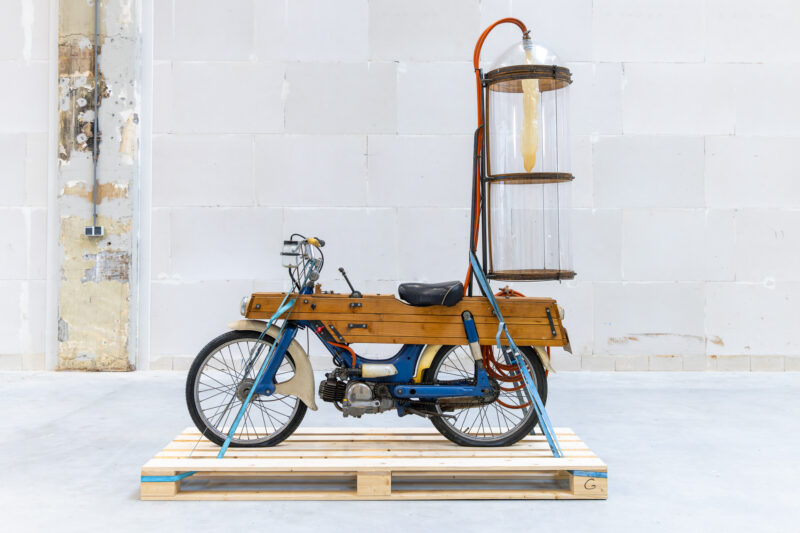
Challenging the tech industry’s obsession with frictionless speed and efficiency, artist Gijs Schalkx presented Onderweg naar een toekomst (On the Way to a Future). The exhibition featured a fleet of fully functional, unconventional vehicles built by the artist, including a motorcycle powered by swamp gas, an automobile fueled by waste plastic, and an experimental electric flying bicycle.
Schalkx’s work directly critiques passive consumerism and society’s blind faith in infallible technological progress. "Technology is often presented as infallible, fast, and efficient. I feel that most people take it in as passive consumers, without any awareness of the processes and infrastructures behind it," Schalkx explained. By building machines that operate just outside the logic of commercial utility, Schalkx exposes the hidden material infrastructures and environmental costs sustaining modern mobility.
- The DIRT: The Ashtray, the Cupboard, and the Leather Boots
Curated by Florine van Rees and Jeroen Dijkstra of the Dutch Institute of Royal Taste (The DIRT), the exhibition The Ashtray, the Cupboard, and the Leather Boots explored the psychology of material attachment. Stemming from in-depth interviews with three women about treasured possessions that hold little monetary value, the exhibition examined why certain ordinary objects become irreplaceable over time.
The overarching showcase featured three distinct sub-projects by contemporary designers:
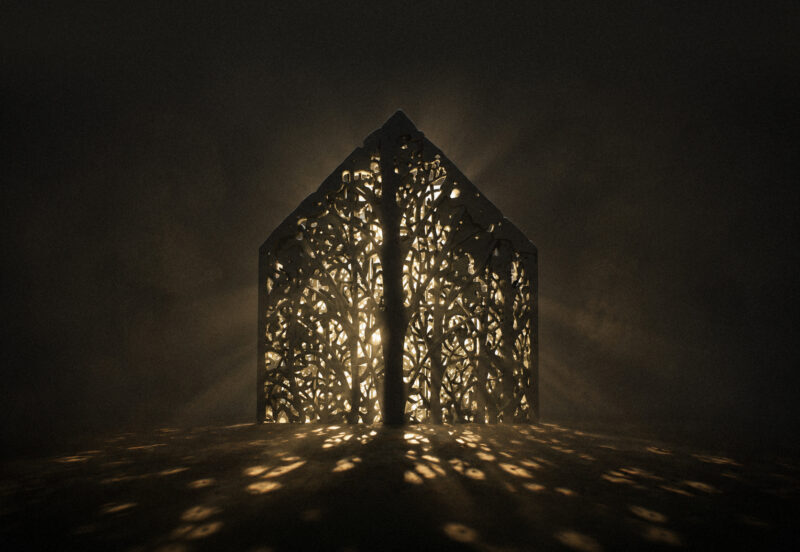
- Ritual Remains by Stina Henriksson, which investigated the sensory rituals associated with lighting cigarettes and candles, framing fire as a vessel for personal memory.
- Slaapzak Kast (Sleeping Bag Cupboard) by Lotte Raida, which reinterpreted domestic storage furniture through the tactile memory of outdoor camping holidays.
- Make Me Fit by Astrid Vagner, which examined the psychological pressures of femininity and bodily expectations through custom leather footwear.
- The Swedish School of Textiles: Exit26
Pushing the theoretical and technical boundaries of material science, students from the Swedish School of Textiles presented Exit26. The graduate exhibition explored the intersection of advanced computational craft, textile engineering, and wearable sculpture, dissolving the traditional divisions between physical garments and digital architecture. Standout contributions included Viola Schmidt’s The Jeweld Hand, featuring delicate threads trailing from suede elbow-length gloves to blur the boundary between accessory and textile installation, and Phlox van Oppen’s Weaving Life Stories of Resilient Women, which utilized multilayered jacquard weaving to document personal narratives of trauma and recovery.
- Atelier Arunika: Picche Chest of Drawers
Bringing whimsical character and Postmodern sensibilities to contemporary furniture design, Indian designer Arunika Sarkar of Atelier Arunika introduced the Picche chest of drawers. Characterized by rounded, pill-shaped proportions and heavily inspired by the meticulously framed cinematic aesthetics of filmmaker Wes Anderson, Picche challenges industrial standardization. "At a time when design is increasingly shaped by efficiency and standardization, Picche explores the value of individuality, play, and emotional connection," Sarkar noted, advocating for furniture that possesses an independent narrative presence within architectural spaces.
- Impakt – Centre for Media Culture: Code 2026: Terms of Intimacy
Concluding the major highlights of DDW 2026, the Impakt Centre for Media Culture presented Code 2026: Terms of Intimacy. Featuring seven distinct artistic interventions, the exhibition interrogated the invisible lines separating digital convenience, emotional connection, and corporate surveillance. Addressing sensitive topics ranging from biometric data harvesting to algorithmic AI companionship, works like Simon Pillaud’s The Affirmation Machine translated complex debates surrounding digital privacy and human autonomy into visceral, interactive physical experiences.
Broader Impact and Implications of DDW 2026
The 26th edition of Dutch Design Week demonstrated a decisive maturation in contemporary design discourse. By uniting under the banner of Rebel Authentic Worth, participating designers, academic institutions, and commercial partners signaled a collective pivot away from superficial technocratic solutionism. Instead, DDW 2026 established a vital platform for material accountability, emotional resonance, and critical civic engagement. As industries worldwide grapple with the disruptive realities of artificial intelligence, climate degradation, and socio-political polarization, the projects showcased in Eindhoven offer a blueprint for how radical imagination and unpolished experimentation can forge a more resilient, human-centric future.
Related posts: