Roaches International Secures Landmark Textile Laboratory Order for Indonesian Manufacturer Alia Digital Printex

Roaches International, a prominent member of the British Textile Machinery Association (BTMA), has successfully completed its largest integrated order for textile laboratory equipment to date, marking a significant milestone for the UK-based manufacturer. The project involved the design, supply, and installation of 19 specialized testing machines for a new state-of-the-art facility operated by Alia Digital Printex in Jakarta, Indonesia. This massive logistics operation saw over two tons of precision equipment travel 12,000 miles to support the Indonesian company’s growing production capacity.
The delivery, finalized in late October 2026, underscores a shift in how textile manufacturers approach quality control. Rather than procuring disparate instruments from multiple vendors, Alia Digital Printex opted for a turnkey laboratory solution, relying on Roaches International to handle everything from initial equipment specification and bespoke engineering design to on-site installation and comprehensive staff training.
Corporate Background and Operational Context
Alia Digital Printex, founded in Jakarta in 2017, has rapidly become a key player in the regional textile sector. The company specializes in the high-precision digital printing of textiles, with a specific focus on the apparel market, including scarves, hijabs, and traditional prayer garments. As of late 2026, the company maintains a robust workforce of over 500 employees and boasts a daily production capacity of 18,000 linear metres of fabric.
The establishment of the new laboratory is a strategic move to accommodate the firm’s expanding manufacturing footprint. With international fashion brands increasingly requiring stringent quality assurance, Alia Digital Printex needed a facility that could provide repeatable, reliable data on fabric performance, colorfastness, and material integrity. The partnership with Roaches International, facilitated by local distributor PT. Kawan Era Baru, ensures that the new facility meets international testing standards, providing the technical foundation required for the company to scale its exports to competitive global markets.
The Logistics of a Global Engineering Project
The scale of this project required a meticulous multi-phase approach. The process began with a comprehensive consultation phase where Roaches engineers analyzed the specific testing needs of Alia Digital Printex’s diverse product range. Once the specifications were finalized, the manufacturing phase took place at the Roaches production facility in the United Kingdom, where each of the 19 units was custom-calibrated for the Indonesian climate and the specific fabric types handled by the plant.
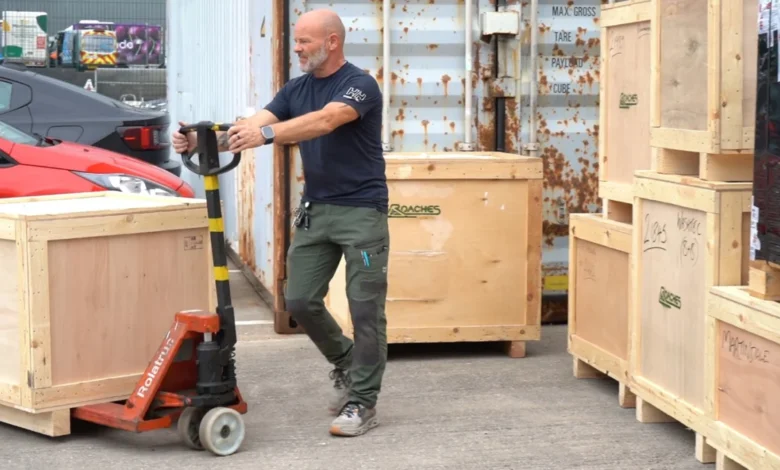
Following production, the equipment was crated and dispatched for its 12,000-mile journey to Jakarta. Upon arrival, the engineering support team from Roaches worked in tandem with PT. Kawan Era Baru to manage the delicate installation process. This on-site phase was critical, involving not just the physical setup of the machinery but also the configuration of integrated testing protocols, ensuring that the lab was fully functional and compliant with international textile testing norms upon handover.

The Shift Toward Integrated Quality Control
The success of the Alia Digital Printex project highlights a broader industry trend: the move toward fully integrated, "connected" textile laboratories. In the past, testing instruments were often treated as silos—individual units that operated independently, requiring manual data entry and fragmented analysis.
As the textile industry undergoes a digital transformation, manufacturers are increasingly looking for ways to streamline data flow. By sourcing an entire laboratory from a single supplier, manufacturers like Alia Digital Printex can ensure that all machines share a common interface and data language. This standardization is the first step toward a more digitized quality control ecosystem, where information from disparate instruments can be aggregated into a central database.
The Future of AI in Textile Testing
Industry analysts suggest that the next phase of this transition will be driven by artificial intelligence. Once testing data is standardized across a single platform, AI algorithms can be deployed to identify patterns that were previously invisible to human operators. For instance, AI could correlate specific processing conditions—such as heat, pressure, or chemical application—with finished product performance metrics, such as shrinkage or color migration.
This predictive capability allows manufacturers to adjust production parameters in real-time, reducing waste and increasing the consistency of the final fabric. By choosing a single-vendor laboratory setup now, Alia Digital Printex has positioned itself to adopt these future technologies with minimal disruption.
Official Perspectives
Seth Seagraves, Marketing Executive at Roaches International, emphasized the significance of the project beyond its immediate scale. "This is a pivotal moment for our company because it demonstrates the tangible advantages of a holistic approach to lab design," Seagraves stated. "The real opportunity for the textile sector is to connect the information generated by these machines. By treating the lab as an integrated system, we enable manufacturers to build a comprehensive picture of fabric quality that was previously unattainable."
Seagraves also noted the role of ongoing technological development, such as the company’s AXYZ and Sentire systems. These platforms exemplify how digital control and objective measurement can reduce human error and elevate laboratory standards.
Jason Kent, CEO of the British Textile Machinery Association, praised the deal as a testament to the enduring competitiveness of UK engineering. "Roaches International is a stellar example of how British firms continue to lead through innovation and customer-centric support," Kent said. "Winning a contract of this magnitude in a highly competitive international market like Indonesia proves that our manufacturers are not just selling machines—they are providing the essential infrastructure for the future of the global textile industry."

Market Implications and Future Outlook
The expansion of Alia Digital Printex’s capabilities comes at a time when the global textile supply chain is under intense pressure to improve transparency and quality consistency. As brands face stricter sustainability mandates and consumer demand for high-quality, durable garments increases, the role of independent, in-house testing becomes paramount.
For the Indonesian textile market, this investment serves as a benchmark. It signals a shift away from low-cost, high-volume production toward higher-value, quality-assured manufacturing. If other regional manufacturers follow this lead, it could significantly alter the competitive landscape in Southeast Asia, with a greater emphasis on technical precision and data-driven production.
Furthermore, the collaboration serves as a case study for the BTMA’s export strategy. By leveraging the expertise of local partners like PT. Kawan Era Baru, UK manufacturers can overcome the logistical hurdles of long-distance supply chains while maintaining the high standards of support that international clients expect.
As the project concludes, the focus shifts to long-term maintenance and software upgrades. The single-supplier model chosen by the client simplifies these processes, as training programs and maintenance schedules are consolidated under one partner. This stability is expected to yield dividends for Alia Digital Printex as they continue to refine their digital printing processes and expand their footprint in both local and international fashion markets.
Ultimately, the delivery of this laboratory equipment is more than a simple business transaction; it is a strategic investment in the future of digital textile production, reflecting a global trend toward smarter, more connected, and highly efficient manufacturing environments. As artificial intelligence and big data continue to reshape the factory floor, the foundation laid by this project in Jakarta will likely serve as a blueprint for other textile enterprises looking to modernize their quality control operations.