Virtual Studio at the Cidade das TIC, A Coruña Arms Factory / Diaz y Diaz Architects

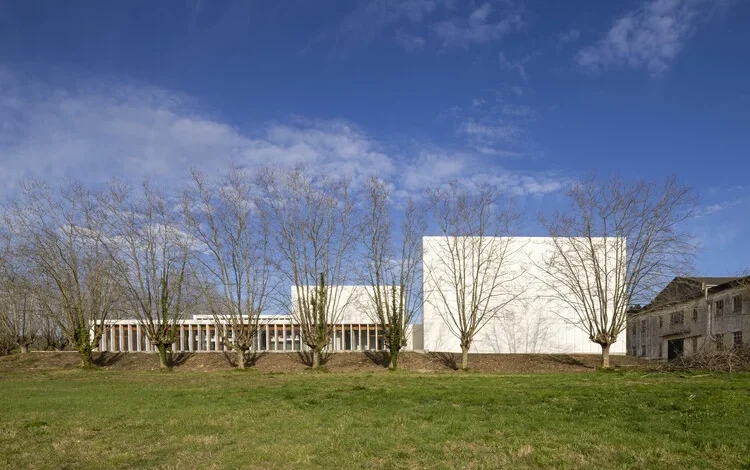
The transformation of the former Santa Bárbara Arms Factory in A Coruña, Spain, has reached a significant milestone with the completion of the Virtual Studio, a cutting-edge facility integrated into the Cidade das TIC (Information and Communication Technologies City). Designed by the architecture firm Diaz y Diaz, this project serves as a physical manifestation of the site’s radical transition: shifting from a hub of mid-20th-century industrial weaponry production to a global epicenter for digital innovation, virtual production, and technological research.
Architectural Concept: The Duality of Space
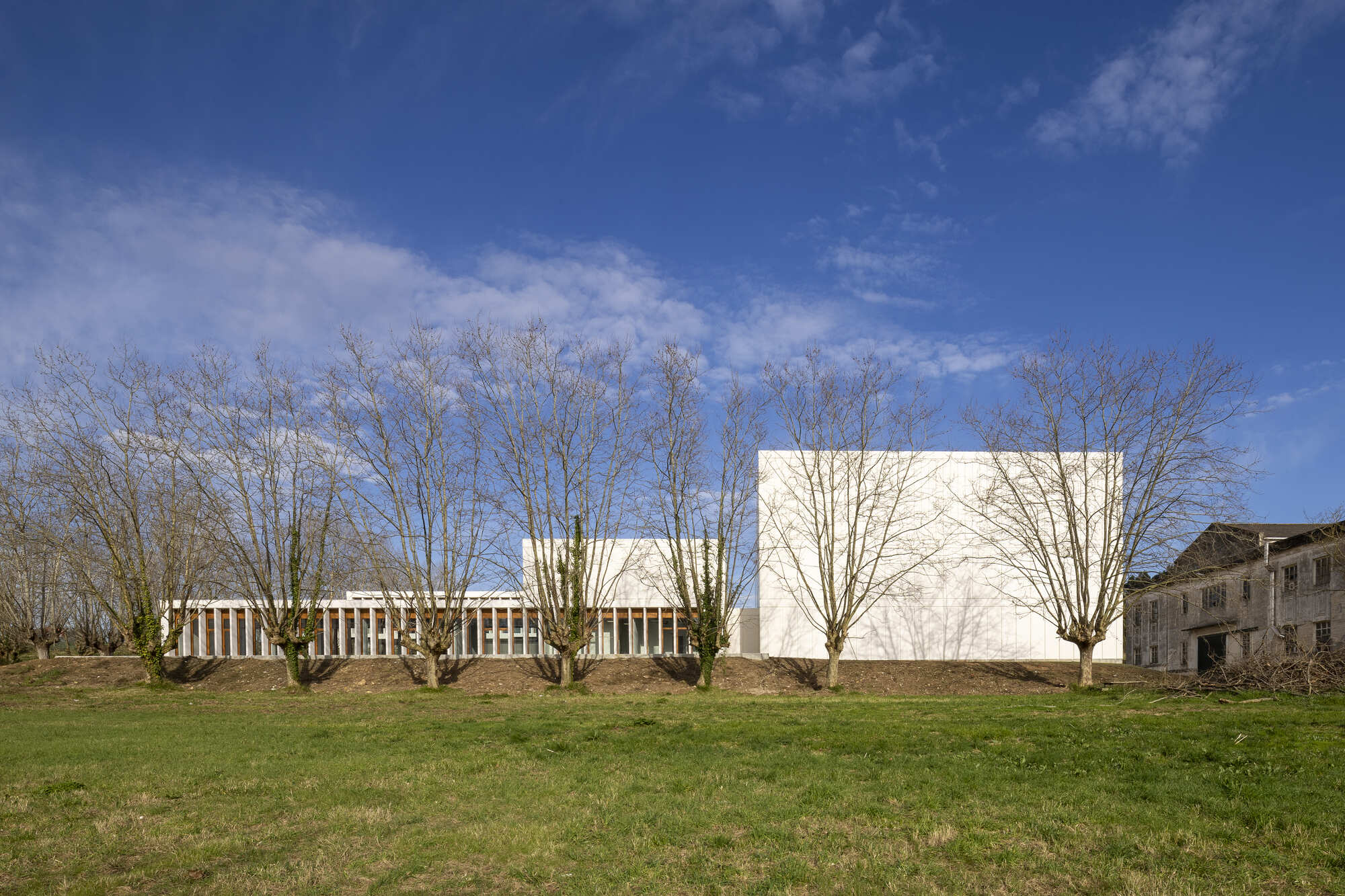
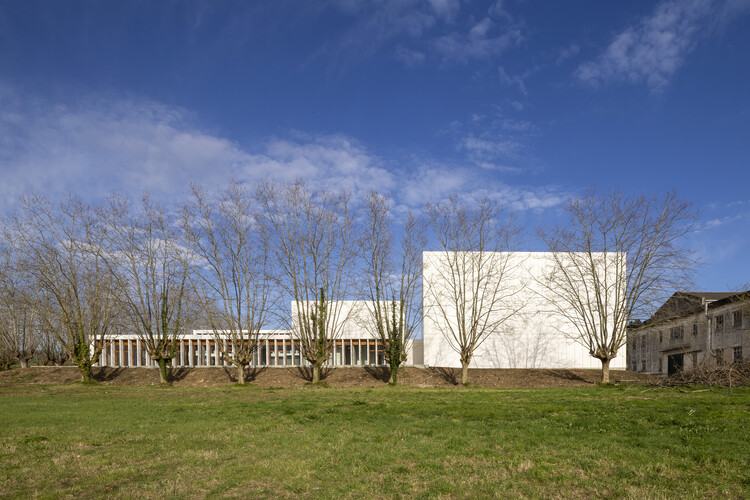
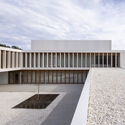
At the core of the Diaz y Diaz proposal lies a fundamental architectural duality. The project is conceived as a "hermetic box"—a necessity for the precise, controlled environments required for modern virtual production—that simultaneously maintains an open dialogue with its historical context. The studio is not merely an isolated room; it is a carefully calibrated piece of infrastructure that acknowledges the monumental industrial memory of the A Coruña site while providing the high-performance conditions required for contemporary digital workflows.
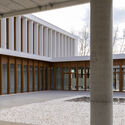
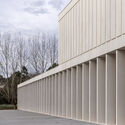
The design team utilized high-performance, minimalist materials to define the interior volumes. By employing a clean, austere aesthetic, the architects have ensured that the space remains a "blank canvas," allowing for the flexibility required by filmmakers, game developers, and tech researchers who utilize the facility. This is contrasted by the exterior, which respects the massive, rugged geometry of the original factory complex, bridging the gap between the concrete legacy of the post-war era and the ethereal nature of the digital world created within.
Historical Context: From Munitions to Multimedia
The site of the Cidade das TIC holds immense historical weight in the Galicia region. The Santa Bárbara factory was, for decades, a pillar of the local economy, representing the industrial might of 20th-century Spain. However, as the global economy shifted toward service-based and technological sectors, the massive facility faced obsolescence.
The decision to repurpose the site, rather than demolish it, reflects a growing trend in European urban planning toward adaptive reuse. The Cidade das TIC project is the result of years of advocacy by local authorities, educational institutions, and private tech firms to convert the factory into a specialized district for the digital economy. The Virtual Studio is one of the most critical components of this master plan, providing the physical infrastructure necessary to host high-end film production, motion capture studios, and artificial intelligence testing grounds.
Timeline of Development
The evolution of the site can be traced through several key phases:
- 1950s–1990s: The Santa Bárbara Arms Factory operates as a major state-run industrial complex, providing employment for thousands in the A Coruña region.
- 2000s: Following a decline in defense contracts and industrial shifts, the site enters a period of dormancy and partial abandonment.
- 2018–2020: Local government officials and the University of A Coruña begin formalizing plans to convert the site into an IT hub.
- 2022: The master plan for the Cidade das TIC is approved, earmarking the factory for multi-use technological development.
- 2024–2025: Construction and renovation work, including the Diaz y Diaz Virtual Studio, commences, focusing on structural reinforcement and internal retrofitting.
- October 2026: Official unveiling of the Virtual Studio, marking its entry into the regional innovation network.
Supporting Data and Technical Specifications
The Virtual Studio is designed to meet international standards for high-fidelity digital production. The facility features a high-volume ceiling capacity, allowing for extensive rigging and lighting arrays required for green-screen and LED-volume workflows. Acoustic insulation is achieved through specialized wall systems that decouple the internal studio environment from the broader industrial shell, ensuring that the facility remains free from external vibration and noise—a critical requirement for high-end audio recording and sensitive sensor calibration.
Beyond the physical space, the studio is integrated into the city’s high-speed data backbone. The proximity to the other research units within the Cidade das TIC allows for rapid data transfer between the studio and the cloud-computing servers located on the same campus, significantly reducing the render times for complex real-time graphics.
Institutional Responses and Stakeholder Impact
Representatives from Diaz y Diaz Architects have emphasized that the primary challenge of the project was balancing technical requirements with historical preservation. "We were tasked with creating an environment of complete sensory control within a structure built for heavy industrial labor," a firm spokesperson noted. "The result is a structure that functions as a high-tech instrument, yet remains deeply rooted in the rugged, concrete character of the original site."
Local government officials have lauded the project as a catalyst for economic growth in A Coruña. By attracting film production companies, video game studios, and research labs to the facility, the city expects to retain local technological talent that might otherwise migrate to larger European hubs like Madrid or London. The project is anticipated to create hundreds of specialized jobs in the digital media sector over the next five years.
Broader Implications: The Future of Industrial Heritage
The Virtual Studio at the Cidade das TIC stands as a case study for the adaptive reuse of industrial ruins. In many urban environments, factories of this scale are often cleared for residential development or retail spaces, which can strip an area of its historical identity. By retaining the shell of the arms factory and inserting a high-tech "virtual" program inside it, the architects have preserved the physical history of A Coruña while enabling the city to participate in the global digital economy.

Furthermore, the project highlights a shift in the definition of "industry." Where the site once produced physical ammunition, it now produces "digital content." This conceptual continuity—the production of goods that influence the outside world—has been preserved, even if the nature of the output has fundamentally changed.
As the Cidade das TIC continues to expand, the success of the Virtual Studio will likely serve as a benchmark for similar projects across Spain. It demonstrates that the marriage of historical industrial architecture with modern technological needs is not only feasible but can also produce highly functional, iconic spaces that serve as landmarks for future urban development. The project is a testament to the fact that, in the era of the digital revolution, the physical environment remains a powerful tool for defining the culture and economic trajectory of a city.
Related posts: