The Architectural Context of Merano
To understand the significance of the Hotel Aurora project, one must first look at the unique urban evolution of Merano. Throughout the nineteenth century, Merano transitioned from a quiet medieval outpost to a world-renowned "Kurstadt" (spa town), largely due to its mild Mediterranean microclimate and the patronage of the Austrian imperial family, most notably Empress Elisabeth (Sissi). This period of rapid growth bequeathed the city a distinctive architectural language characterized by Belle Époque hotels, ornate promenades, and neoclassical villas.
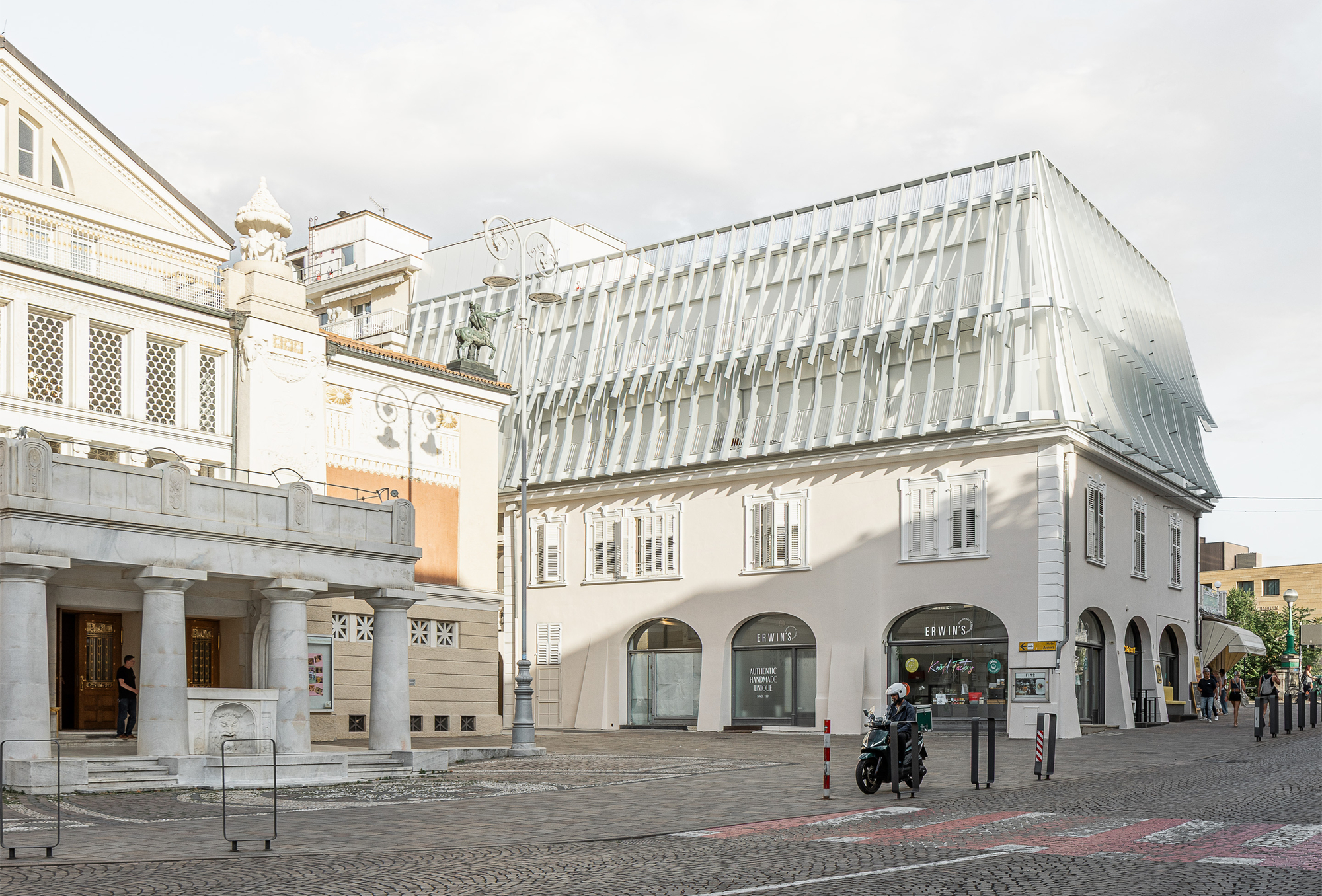
The hotel typology, in particular, has been central to Merano’s identity. These structures were never merely places of lodging; they were social hubs that dictated the rhythm of the city. However, as the twentieth century progressed, Merano also became a canvas for modernist experimentation. The Hotel Aurora sits directly adjacent to a residential building designed in the 1960s by Armando Ronca, one of the most influential figures of South Tyrolean modernism. Ronca’s work introduced a rigorous, functionalist aesthetic to the city, creating a dialogue—and sometimes a tension—with the historical fabric.
The challenge for feld72 was to insert a contemporary volume into this delicate ecosystem. The firm, known for its research-driven approach and sensitivity to social context, sought to create a building that did not merely imitate the past nor ignore it, but rather acted as a "mediator."
Strategic Design and Urban Mediation
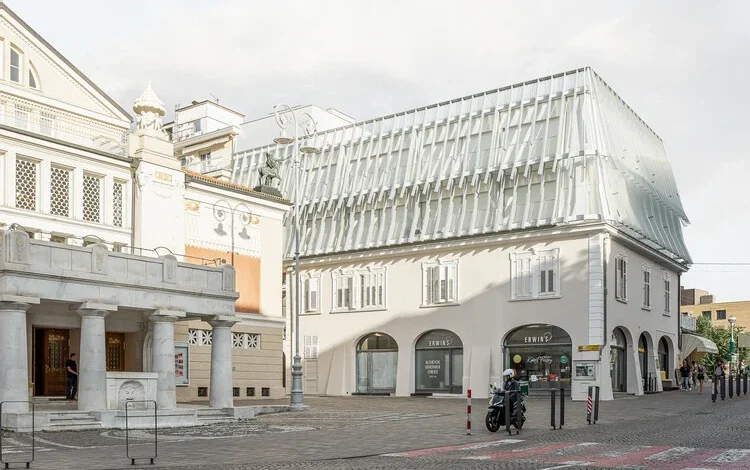
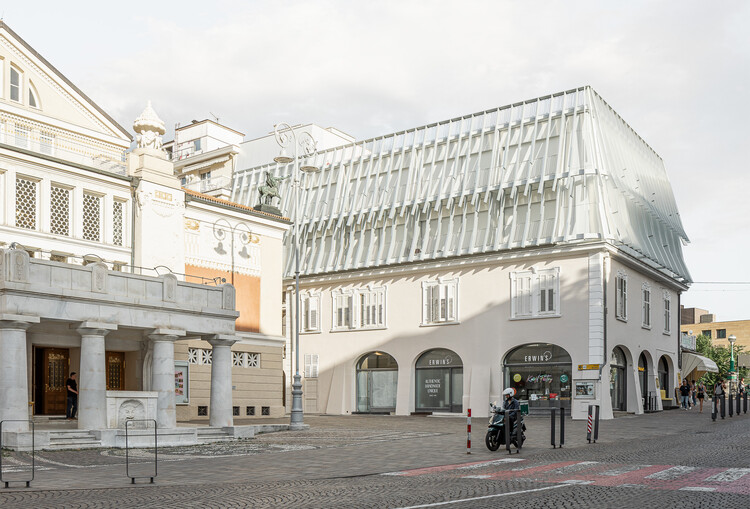
The Hotel Aurora occupies a threshold position. To its front lies the Passer River, with its expansive promenades and open landscape; to its rear and sides lies the dense, intricate network of streets leading to the municipal theatre and the commercial heart of the city. This dual orientation required a design that could respond to two very different scales: the wide-angle view of the riverfront and the intimate, tactile experience of the street level.
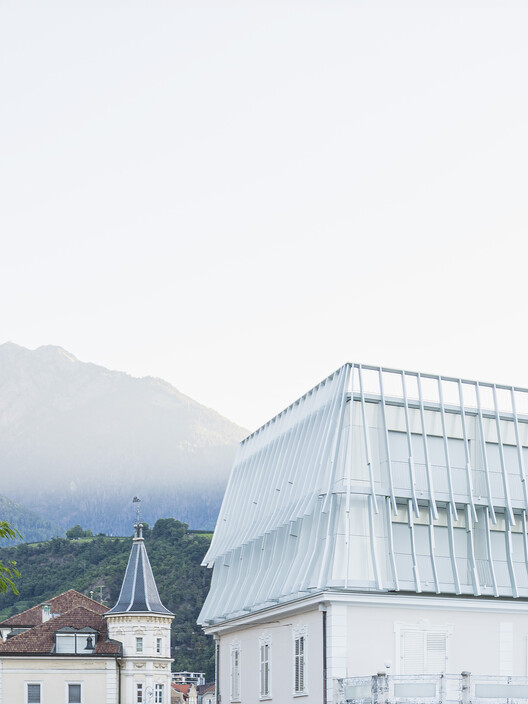
The architects at feld72 focused on continuity. Instead of a radical break from the surrounding heights and volumes, the Hotel Aurora respects the established skyline. Its facade is a study in rhythm and materiality, designed to echo the balconies and window proportions of the neighboring historic hotels while adopting the clean lines and structural honesty of Ronca’s modernism. The result is a structure that feels both new and inevitable, as if it were the missing piece of a long-evolving urban puzzle.
Chronology of Development and Site History
The development of the Hotel Aurora site follows a timeline that mirrors the broader shifts in European tourism and urban planning:
- Late 19th Century: The area around the Passer Promenade becomes the epicenter of Merano’s social life. The municipal theatre is constructed, establishing the neighborhood as a cultural district.
- Post-War Expansion (1950s-1960s): Merano undergoes a second wave of modernization. Armando Ronca designs several landmark buildings, including the residential block adjacent to the Aurora site, introducing reinforced concrete and geometric rigor to the city.
- Late 20th Century: The original structures on the Aurora site undergo various modifications, reflecting the changing demands of the hospitality industry but often losing architectural cohesion.
- 2020-2024: feld72 Architekten ZT GmbH is commissioned to reimagine the hotel. The project involves a deep analysis of the site’s historical layers, leading to a design that prioritizes urban integration and sustainable materiality.
- 2026: The project is completed and published, setting a new standard for contextual modernism in the Alps.
Materiality and Interior Philosophy
The choice of materials for Hotel Aurora is deeply rooted in the regional vernacular of South Tyrol, yet applied with a contemporary sensibility. The facade utilizes a palette that harmonizes with the earthy tones of the surrounding mountains and the plastered finishes of Merano’s historic center. By using high-quality finishes that age gracefully, the architects ensure that the building will maintain its aesthetic integrity in the face of the alpine climate.
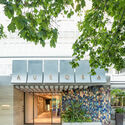
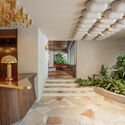
Internally, the hotel is designed to be an extension of the city’s public space. The ground floor is characterized by transparency and permeability, inviting the life of the promenade into the lobby and dining areas. The transition from the public realm to the private guest rooms is managed through a series of "buffer zones"—balconies and loggias that provide guests with views of the river while maintaining a sense of seclusion. These balconies are a direct nod to the "resort architecture" of the 1900s, where the act of "taking the air" was a central part of the guest experience.
Supporting Data and Economic Impact
The revitalization of the Hotel Aurora comes at a time when South Tyrol is experiencing a significant shift in its tourism sector. According to data from the Provincial Statistics Institute (ASTAT), Merano remains one of the most visited destinations in the region, with over 1.2 million overnight stays recorded annually in recent years. However, there has been a notable trend toward "design-led" tourism, where travelers seek accommodations that offer a unique sense of place and architectural quality.
- Regional Investment: The hospitality sector in South Tyrol accounts for approximately 11% of the regional GDP. Projects like Hotel Aurora represent a strategic move to move away from mass tourism toward high-value, sustainable urban tourism.
- Architectural Value: The project has been recognized for its contribution to "Baukultur" (the culture of building), a movement in the Alps that promotes high-quality architecture as a means of preserving regional identity while embracing the future.
- Environmental Footprint: Although specific energy metrics are proprietary, the design follows contemporary European standards for thermal insulation and sustainable heating, crucial for a city that experiences both hot summers and snowy winters.
Official Responses and Architectural Analysis
Industry experts have praised the project for its "quiet confidence." In a statement reflecting on the project’s completion, the design team at feld72 noted that their primary goal was to "reconcile the different speeds of the city"—the slow, contemplative pace of the promenade and the faster, more dynamic pulse of the theater district.
Local urban planning authorities in Merano have also highlighted the project as a model for "inner-city redensification." By replacing or upgrading underutilized structures with a high-quality architectural volume, the project enhances the urban fabric without encroaching on the green spaces that make Merano famous. Critics have pointed out that the Hotel Aurora’s success lies in its "tectonic politeness"—the way it sits next to the Ronca building without trying to overshadow it, creating a respectful dialogue between two different eras of modern thought.
Broader Implications for Alpine Urbanism
The Hotel Aurora / feld72 Architekten ZT GmbH project serves as a case study for the future of Alpine urbanism. As mountain towns across Europe grapple with the pressures of climate change, over-tourism, and the need for modernization, the "Merano model" offers a potential path forward. This model suggests that progress does not require the erasure of history, nor does preservation require the stagnation of design.
By treating the city as a living organism rather than a museum, feld72 has demonstrated that contemporary architecture can be a tool for healing urban scars. The Hotel Aurora does not just provide beds for tourists; it reinforces the social and visual continuity of the Passer Promenade. It acknowledges that a city’s character is not found in a single style, but in the layers of different styles that accumulate over centuries.
As Merano continues to evolve, the Hotel Aurora will stand as a testament to a specific moment in the early 21st century when architects chose to listen to the site before they began to draw. It is a building that understands its role as a threshold—not just between the river and the square, but between the rich heritage of the past and the possibilities of the future. The project reaffirms that in the realm of high-end hospitality, the greatest luxury a hotel can offer is a deep, authentic connection to its location.