Chester Higgins: Shared Memories Exhibition Celebrates Six Decades of Humanity and Representation Through Photography

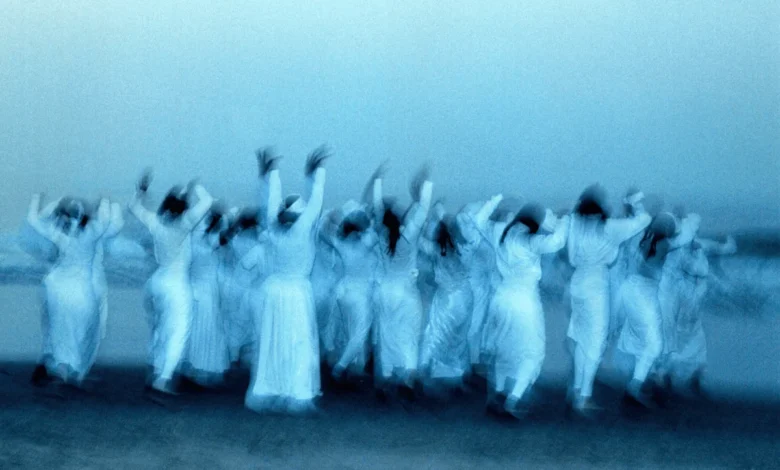
For more than six decades, acclaimed documentary photographer Chester Higgins has used his lens to construct a profound visual archive honoring the dignity, complexity, and global history of people of African descent. Currently on view at the Bruce Silverstein Gallery in New York City through June 20, 2026, the comprehensive retrospective exhibition titled Chester Higgins: Shared Memories brings together six decades of his pioneering work. The retrospective serves not only as a celebration of an extraordinary artistic career that spanned nearly forty years at The New York Times, but also as a critical examination of how visual media shapes cultural identity, humanizes marginalized communities, and challenges persistent historical stereotypes.
Main Facts and Exhibition Overview
Chester Higgins: Shared Memories presents a sweeping chronological and thematic overview of Higgins’s life’s work, featuring iconic imagery captured across the United States, Africa, and the Caribbean. The exhibition highlights his unique ability to document the human condition with empathy, free from the constraints of traditional journalistic tropes that historically marginalized Black subjects.
Born in rural southern Alabama during the apex of the Jim Crow era and the burgeoning Civil Rights movement, Higgins’s trajectory from a chemistry student at Tuskegee University to a visionary staff photographer at the nation’s paper of record is a testament to the power of self-determination in visual storytelling. The exhibition at the Bruce Silverstein Gallery curates pivotal moments from his extensive portfolio, showcasing his travels to document African diaspora communities, spiritual ceremonies, and the quiet dignity of everyday life across diverse socioeconomic landscapes.

Chronology and Formative Years
Higgins’s journey into photography was catalyzed by the sociopolitical turbulence of the American South during the 1960s. Raised in a segregated environment, he bore witness to the systemic inequalities and racial oppression that defined the era. His exposure to the Civil Rights movement provided a visceral understanding of how media narratives could either empower or subjugate a populace.
While studying at Tuskegee University—a historically Black institution founded by Booker T. Washington—Higgins picked up a camera as a tool for documentation and resistance. A defining moment in his early consciousness occurred the day after he participated in a civil rights protest at the Alabama State Capitol in Montgomery against the segregationist policies of Governor George Wallace. When Higgins examined the local and national newspapers the following morning, he confronted a jarring discrepancy: instead of depicting peaceful American citizens petitioning their government for constitutional rights, the published photographs framed the student demonstrators as menacing agitators, criminals, and threats to public safety.

This early exposure to media bias left an indelible mark on Higgins’s artistic philosophy. It taught him a foundational lesson that would guide his career: "The photograph never lies about the photographer." Higgins realized that a photographer’s internal worldview, emotional baseline, and sociological biases inevitably project themselves onto their subjects. If a photographer harbors disdain or fear toward a community, those sentiments will manifest in the resulting imagery. Conversely, a lens guided by empathy and respect yields portraits of profound dignity.
A Career at The New York Times and the Battle for Balanced Representation
In 1975, Higgins joined the photography staff of The New York Times, embarking on a tenure that would last nearly four decades. Entering the mainstream media establishment as a Black photojournalist during a period of institutional homogeneity placed Higgins at the vanguard of a quiet revolution within American journalism.

Prior to Higgins’s tenure and the broader shifts in late-20th-century media, mainstream photographic coverage of Black Americans was predominantly crisis-driven, focusing disproportionately on crime, poverty, and urban decay. This narrow portrayal reinforced systemic prejudices among a largely white readership and decision-making class. Higgins viewed his position at the newspaper of record not merely as an employment opportunity, but as a cultural imperative to alter the nation’s visual diet.
Higgins intentionally broadened the scope of his assignments and self-directed projects to encompass the full spectrum of Black life. When documenting poverty, for instance, he consciously rejected the traditional journalistic lenses of classism, pity, and exclusion. Instead of reducing impoverished individuals to flat statistics or objects of charity, he framed them through the universal lens of shared humanity.

Throughout his decades at The New York Times, Higgins trained his lens on the ordinary and extraordinary moments that define human existence: family gatherings, spiritual ceremonies, celebrations, daily labor, and the graceful aging of individuals. By injecting these nuanced portrayals into the pages consumed daily by America’s political, economic, and cultural leaders, Higgins systematically expanded the visual horizons of the publication’s readership.
Upon his retirement, the managing editor of The New York Times acknowledged the profound impact of Higgins’s work, noting that he had fundamentally altered the way the predominantly white editorial staff and readership perceived Black people, effectively expanding the horizons of the institution.

Philosophical Foundations: The Signature of the Spirit
Beyond his documentary contributions to journalism, Higgins’s artistic identity is deeply rooted in a philosophical and spiritual search for identity. Having experienced an out-of-mind or out-of-body shift in perception during his youth, Higgins developed a worldview that reality is multi-layered and operates in parallel dimensions.
Higgins describes his creative process as an alignment with what he terms the "Signature of the Spirit"—a marriage between nature and human life driven by underlying, invisible forces that operate beneath the threshold of ordinary sensory perception. Rather than functioning as an intrusive observer, Higgins views himself as an "ortovert" who has harnessed his ego to allow the natural rhythm of life to unfold before his camera. His photographs seek to capture those transient moments where the spiritual world intersects with physical reality.

Broader Impact and Implications
The staging of Chester Higgins: Shared Memories arrives at a critical juncture in contemporary cultural discourse regarding representation, media literacy, and historical memory. In an era where digital media and algorithmic feeds frequently amplify polarized narratives and visual stereotypes, Higgins’s six-decade body of work offers a corrective counter-narrative rooted in empathy, historical depth, and universal human truths.
Art historians and cultural critics note that Higgins’s legacy extends far beyond the technical mastery of composition and lighting. By steadfastly refusing to compromise the dignity of his subjects, he established a new ethical standard for documentary photography. His work demonstrates that art can function as a bridge between disparate communities, translating complex societal data into digestible, emotional truths that invite viewers to reevaluate their own perceptions.

As Chester Higgins: Shared Memories remains on view at the Bruce Silverstein Gallery through June 20, 2026, it invites a new generation of artists, journalists, and citizens to consider the power inherent in the act of looking. Higgins’s enduring contribution remains a masterclass in how visual storytelling can dismantle prejudice, heal historical miseducation, and illuminate the shared spirit that unites all human experiences.