Arne Arens on Revolutionizing Apparel Manufacturing with unspun’s 3D Weaving Technology


The global apparel industry stands at a critical juncture, grappling with systemic inefficiencies, geopolitical volatility, and an urgent mandate for sustainability. Against this backdrop, unspun, a deep-tech company specializing in 3D weaving, is poised to redefine the manufacturing landscape. At its helm is Arne Arens, a seasoned executive who has transitioned from leading major brands like The North Face and Boardriders to spearheading technological innovation. Arens’ unique vantage point—having navigated the complexities of global supply chains from the brand side and now driving a disruptive production solution—offers unparalleled insight into the industry’s potential transformation. His journey to unspun underscores a growing recognition that incremental changes are insufficient to address the profound challenges facing fashion manufacturing today.
The Enduring Crisis in Apparel Manufacturing

For decades, the apparel industry has operated on a model built for mass production, characterized by long lead times, geographical dispersion, and significant waste. This traditional "cut-and-sew" paradigm, which involves weaving flat fabric, cutting pattern pieces, and then labor-intensively sewing them together, has moved predominantly to low-wage countries in Asia. This outsourcing was driven by the principle of "labour arbitrage," where significant cost savings could be achieved through cheaper labor. However, this model has inherent drawbacks: extended lead times (often 9-12 months), massive forecasting inaccuracies leading to overproduction, and substantial material waste on cutting floors.
The consequences of this legacy system are multifaceted. Financially, brands grapple with excess inventory, forced markdowns, and diminished profitability. Environmentally, the industry is a major contributor to pollution, carbon emissions, and landfill waste, with an estimated 10-15% of fabric wasted during the cutting process alone, and a significant portion of garments never even sold. Socially, the reliance on low-wage labor has raised ethical concerns regarding working conditions and fair compensation.
Recent global events have amplified these vulnerabilities. The COVID-19 pandemic exposed the fragility of extended supply chains, causing unprecedented disruptions in production and shipping. Geopolitical tensions, such as trade wars and regional conflicts, have led to unpredictable tariffs and increased supply chain fragmentation. The general shakiness of the global order, marked by rising protectionism and economic nationalism, has created a strong mandate for state-level investment in domestic infrastructure. This environment has made the case for reshoring manufacturing not just a matter of national interest, but a strategic imperative for brands seeking resilience and agility.

Unveiling 3D Weaving: unspun’s Vega Platform
At the heart of unspun’s disruptive potential is its proprietary 3D weaving technology, embodied in the Vega machine. Unlike traditional weaving, which produces two-dimensional fabric, Vega directly weaves three-dimensional garment components. Arne Arens elaborates on this innovation: "Traditional weaving makes a flat fabric… you take that flat fabric, cut shapes out of it, sew them together and create a final product. All the things that are challenging about apparel manufacturing live in the multitude of steps you have to go through: the waste on the cutting floor, the labour in the sewing, and the lead time."
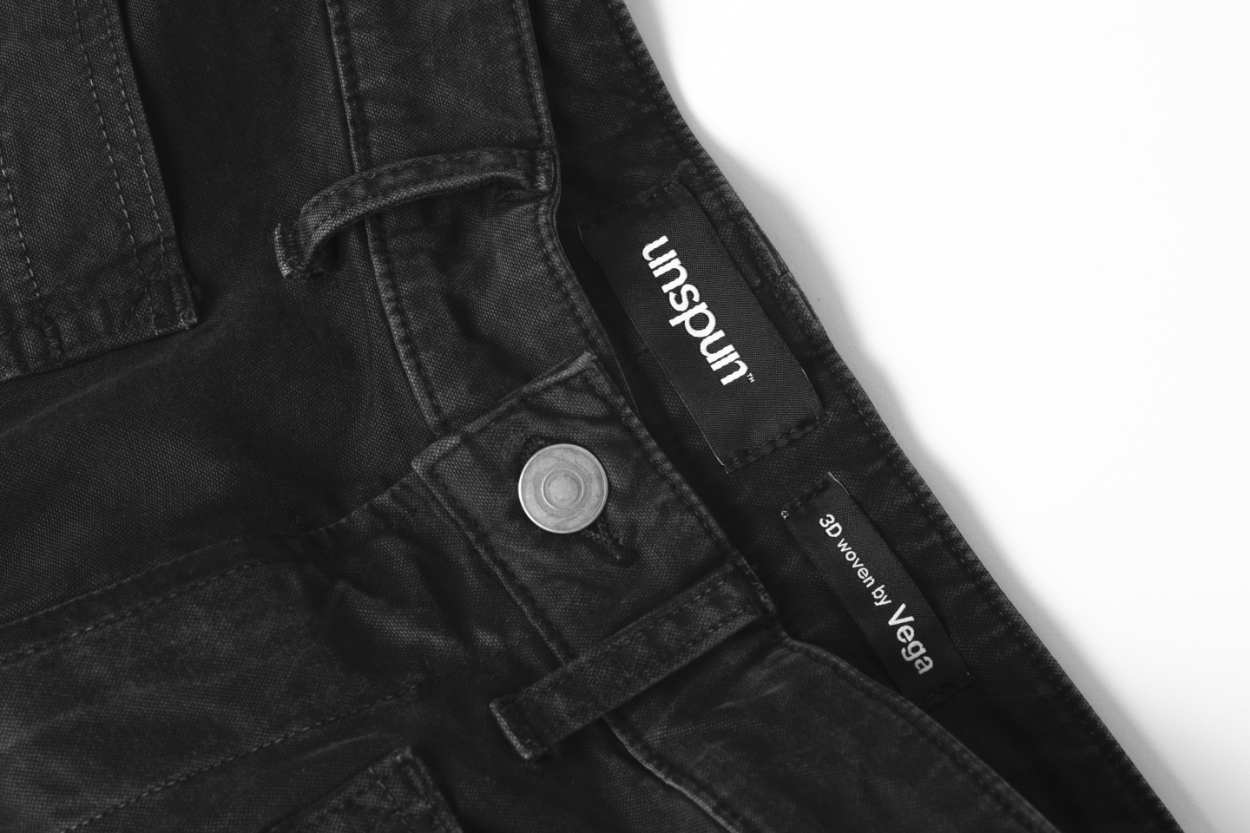
Unspun’s approach fundamentally alters this process. The Vega machine uses thousands of individual yarns (up to 3,000) that are interlaced directly into a seamless, three-dimensional tube. This circular weaving motion can change geometry and diameter as it operates, creating a product like a trouser leg that is wider where needed and tapered where appropriate, all in one continuous process. The result is a seamless, woven garment part, eliminating the need for cutting and significantly reducing sewing.

A key differentiator for 3D weaving compared to 3D knitting, which has also seen recent advancements, is speed and scalability. While 3D knitting has often been limited by slower production cycles, making it suitable for niche or high-price-point items, unspun’s Vega machine can produce a pair of trouser legs in approximately eight minutes. This efficiency positions 3D weaving as a viable solution for large-scale production, challenging the notion that innovation in manufacturing must inherently lead to premium pricing. "We can do a pair of trouser legs in about eight minutes, which means we can run this process at scale and at cost," Arens states, highlighting the technology’s potential to democratize advanced manufacturing.
The implications of this direct-to-shape weaving are profound:
- Zero Cutting Waste: By weaving the garment directly into its final shape, fabric waste from cutting is virtually eliminated.
- Reduced Labor: The automation significantly lessens the need for manual cutting and sewing, mitigating labor cost disparities that drove offshoring.
- Shorter Lead Times: The entire process, from yarn to finished fabric, is collapsed into a single step, drastically cutting production cycles.
- Local Production: The automated, cost-effective nature of Vega makes domestic manufacturing economically feasible in high-wage countries like the US and Europe.
- Seamless Comfort and Durability: The woven cloth retains its characteristic structure, hand, and durability while offering the enhanced comfort of a seamless construction.
A CEO’s Pivot: From Brand Leader to Tech Innovator

Arne Arens’ career trajectory provides a unique lens through which to understand unspun’s appeal. His extensive experience as Global Brand President at The North Face (2017-2021) and CEO of Boardriders (owning Quiksilver, Billabong, Roxy, DC Shoes), coupled with his board membership at Everlane, positioned him at the pinnacle of global apparel brand management. He witnessed firsthand the immense pressures of forecasting demand nine to twelve months in advance, the logistical nightmares of global supply chains, and the financial toll of overproduction and discounting.
His move to unspun as CEO earlier this year signifies a fundamental shift in perspective – from managing the outputs of a broken system to actively building its solution. "I’ve spent the last twenty years on the other side of this supply chain, and I’ve seen everything that’s challenging about it," Arens explains. "Being part of something that revolutionises it and addresses so much of the financial waste, the large carbon footprint and the environmental waste that the legacy system creates was just really exciting to me." This tangibility, he notes, is a stark contrast to his previous roles. At unspun’s micro-factory in Emeryville, California, he can literally watch a pair of trousers come off a machine before the day begins, offering an immediate connection to the product and the process that was absent when manufacturing was "nine thousand miles from my desk." This direct engagement with deep technology, at the critical industrialization and commercialization phase, represents a significant career leap for a leader typically associated with brand strategy and market expansion.
Evolution of a Vision: From DTC to Tech Enabler

Unspun’s history provides a compelling narrative of a technology company proving its concept through a consumer-facing brand. In its early days, unspun operated as a direct-to-consumer brand, offering custom-fit jeans. This initial phase, while appearing to be a traditional brand, served as a crucial testing ground for its underlying technology. The core conviction from the outset was that garments should be made "only after you know someone actually wants it," challenging the speculative mass-production model. This on-demand philosophy, rooted in consumer desire rather than distant forecasting, has remained constant.
The pivot from a DTC brand with a website selling custom jeans to a technology company licensing its machines to global manufacturers marks a strategic evolution. The brand served its purpose by validating the technology, refining the production process, and demonstrating the consumer appeal of custom-fit, seamless woven products. Now, unspun aims to be an enabler, providing the tools for manufacturers worldwide to adopt its technology and realize its benefits. This B2B model allows unspun to scale its impact across the industry, rather than remaining a single, albeit innovative, brand.
The company’s software ecosystem is designed to integrate seamlessly into existing design workflows. Designers can continue using familiar 2D and 3D CAD software, such as CLO 3D. Unspun has developed an intermediary software layer that translates these designs into machine instructions for the Vega platform. This means that "the garment really becomes a file," as Arens describes it. This digital asset, encompassing 3D geometry, weave structure, and construction, can then be sent to any manufacturing node equipped with a Vega machine, ensuring consistent and precise production globally. This asset-first approach to design and production, with localized, distributed manufacturing nodes, aligns with the long-held vision of a more agile and responsive supply chain.

Economic Imperatives: Beyond Unit Cost
A critical barrier to domestic manufacturing has traditionally been the unit cost mindset, where brands prioritize the lowest possible price per garment, often found offshore. Unspun directly challenges this by demonstrating significant economic benefits that extend far beyond initial production cost. Arne Arens outlines two primary financial gains:
- Gross Margin Improvement for Brands: The most significant impact stems from reducing overproduction and subsequent discounting. Arens notes that an average apparel retailer discounts approximately 40% of its units seasonally. By reducing lead times from 9-12 months to 1-2 months, forecasting accuracy dramatically improves. Drawing a parallel to agile fast-fashion leaders like Zara, who discount around 15% of their inventory, Arens estimates that brands adopting unspun’s model can achieve a 400-500 basis point (4-5%) gross margin improvement simply by reducing the volume and depth of discounts. This figure doesn’t even account for savings on tariffs and transport costs, which are eliminated with local production.
- Doubled Operating Margins for Manufacturers: For manufacturers, the financial case is equally compelling. The automation offered by Vega collapses multiple traditional steps (weaving flat fabric, shipping, cutting, sewing) into a single, integrated process. This significantly reduces material costs by 50-60% due to the elimination of cutting waste. Combined with the automation of labor, manufacturers can potentially double their operating margins over a four-to-five-year period compared to the legacy supply chain.
Beyond these financial metrics, the environmental savings are substantial. A study commissioned by unspun indicates that its technology can reduce the carbon footprint of garment production by approximately half compared to the traditional supply chain. This is achieved by eliminating cutting waste, minimizing overproduction, and drastically reducing the need for long-distance transportation.

The Geopolitical Tailwind and Reshoring Ambitions
The current geopolitical climate acts as a significant tailwind for unspun’s model. While the core value proposition of reduced lead times and efficiency stands independently, factors like tariffs, trade disputes (e.g., US-China trade war tariffs averaging 7.5% on apparel), and global supply chain vulnerabilities have only strengthened the case for domestic production. The "Made in America" and "Made in Europe" movements are gaining traction, driven by desires for economic security, job creation, and greater control over supply chains.
Arens clarifies that unspun’s viability is not contingent on these external conditions persisting. Even if tariffs were to disappear and offshore production became marginally cheaper, the inherent advantage of a 1-2 month lead time over a 9-12 month lead time remains. "Our idea lives independently of that," he asserts. "Being able to produce locally and on demand is uncoupled from tariffs."

The model’s portability is also a key strength. Arens contends that the technology is equally feasible in Europe as in the US, given that the automation negates the labor arbitrage advantage of traditional offshore production. In fact, he suggests it might be "a little easier" in Europe, where wage rates in countries like Turkey and Portugal are already lower than in the US, making the financial case even stronger. Unspun is actively pursuing opportunities in both regions, aiming to establish manufacturing hubs that can serve local markets.
Building the New Supply Chain: Overcoming the Chicken-and-Egg
The transition to a new manufacturing paradigm faces a classic "chicken-and-egg" problem: brands are hesitant to place on-demand orders without established local infrastructure, while manufacturers are reluctant to invest in new infrastructure without guaranteed demand. Unspun is tackling this challenge through a multi-pronged strategy:
- Strategic Manufacturer Partnerships: Unspun is engaging with world-class manufacturers like Arvind, a vertically integrated apparel producer in India with a vast network of global brands (Gap, Levi’s, PVH). Arvind’s interest, potentially starting with deployment in India and eyeing the US, demonstrates the technology’s global appeal to established players.
- Brand Commitments and US Hub Development: The company has secured letters of support and is in advanced sample development stages with major US retailers like Walmart and REI Co-op. These brands recognize the potential returns and are exploring how to integrate unspun’s technology into their supply chains. Concurrently, unspun is working to establish US manufacturing hubs. A significant development is the stated intent to build a facility in New Mexico, leveraging state government support for advanced manufacturing initiatives. This aligns with the broader push for government subsidies to de-risk investments in domestic production infrastructure.
- Pilot Programs from Emeryville Micro-Factory: Unspun is also running pilot production runs from its micro-factory in Emeryville, California, which houses seven operational Vega machines. These smaller, low-risk orders allow brands like Filson, Patagonia, J.Crew, and Banana Republic to test the technology, assess quality, and gauge consumer uptake without major upfront commitments. These successful pilots are intended to build confidence and pave the way for larger orders.
By orchestrating these "three nodes of the triangle"—unspun’s technology, manufacturer capacity, and brand demand—Arne Arens believes the company can overcome the inherent inertia of the traditional system and catalyze widespread adoption.
Transforming the Workforce: The Future of Manufacturing Jobs
A common concern with automation is its impact on jobs. However, unspun argues that its technology will not only protect but also net-create specialized manufacturing jobs in Western economies, bringing back roles that migrated offshore decades ago. These new jobs, Arens explains, are fundamentally different from the low-wage sewing positions of the past. They are "textile technicians, maintenance people, quality engineers—genuinely skilled industrial roles, with industrial wages."

Furthermore, the automation doesn’t eliminate traditional design skills; it redefines and elevates them. Pattern-making and 3D expertise become even more critical, as every garment must be fully engineered digitally before production. "Pattern knowledge doesn’t disappear in our world. It becomes more important, and it moves into the product file," Arens notes. This means the file itself becomes the precise machine instruction, making these specialized skills more valuable and central to the production process. The shift is towards higher-skilled, higher-paying roles, countering the narrative of widespread job displacement by robots and instead fostering a new generation of advanced manufacturing professionals.
A Decade Ahead: The Vision for Apparel Production
Looking a decade into the future, Arne Arens envisions a fundamental transformation in how woven apparel is produced. The single biggest change, he predicts, will be the elimination of overproduction, moving towards an on-demand, custom-made manufacturing model.

"We’re moving towards an on-demand, custom-made model," Arens states. "If you marry what we’re doing now with the original premise of the company—personal fit—those two things lead to a custom-made, on-demand manufacturing model that cuts out any kind of overproduction." This vision transcends the current mass-manufacturing paradigm, allowing for greater responsiveness to consumer demand, reduced inventory risk, and minimal environmental impact.
The future supply chain will likely feature a distributed network of manufacturing hubs—perhaps one on each coast of the US, one in the middle, or even 35 strategically located facilities across the country and similar clusters in Europe. While the idea of a 3D printer in every home might remain a distant dream for apparel, the concept of localized, on-demand production nodes is highly plausible. Unspun’s technology, by making this model economically viable and efficient, serves as a crucial facilitator for this impending revolution. The transition promises not just faster production and healthier margins, but a more resilient, sustainable, and ethically sound apparel industry for the coming decades.