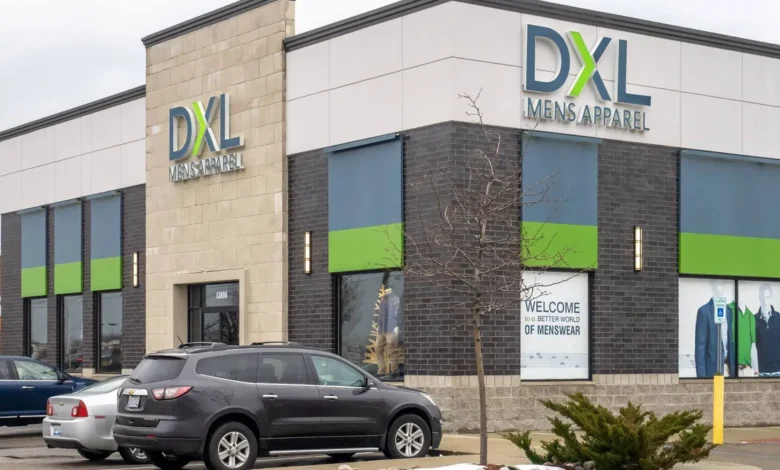
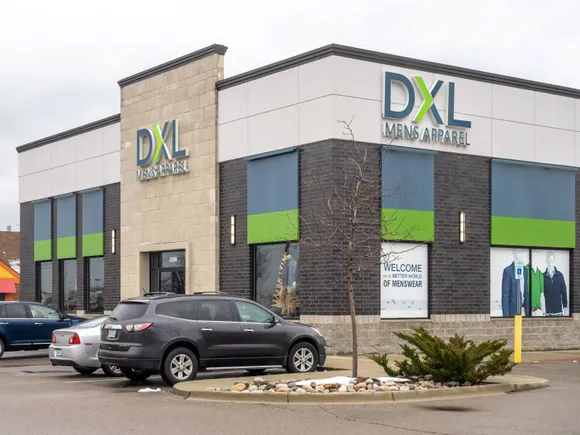
Destination XL Group, a prominent specialty retailer catering to big and tall men’s apparel, continues to grapple with persistent financial headwinds as it moves through the fiscal year. Despite reporting ongoing sales declines during the second quarter, newly appointed interim leadership has struck an optimistic tone, signaling that operational pivots and targeted growth initiatives will soon steer the company back toward profitability and expansion.
During a recent earnings call with financial analysts, interim Chief Executive Officer Lionel Conacher addressed the company’s current financial standing. While acknowledging that sales contractions persisted through the second quarter, Conacher struck a resolute note, telling stakeholders that "a resumption in sales growth is imminent."
The optimism expressed by executive leadership comes at a critical juncture for Destination XL (DXL). The retailer has faced a volatile macroeconomic climate, evolving consumer spending habits, and unique structural shifts within its core demographic. As the company works to stabilize its market position, executive leadership has unveiled a comprehensive, multi-pillared turnaround strategy designed to optimize its retail footprint, enhance customer acquisition, and leverage proprietary fitting technologies to recapture lost momentum.
A Historical Overview of Recent Financial Performance
To fully understand Destination XL’s current strategic maneuvers, analysts must examine the recent trajectory of the company’s top-line performance. The second-quarter sales declines, while challenging, represent a nuanced picture when viewed alongside previous quarters.
In the immediate preceding quarter, DXL reported a year-over-year sales decrease of 2.1%. While second-quarter results indicated that the rate of decline worsened slightly compared to that period, they still reflected an overall moderation when contrasted with the steeper 6% year-over-year sales decline reported in the fourth quarter of the previous fiscal year. This undulating pattern underscores the broader volatility impacting the men’s apparel sector, particularly for specialty retailers whose target markets are undergoing profound lifestyle and demographic shifts.
Executive leadership has been transparent regarding the primary drivers behind these traffic and sales drops. According to customer surveys and internal behavioral data compiled by the company, the traffic slowdown is not indicative of a permanent loss of brand loyalty. Instead, it is attributed to a complex convergence of factors: shifting macroeconomic spending priorities among consumers, delayed purchasing decisions in the face of broader economic uncertainty, and a structural shift linked to modern weight-loss journeys.
The GLP-1 Phenomenon and Its Impact on Big and Tall Retail
One of the most fascinating and consequential factors influencing DXL’s recent performance is the widespread adoption of GLP-1 weight-loss medications. As drugs designed for diabetes management and weight loss surge in popularity nationwide, specialty retailers focused on big and tall apparel are uniquely positioned on the front lines of this cultural and medical shift.
Jimmy Olsson, who assumed the newly created role of chief growth officer on September 2, addressed the GLP-1 phenomenon directly during the earnings call with analysts. Olsson brings a wealth of executive experience to DXL, having previously held leadership roles at major retail brands including Todd Snyder, Walmart, Coach, American Eagle Outfitters, and Gap Inc.
According to Olsson, focusing on fit remains "the right lens for how we’re addressing a genuine structural shift in our customer with GLP-1 medication adoption." Proprietary surveys conducted by DXL indicate that a meaningful portion of the retailer’s core customer base is currently utilizing GLP-1 medications.
The behavioral pattern of these consumers typically follows a distinct timeline: while individuals are actively undergoing their weight loss transformations, they frequently pause their apparel purchasing entirely. However, the qualitative data offers a silver lining for the brand. A solid majority of these surveyed customers report that they fully intend to return to DXL once they reach a stable body size.
Rather than viewing the medical weight-loss trend as an existential threat, DXL is positioning itself as a lifelong partner to its customers, ready to outfit them at every stage of their physical journey.
Leveraging Technology: The Power of FitMap Body Scanning
To combat these headwinds and offer a differentiated retail experience, DXL is doubling down on its proprietary technological assets, most notably its FitMap body scanning technology. In an era where physical brick-and-mortar stores must offer compelling reasons for consumers to leave their homes, personalized in-store tech is proving to be a powerful differentiator.
Olsson highlighted the rapid adoption and tangible financial impact of the FitMap system during his remarks to analysts. To date, DXL has scanned more than 150,000 customers using the technology.
More importantly, longitudinal data reveals a compelling return on investment for this digital integration. The company’s most recent 12-month cohort analysis demonstrates that customers who utilize the FitMap body scanning system spend significantly more than they did prior to being scanned. By removing the friction and guesswork traditionally associated with finding the right fit in big and tall sizing, DXL is successfully converting hesitant shoppers into higher-value, loyal brand advocates.
Portfolio Optimization and Strategic Store Closures
As part of the broader turnaround blueprint aimed at improving financial efficiency, DXL is critically evaluating its physical store portfolio. Retail real estate strategy has become a central focus for leadership as they seek to maximize return on assets across the enterprise.
Stratton outlined the company’s real estate rationalization plan, noting that DXL intends to close three specific store locations before the conclusion of the current year. Looking ahead to the next fiscal year, the scope of the portfolio review will expand significantly.
"There’s going to be a few dozen stores that are coming up for lease and renewal next year," Stratton told analysts, clarifying that while not all of those locations will face closure, each lease will be examined rigorously on a case-by-case basis.

The underlying philosophy guiding these real estate decisions is rooted in asset productivity and geographic volume transfer. "The punchline here is we need to improve our return on assets," Stratton emphasized. By strategically targeting underperforming stores that possess a high statistical probability of transferring their existing sales volume to a nearby DXL location, the company aims to streamline its operational overhead without sacrificing overall market share. This disciplined approach ensures that the total store portfolio operates at a higher level of profitability.
A Four-Pillar Growth Strategy for the Future
To navigate out of the current sales slump and secure long-term market dominance, DXL’s newly minted Chief Growth Officer has introduced a comprehensive four-pillar growth strategy. This framework is designed to address the vulnerabilities exposed by recent traffic misses while capitalizing on the brand’s unique strengths.
The foundational objectives of the four-pillar strategy include:
- Driving consistent, high-value store traffic through targeted marketing and experiential retail.
- Sharpening product storytelling to better communicate quality, value, and style to the big and tall consumer.
- Creating stronger, more compelling reasons for customers to choose DXL over general apparel competitors.
- Aggressively expanding the retailer’s proprietary private label brands to improve profit margins and offer exclusive merchandise.
Addressing customer acquisition head-on, Olsson was candid with stakeholders regarding the company’s immediate operational focus. "I want to be direct and transparent with you that [driving new customer acquisition] is the priority most exposed by this quarter’s traffic miss," Olsson stated. By reallocating resources toward top-of-funnel marketing and modernizing digital acquisition channels, DXL hopes to widen its customer funnel and bring a new generation of shoppers into the fold.
Analyst Perspectives and Broader Industry Implications
The challenges facing Destination XL are emblematic of a broader transformation occurring within the specialized apparel and retail sectors. As consumer demographics shift, macroeconomic pressures fluctuate, and lifestyle interventions like GLP-1 medications alter shopping patterns, traditional retailers are forced to adapt or risk obsolescence.
Industry analysts observing DXL’s maneuvers note that the company’s proactive stance—combining hard-nosed real estate optimization with forward-thinking investments in proprietary tech like FitMap—demonstrates a mature approach to crisis management. While the immediate-term results reflect the friction of a transitional period, the strategic foundation being laid by Conacher, Olsson, and the rest of the executive team addresses both the macro and micro forces at play.
The success of DXL’s turnaround will ultimately be measured by its ability to execute on its four-pillar growth strategy over the coming quarters. If the company can successfully navigate lease renewals, capture the eventual return of weight-loss consumers, and leverage its body-scanning technology to drive basket sizes higher, the interim CEO’s prediction of an imminent return to sales growth may well prove accurate.
As Destination XL continues to refine its operations through the remainder of the fiscal year, investors, analysts, and retail industry observers alike will be closely monitoring the execution of these strategic pillars, watching to see how a heritage specialty retailer modernizes for a rapidly evolving consumer landscape.