Luxury multi-brand retailer End is marking a significant milestone in its corporate evolution this month by introducing its very first in-house apparel line catering to both men and women. The debut collection, which officially rolls out in September 2026, represents a strategic pivot for a merchant historically known for curating and distributing third-party labels, high-end streetwear, and luxury designer collaborations. Shoppers can expect to find the inaugural pieces available across the retailer’s premier physical brick-and-mortar locations in London, Newcastle, Manchester, and Glasgow, as well as on its global e-commerce platform. This move places End alongside a growing cohort of modern luxury retailers that are leveraging proprietary brands to capture higher profit margins, enhance brand distinctiveness, and foster deeper consumer loyalty in an increasingly competitive retail landscape.
The Genesis and Chronology of a Retail Transformation
Founded originally as a niche menswear sneaker and streetwear boutique in Newcastle upon Tyne, End has spent more than two decades cultivating a reputation as a trusted purveyor of global luxury and contemporary fashion. Over the years, the business expanded exponentially, establishing sprawling flagship destinations across key United Kingdom cultural hubs and securing strategic financial backing to accelerate its international footprint. The decision to conceptualize, design, and manufacture an in-house label did not happen overnight; rather, it is the culmination of years of trend data collection, consumer insights analysis, and the maturation of the company’s internal design and merchandising divisions.
Planning for the proprietary line began quietly behind the scenes several years prior to the 2026 launch, as executive leadership identified a distinct white space in the market for garments that bridge the gap between elevated tailoring, utilitarian streetwear, and everyday luxury. Throughout 2024 and 2025, the retailer steadily assembled a dedicated team of designers, textile experts, and sourcing specialists tasked with establishing a unique aesthetic identity for the house brand. By early 2026, initial samples were finalized, production pathways were secured with high-grade manufacturing partners, and marketing campaigns were put into motion. The September 2026 rollout serves as the definitive public unveiling of this multi-year strategic undertaking.
Strategic Positioning and Collection Overview
The initial drop for the proprietary label has been carefully curated to reflect the diverse aesthetic palette of End’s core consumer base. Encompassing complete wardrobes for both men and women, the collection moves fluidly between sharp tailoring, luxury knitwear, premium outerwear, and elevated everyday staples. Industry insiders who have previewed the collection note a strong emphasis on fabric quality, understated branding, and versatile silhouettes—characteristics that currently dominate the modern luxury and contemporary markets.
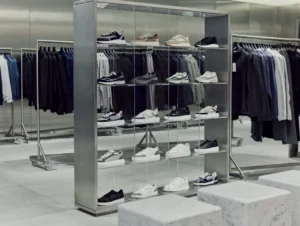
By launching simultaneously across its four key physical retail flagships in London, Newcastle, Manchester, and Glasgow, End is ensuring that its most dedicated domestic clientele can experience the fit, feel, and craftsmanship of the garments firsthand. These four stores have historically acted as cultural epicenters for the brand, frequently hosting exclusive sneaker drops, artist collaborations, and high-profile activations. Integrating the new in-house label into these environments reinforces the physical spaces as immersive brand worlds rather than mere points of sale. Concurrently, the digital release ensures that international consumers—who make up a substantial portion of the retailer’s overall revenue—can access the collection on day one, maximizing the global reach of the brand’s inaugural offering.
Market Dynamics and Financial Implications

The introduction of an own-brand label by a major multi-brand luxury retailer is a well-established play designed to insulate businesses from the economic pressures of wholesale distribution, rising supply chain costs, and fluctuating supplier terms. While stocking established luxury houses guarantees immediate brand cachet, wholesale margins can be restrictive, and retailers are frequently bound by the creative directions and pricing structures of third-party design houses.
By introducing a proprietary line, End stands to capture significantly higher gross margins on these categories. In-house production allows the retailer to exert total control over the design process, pricing architecture, inventory volume, and promotional cadence. Furthermore, an own-brand label provides a unique competitive differentiator. In a digital marketplace where many luxury stockists offer identical inventories from the same roster of global designers, having an exclusive, proprietary label gives consumers a compelling reason to choose End over competing platforms.
Financial analysts closely monitoring the luxury retail sector suggest that successful in-house brands can quickly scale to become substantial revenue drivers. If the consumer response to the September 2026 debut meets internal projections, industry expectations point toward an expansion of the proprietary line into additional product categories, potentially encompassing footwear, leather goods, and specialized capsule collections tied to seasonal cultural events.
Consumer Trends and the Rise of "Quiet Luxury" and Utility
The timing of End’s own-brand launch aligns neatly with broader shifts in consumer psychology and fashion preferences. The post-pandemic luxury landscape has seen a notable recalibration away from hyper-branded, logo-driven items toward pieces defined by superior craftsmanship, understated elegance, and long-term utility—often categorized under the umbrella of "quiet luxury" or elevated everyday wear. At the same time, the appreciation for high-end streetwear has matured, evolving into a sophisticated hybrid style where tailored trousers are routinely paired with technical outerwear and luxury footwear.
End’s design philosophy for the new label appears to target this exact intersection. By drawing upon its extensive history of curating technical outerwear, contemporary sportswear, and classic tailoring, the retailer has synthesized a product offering that speaks directly to the modern consumer’s desire for versatility. The garments are engineered to transition seamlessly from urban environments to casual professional settings, reflecting the fluid, multi-faceted lifestyles of contemporary shoppers.
Industry Perspectives and Expert Analysis
Retail analysts and industry commentators have largely responded to the news with optimism, viewing the move as a natural, mature progression for a brand that has spent decades helping shape modern street fashion and luxury retail culture.
"When a retailer reaches the scale, brand equity, and cultural authority that End has accumulated over the past twenty years, launching a proprietary label is almost a mandatory step in brand evolution," notes a prominent London-based retail strategist who spoke on condition of anonymity regarding market trends. "They have spent years studying what consumers buy, how they style it, and where current market offerings fall short. Translating that deep reservoir of consumer intelligence into an in-house collection gives them an immense advantage right out of the gate."
Moreover, observers point out that physical retail spaces like the London and Manchester flagships provide an immediate testing ground for customer feedback. Store associates can directly gauge reactions to fit, sizing, fabric selection, and price points, allowing the buying and design teams to iterate rapidly on subsequent drops.
Challenges and Operational Hurdles
Despite the clear strategic advantages, launching an independent apparel label is not without operational risks. The luxury and contemporary fashion sectors are fiercely competitive, saturated with both legacy heritage houses and agile direct-to-consumer digital brands. To succeed, End must convince its discerning customer base—who are accustomed to wearing world-renowned designer labels—that its in-house garments possess the requisite quality, design integrity, and prestige to command luxury-tier price points.
Supply chain volatility, inventory management, and accurate demand forecasting represent additional challenges. Producing clothing for both men and women across multiple size curves and distributing it globally requires sophisticated logistics infrastructure. Any miscalculations in volume could lead to excess stock that requires discounting, which can dilute the perceived exclusivity of a nascent luxury label. However, End’s extensive operational experience in managing complex global supply chains and high-volume product launches positions the company well to navigate these hurdles.
Looking Ahead: The Future of End’s Proprietary Portfolio
As the September 2026 launch unfolds across London, Newcastle, Manchester, Glasgow, and online, all eyes within the fashion industry will be trained on the reception of End’s inaugural collection. Success in this initial rollout is widely expected to lay the foundation for a permanent, expanding pillar of the company’s business model.
Beyond immediate sales figures, the true measure of success for this venture will be brand resonance: whether consumers begin to view End not only as a destination for the world’s best third-party designers, but as a creator of style in its own right. As the retail sector continues to evolve at a rapid pace, the ability to successfully balance curated multi-brand commerce with proprietary product creation may well define the enduring market leaders of the next decade. For End, the journey into in-house design marks the beginning of an ambitious new chapter, transforming the retailer from a trusted curator of fashion history into an active author of its future.