Digital Edition: Pauline Dujancourt: the art and craft of London Fashion Week


As the global fashion calendar shifts its focus toward the upcoming spring and summer seasons, emerging and established designers alike are finalizing months of meticulous preparation. Among them is Pauline Dujancourt, a Paris-born, London-based designer who has steadily carved out a distinct niche within the British capital’s vibrant creative ecosystem. As she prepares for her highly anticipated Spring/Summer 2027 showcase at London Fashion Week (LFW), Dujancourt reflects on the demanding yet deeply rewarding rhythms of her day-to-day operations, the foundational wardrobe pieces that ground her personal aesthetic, and the strategic milestones ahead as she guides her eponymous brand into its next phase of commercial and creative growth.
The journey to London Fashion Week is rarely a straightforward endeavor, particularly for independent designers navigating a post-pandemic economic landscape defined by shifting consumer habits, rising supply chain costs, and heightened demands for sustainable practices. For Dujancourt, whose design philosophy heavily emphasizes traditional craftsmanship, artisanal textiles, and a deliberate slowdown of the fashion cycle, the pressure to scale while maintaining uncompromising standards is a constant balancing act.
The Making of an Independent Label: Background and Context
To understand Pauline Dujancourt’s place in the contemporary fashion landscape, one must examine the intersection of her Parisian heritage and her London training. Having honed her craft through rigorous academic study and hands-on experience within European design houses, Dujancourt chose London as the operational and spiritual home for her brand. The city has long maintained a reputation as an incubator for avant-garde talent, largely supported by initiatives such as the British Fashion Council’s (BFC) NEWGEN program, which provides financial backing, mentorship, and showcase opportunities to the industry’s brightest emerging stars.
Independent labels like Dujancourt’s operate in a space distinct from luxury conglomerates. Where mass-market luxury relies on sheer advertising volume and rapid trend cycles, artisanal brands typically depend on narrative depth, material integrity, and a loyal consumer base that values provenance. Dujancourt’s design ethos leans heavily into tactile storytelling—utilizing complex knitwear techniques, hand-finished details, and deadstock or responsibly sourced materials. This commitment to slow fashion, however, introduces unique operational challenges, particularly when scaling production to meet international wholesale demands.
A Day in the Life: Balancing Artistry and Commerce
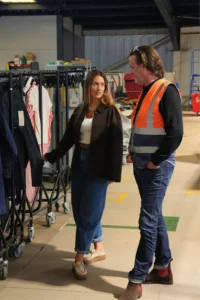
Behind the pristine runways of London Fashion Week lies months of grueling daily routines. For Dujancourt, a typical day does not begin with sketching under ideal conditions; rather, it is a complex orchestration of administrative duties, atelier management, material sourcing, and fittings.
In interviews leading up to her Spring/Summer 2027 presentation, the designer has often spoken about the rhythm of her atelier. Mornings are typically reserved for deep creative focus—reviewing sample adjustments, refining color palettes, and working directly with technicians on intricate knit structures. As the day progresses, the focus shifts toward business development: coordinating with PR agencies, managing international stockists, and overseeing the logistical hurdles of putting together a runway show.

Her personal wardrobe reflects this duality of function and form. Eschewing fleeting micro-trends, Dujancourt’s personal style favors archival pieces, impeccably tailored outerwear, and foundational garments that offer both comfort during 14-hour atelier shifts and polish for evening industry engagements. This preference for timeless utility directly informs her collections, where garments are designed to endure rather than merely populate a seasonal lookbook.
The Road to Spring/Summer 2027: Chronology and Preparation
The timeline for a London Fashion Week showcase is rigorous, typically spanning six to nine months of continuous development.
- Concept Inception (Months 9–6 Prior): The process begins long before the physical garments take shape. Dujancourt and her team establish the overarching narrative, research historical or cultural references, and begin preliminary textile sampling.
- Material Sourcing and Development (Months 6–4 Prior): Sourcing sustainable yarns and deadstock fabrics becomes the priority. This phase involves extensive trial and error, particularly for a designer who prioritizes artisanal hand-craft techniques that cannot be easily replicated by industrial machinery.
- Toile Fitting and Initial Casting (Months 4–2 Prior): Silhouettes are tested on models, proportions are adjusted, and initial decisions regarding hair, makeup, and styling direction are established in collaboration with creative directors and casting agents.
- Final Production and Show Logistics (Months 2–1 Prior): The final samples are meticulously crafted. Simultaneously, the production team finalizes venue contracts, sound design, seating charts, and media accreditation.
- The Presentation (Show Day): A tightly choreographed 10-to-15-minute runway show that encapsulates months of labor for a global audience of buyers, journalists, and critics.
Industry Perspectives and Economic Implications
The business of independent fashion in the United Kingdom continues to face structural hurdles. According to recent data from the British Fashion Council, while the UK fashion industry directly contributes billions of pounds to the national economy, small and medium-sized enterprises (SMEs) frequently struggle with access to working capital, high studio rents in central London, and the regulatory complexities of post-Brexit exporting to the European Union.
Despite these hurdles, designers like Dujancourt represent the lifeblood of London Fashion Week’s international prestige. Industry analysts note that global buyers increasingly look to independent showcases to discover fresh perspectives that larger houses can no longer provide. Pauline Dujancourt’s upcoming Spring/Summer 2027 collection is anticipated to test the waters for wider commercial expansion, potentially opening doors to key international stockists in Asia, North America, and mainland Europe.
Strategic Growth and Future Horizons
As Dujancourt prepares to unveil her latest collection, the focus extends far beyond the immediate spotlight of the runway. The overarching objective for the brand is sustainable scaling. This involves carefully expanding her direct-to-consumer digital presence while nurturing strategic wholesale partnerships with high-end boutiques that align with her brand values.
Furthermore, the conversation around sustainability remains central to her business model. Consumers and investors alike are increasingly holding brands accountable for their environmental footprint. By anchoring her business in small-batch production, localized European manufacturing, and transparent supply chains, Dujancourt is positioning her label to meet tightening regulatory standards while appealing to a discerning demographic of conscious luxury consumers.
Ultimately, Pauline Dujancourt’s presence at London Fashion Week underscores the enduring appeal of craftsmanship in a digital-first era. As she steps onto the runway for her Spring/Summer 2027 presentation, she does so not just as a designer showing a seasonal collection, but as an artisan entrepreneur navigating the complex realities of building a modern, resilient fashion house.
Related posts: