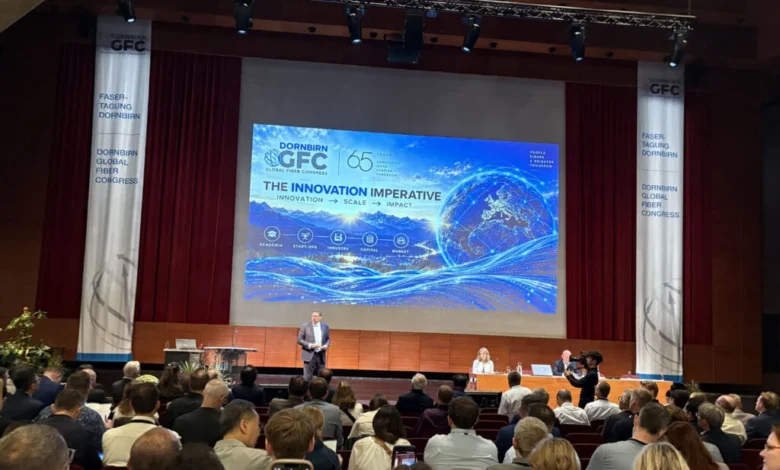
The 65th edition of the Dornbirn Global Fiber Congress (GFC), held in Austria from September 16–18, 2026, served as a stark reminder of the textile industry’s ongoing struggle to translate circular economy theory into industrial reality. While the congress showcased a decade of technological breakthroughs—ranging from advanced enzymatic recycling to complex chemical separation processes—the overriding sentiment among attendees was one of persistent inertia. Despite the proliferation of pilot plants and academic research, the global textile industry remains fundamentally linear, with fiber-to-fiber recycling still struggling to capture more than a negligible fraction of total market output.
A Decade of Circularity: The Dornbirn Context
Since its inception, the Dornbirn GFC has acted as the premier global forum for fiber innovation. Over the last ten years, the congress has shifted its focus from purely performance-based fiber engineering to the systemic challenges of sustainability. The 2026 iteration, however, felt distinct. While previous years were defined by optimism regarding new recycling technologies, this year’s discussions were underscored by a palpable frustration regarding the "valley of death"—the inability to scale these technologies from lab-bench successes to commercially viable industrial operations.
The industry is currently grappling with a paradox: there is no shortage of scientific expertise, yet the gap between the EU’s ambitious legislative frameworks and the actual infrastructure on the ground is widening. As experts debated the finer points of polymer recovery and mechanical shredding, the geopolitical landscape of fiber production shifted in ways that threaten the relevance of European circularity models.
The Diverging Strategies: Europe vs. China
A defining moment of the 2026 congress was the CEO panel debate on the opening day, where Robert van de Kerkhof, president of the Austrian Fibers Institute, offered a sobering assessment of Europe’s competitive trajectory. "Having recognized the need for industry-wide change early, Europe’s competitive advantage is shrinking as its companies respond to a series of crises, one after another," van de Kerkhof stated. He warned that the region is not only losing its grip on manufacturing know-how but is increasingly hampered by a regulatory environment that emphasizes compliance and bureaucracy over industrial agility.
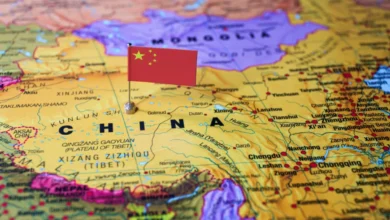
In contrast, China is moving with a speed that signals a paradigm shift in resource management. Under its new Circular Economy Development Plan for the 15th Five-Year Plan (2026–2030), Beijing has adopted the concept of the "urban mine." This strategy treats discarded materials—ranging from e-waste and vehicles to the millions of tons of textile waste generated by its massive urban centers—not as environmental externalities, but as a strategic domestic raw material reserve.
The scale of China’s ambition is quantified by its targets: by 2030, the nation aims to create a resource recycling industry valued at approximately RMB 8 trillion (roughly €1 trillion). This includes the utilization of 4.5 billion tons of bulk solid waste and the recycling of 510 million tons of major renewable resources annually. For the textile sector, this means moving beyond simple collection to a standardized system of design-for-disassembly, where products are engineered from the outset to be integrated back into the industrial loop.
Chronology of Legislative and Industrial Milestones
To understand the current tension, it is necessary to examine the timeline of the global transition toward circularity:
- 2022: The European Commission publishes the EU Strategy for Sustainable and Circular Textiles, setting a 2030 vision for durable, repairable, and recyclable garments. Simultaneously, China introduces its specific textile recycling roadmap, targeting a 30% utilization rate for waste textiles by 2030.
- 2025 (January): EU member states are mandated to implement separate textile waste collection, a critical step to diverting material from landfills.
- 2025 (Throughout): Despite collection mandates, data indicates that the EU still exported 1.4 million tons of used textiles, highlighting the lack of domestic processing capacity.
- 2026 (July): Large companies operating in the EU are prohibited from destroying unsold clothing and footwear, a move intended to curb the "overproduction" crisis.
- 2026 (September): The 65th Dornbirn GFC convenes, where industry leaders acknowledge that despite four years of intense policy development, only roughly 1% of global clothing material is currently recycled back into new clothing.
The Infrastructure Gap and the "Urban Mine"
The fundamental challenge facing the textile industry is the chemical and physical complexity of modern garments. Blended fibers, such as polyester-cotton mixes, coupled with toxic dyes and specialized finishes, make separation at scale an economic nightmare. While European researchers have pioneered high-end enzymatic and chemical recycling, these processes often lack the low-cost energy and scale required to compete with virgin fiber production.
China’s "urban mine" philosophy addresses this by treating the entire supply chain as an industrial ecosystem. By integrating recycling into its national manufacturing strategy, China is building the infrastructure to process textiles at a scale that Europe has yet to replicate. However, analysts note a critical nuance: China’s target of three million tons of recycled fiber does not necessarily mean "closed-loop" textile-to-textile recycling. Much of this material will likely be diverted to "downcycled" applications, such as insulation, nonwovens, or filling materials, which are essential for industrial utility but do not solve the clothing industry’s specific sustainability dilemma.
European Environment Agency (EEA) Data and Regulatory Reality
The EEA’s recent indicators provide the most objective view of the European predicament. With 6.94 million tons of textile waste generated in 2022—averaging 16kg per person—the system is failing at the most basic level. Less than 15% of this waste is captured through separate collection systems. Of the textiles that are collected separately, a staggering 26% are still incinerated or landfilled.
The regulatory framework in Europe, while comprehensive, is currently a "top-down" approach. Initiatives like the Digital Product Passport (DPP) and strict Ecodesign requirements are designed to force transparency and quality. However, as the 2026 GFC discussions highlighted, these regulations create a significant compliance burden for small and medium-sized enterprises (SMEs) without providing the capital injection necessary to build the massive sorting and processing facilities required to handle the volume of waste collected.
Future Implications and The Economic Test
The central tension for the coming years is whether Europe’s focus on regulatory perfection can survive the economic pressure of global competition. China’s determination to treat textiles as a strategic industrial asset suggests that the next decade will be won by whoever can lower the "cost per kilogram" of high-quality recycled fiber.
For the textile industry, the transition from pilot projects to industrial-scale viability is no longer an optional innovation—it is a race for resource security. As the 2026 congress concluded, the industry is entering a "post-promotional" phase. The period of claiming sustainability through conferences and pilot programs is ending. By 2030, success will be defined by cold, hard metrics: the total tonnage of fiber reclaimed, the purity of that fiber, and the profit margins achieved by the firms that successfully bridge the gap between waste and raw material.
The challenge for Europe is to ensure that its regulatory framework acts as a catalyst for investment rather than a barrier to entry. If the continent cannot move its recycling capacity from the lab to the factory floor, the "urban mine" may become a concept dominated by external players, leaving Europe as a consumer of high-cost, imported recycled materials rather than a leader in the circular textile economy. As stakeholders look ahead to the next few years, the focus must shift from designing the perfect policy to building the necessary machinery to turn the massive flow of discarded clothing into a reliable, high-value industrial input.