Jolly the Fireman and the Rise of Agentic Shopping: Meta’s New Frontier in Consumer Commerce

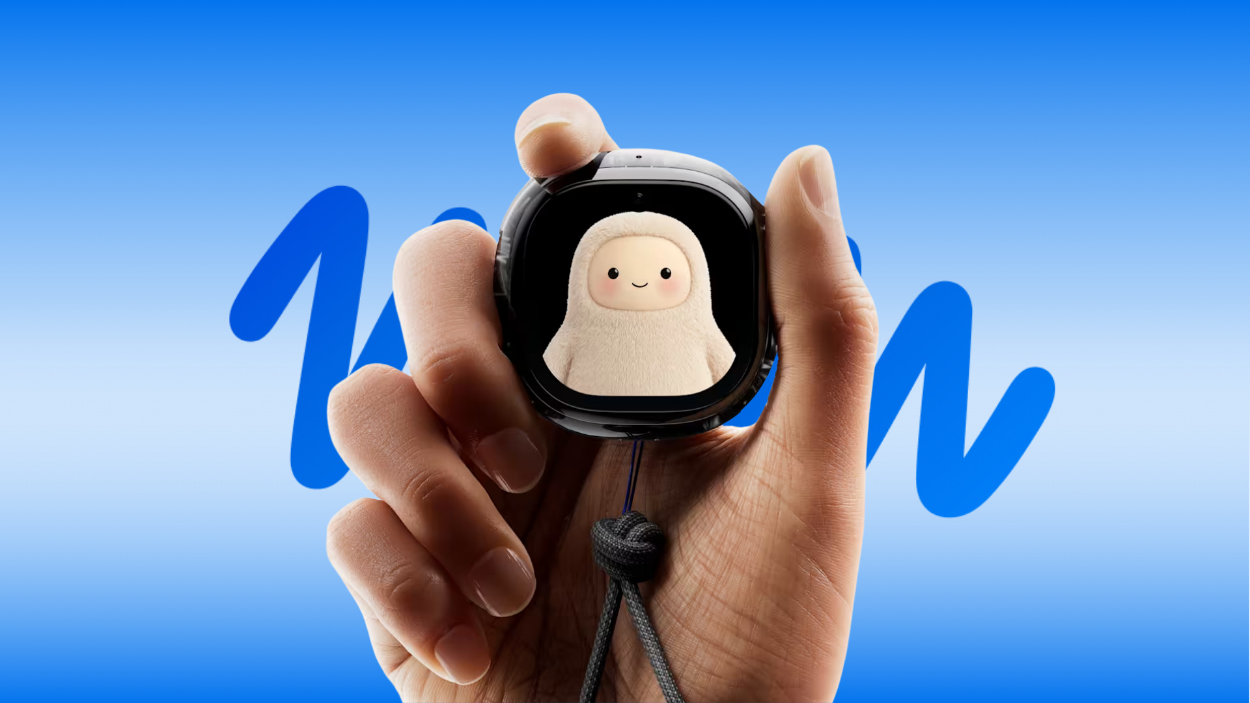
At the recent Meta Connect event, the technology giant unveiled more than just hardware; it introduced "Jolly," the charismatic mascot for its new AI agent, Muse. While the visual identity of the agent—complete with a miniature fireman’s outfit—leans into the modern tech trend of "cozy" and accessible AI, the underlying architecture represents a significant shift in how consumers will interact with digital marketplaces. As Muse gains traction in the United States, outpacing the initial growth trajectory of early generative AI applications, the industry is forced to confront the mechanics, incentives, and risks of agentic shopping.
The Evolution of Meta’s Agentic Strategy
Meta’s unveiling of Muse follows a year of rapid development in the "AI glasses" category. According to data from Omdia, global shipments of AI-integrated eyewear more than doubled in the first half of 2026, reaching a record 4.2 million units. Meta’s strategy has centered on diversifying this hardware, introducing audio-only versions that address growing consumer privacy concerns regarding constant camera surveillance.

However, the hardware serves primarily as a vessel for the software layer. Muse, which launched in early September 2026, represents Meta’s move to "productize" the concept of a virtual friend as a primary interface. By leveraging a secure Linux virtual machine capable of desktop-class browser interaction, Muse is designed to perform tasks autonomously. This ranges from simple information retrieval to complex, multi-step shopping transactions. The success of this strategy is evident in the App Store, where Muse has rapidly climbed the charts, suggesting that the "Openclaw" model—an accessible, conversational interface for standard users—is resonating with the broader public.
The Mechanics of Agentic Shopping
The transition from passive browsing to active, agent-driven commerce is currently in its nascent, "jagged" stage. In practice, agentic shopping involves an AI navigating a browser, interpreting UI elements, and executing payments. The technical challenges remain substantial; for example, LLMs often struggle with login pop-up modals, cross-platform authentication, and local software compatibility.
To mitigate these friction points, Meta has pursued a "kitchen-sink" integration strategy. By partnering with major payment processors like Stripe and Shopify, and securing direct agreements with major U.S. retailers such as Walmart, Sephora, Gap, and Dick’s Sporting Goods, Meta is attempting to create a frictionless loop for the user. Unlike previous iterations of AI shopping assistants that relied on third-party plugins, Muse aims to be a native participant in the checkout flow, potentially bypassing the need for users to manually input data at every store.
The New Era of Showrooming
The rise of these agents is poised to redefine the term "showrooming." Traditionally, showrooming described a consumer viewing a product in a physical retail space before using a smartphone to find a better price online. Today, the practice has been accelerated by AI. Research from the MACH Alliance indicates that AI currently influences over 40% of in-store shopping, a figure that climbs to over 60% among Gen Z consumers.
"Influence" in this context refers to the use of AI as a stylistic advisor or a real-time price comparator. As smart glasses and wearable devices—such as the rumored 5G-enabled bag charms—become more prevalent, this behavior will likely move from a handheld activity to a seamless, hands-free interaction. Brands that fail to optimize for "AEO" (Agent Engine Optimization) may find their products invisible to an agent that has been trained to prioritize specific retailer agreements or promotional algorithms.
Risks, Regulation, and Institutional Skepticism
The rapid adoption of agentic commerce has not gone unnoticed by the financial sector. A coalition of legacy banking institutions released a statement in late September 2026, warning that the technology is outpacing existing security safeguards. The primary concerns cited include the potential for AI agents to inadvertently share sensitive card data, the increased risk of sophisticated fraud, and the tendency of agents to steer users toward payment methods that lack robust consumer protections.

Furthermore, major marketplaces are beginning to push back. Amazon recently blocked Muse from accessing its platform, citing concerns over unauthorized browser automation. This echoes previous industry attempts to restrict AI scrapers, such as the conflict between Amazon and Perplexity earlier in the year. While these bans are currently a recurring theme in the industry, the long-term viability of such restrictions remains in doubt as personal AI agents become ubiquitous.
The Advertising Dilemma
Perhaps the most significant concern regarding Muse is the business model powering it. Meta remains the world’s largest digital advertising entity. Industry analysts are raising questions about the inherent conflict of interest: will Muse act as a neutral shopping assistant, or will it prioritize retailers that participate in Meta’s programmatic advertising stack?
While companies like OpenAI have also explored "advertiser-sponsored agents," they do not own the underlying infrastructure of the digital advertising ecosystem in the same way Meta does. This makes the potential for algorithmic bias—where the agent subtly steers users toward paid partners—a significant point of contention. The "cuteness" of Jolly the mascot may serve to lower consumer guardrails, making the persuasive nature of AI-driven recommendations more effective, and potentially more exploitative.
Future Implications for Retail
As we head into the 2026 holiday retail season, the landscape of commerce is shifting toward a model of delegation. The integration of "personal superintelligence" into daily items—from eyewear to accessories—means that retailers must prepare for a future where they are not just selling to humans, but to their digital proxies.
The success of Muse will likely depend on Meta’s ability to balance its dual role as a platform for open, agentic interaction and a profit-driven advertising giant. If the platform succeeds, it will usher in an era where the "last mile" of shopping is not just automated, but curated by an agent that knows the user’s preferences, budget, and purchasing history better than any human sales associate.
However, this transition also highlights a growing divide between consumer convenience and corporate accountability. As users continue to delegate their decision-making to agents, the responsibility for verifying the integrity of those decisions shifts from the individual to the software provider. Whether Jolly becomes a trusted companion or a sophisticated marketing vehicle remains the central question for the next phase of the digital economy. The technology is here, the mascot is charming, and the infrastructure is being built at breakneck speed; the only remaining uncertainty is the degree to which consumers are willing to trade autonomy for the efficiency of the agentic age.