Massive E-commerce Warehouse Fires in South Korea and Russia Signal Global Supply Chain Vulnerabilities

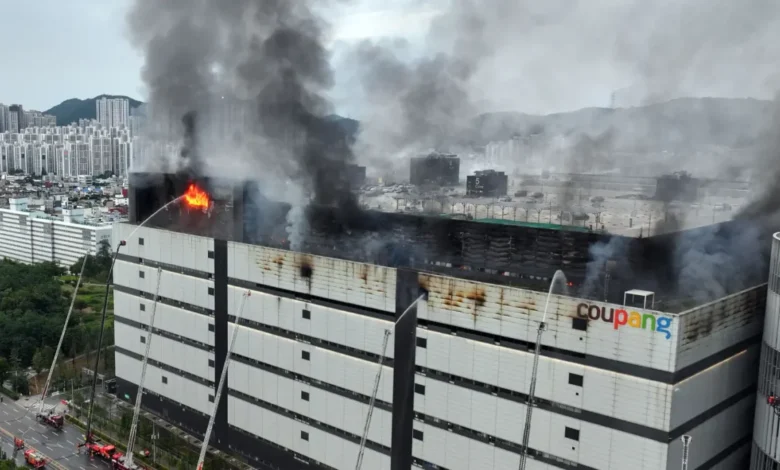
A colossal fire at a Coupang logistics center in Incheon, South Korea, was finally contained late Monday after an arduous 61-hour battle by firefighters, raising concerns about potential damages amounting to hundreds of millions of U.S. dollars for the e-commerce giant. This incident occurred concurrently with devastating Ukrainian drone strikes on two major Wildberries warehouses in central Russia, which the company estimates could result in over $1.3 billion in losses. These twin disasters underscore the increasing fragility and vulnerability of modern e-commerce infrastructure to both accidental catastrophe and geopolitical conflict, sending ripples through global supply chains and highlighting the immense economic and operational risks associated with large-scale fulfillment centers.
The Coupang Inferno in Incheon: A Protracted Battle Against Flames
The harrowing incident at Coupang’s sprawling eight-story logistics center in Incheon, west of Seoul, began at approximately 6:54 a.m. local time on Saturday. The fire ignited on the sixth floor of the colossal 3.2-million-square-foot facility and rapidly spread to the seventh, creating a monumental challenge for emergency services. The warehouse, a critical hub for Coupang’s signature Rocket Delivery same-day service, serves the densely populated Seoul metropolitan area, making its operational disruption particularly impactful.
Chronology of the Disaster:
- Saturday Morning (June 29): Fire breaks out on the sixth floor of the Incheon logistics center at 6:54 a.m. local time. Initial reports indicate rapid spread due to the highly flammable nature of stored inventory, including household products, paper boxes, and vinyl packaging.
- Saturday Afternoon/Evening: Firefighting efforts commence immediately, with authorities deploying significant resources. All 121 workers inside the building are safely evacuated, averting a mass casualty event. However, the intensity of the blaze and the size of the facility make containment exceptionally difficult.
- Sunday: The fire continues to rage, prompting authorities to order the evacuation of nearby businesses and factories. Concerns mount over the structural integrity of the massive building, with fears that parts of the structure could collapse. Two firefighters are hospitalized after suffering from smoke inhalation and exhaustion, testament to the extreme conditions faced by emergency personnel.
- Monday Evening: After more than 61 hours of continuous firefighting operations, involving a monumental deployment of resources, the fire is finally contained. A total of 845 personnel and 239 fire trucks from eight neighboring cities and provinces were mobilized round-the-clock, illustrating the sheer scale of the emergency response required to bring the inferno under control.
Initial Assessment and Operational Impact:
While Coupang has not yet publicly quantified the expected operational disruption or financial damage, preliminary reports from media outlets like the Korea JoongAng Daily suggest that losses could amount to "several hundred billion" Korean won, translating to several hundred million U.S. dollars. This figure would encompass not only the direct damage to the building and its vast inventory but also significant losses from business operations and logistical bottlenecks.
The Incheon center is a cornerstone of Coupang’s "Rocket Delivery" service, which has become a competitive differentiator in South Korea’s fiercely contested e-commerce market. The disruption is expected to cause delivery delays in parts of Incheon and western Seoul. Coupang has indicated plans to redirect inventory from nearby facilities to mitigate these disruptions and intends to offer compensation coupons worth several thousand won (several dollars) to affected customers. However, the sheer volume of goods processed through the Incheon hub means that a complete redirection without noticeable impact is unlikely.
Investigation and Broader Context:
The precise cause of the fire remains unconfirmed. Authorities are preparing a joint investigation with police and other relevant agencies to determine the origin and contributing factors. The presence of highly flammable materials within a fulfillment center underscores the inherent fire risks associated with modern warehousing, a challenge faced by e-commerce operators globally.
This incident is not Coupang’s first encounter with a major warehouse fire. In June 2021, its Deokpyeong logistics center in Icheon was completely destroyed in a blaze that lasted six days and tragically resulted in the death of a firefighter. Property and inventory losses from that earlier fire were estimated to be between 400 billion won ($270.9 million) and 600 billion won ($406.4 million). The recurrence of such a significant event raises critical questions about fire safety protocols, infrastructure resilience, and risk management within Coupang’s extensive logistics network.
Furthermore, this recent Coupang fire follows another substantial blaze that decimated a 2-million-square-foot logistics center belonging to South Korean retailer E-Land World just eight months prior. That incident, which destroyed 11 million products including clothing, footwear, and accessories, also led to widespread delivery delays and cancellations, highlighting a concerning pattern of large-scale warehouse fires within South Korea’s rapidly expanding e-commerce sector.
Russia’s Wildberries Under Drone Attack: A Geopolitical Conflagration
Simultaneously, a more sinister and geopolitically charged series of events unfolded in Russia, severely impacting the country’s largest online marketplace, Wildberries. Ukrainian drone strikes on two of its key logistics centers over the weekend have left the company and its network of third-party sellers facing catastrophic losses, with estimates soaring above $1.3 billion.
The Strikes and Their Aftermath:
- Saturday Night (June 29): Ukrainian drone strikes target two critical Wildberries logistics centers in central Russia. The first hit the Elektrostal warehouse near Moscow, and the second struck the Kotovsk facility, approximately 340 miles southeast.
- Initial Casualties: Russian officials reported a tragic toll, with seven workers killed in the Kotovsk attack and another person later dying following the Elektrostal strike. More than 80 individuals were reported injured across both sites, underscoring the human cost of these attacks.
- Extended Fires: Fires at the Elektrostal complex, a crucial hub for Moscow and the surrounding region, continued for more than a day, indicating the severity and destructive power of the strikes.
Strategic Importance and Devastation:
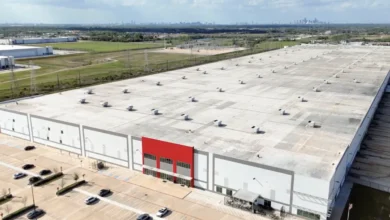
The targeted Wildberries facilities were integral to Russia’s e-commerce ecosystem. The Elektrostal warehouse, spanning 2.7 million square feet, was one of the company’s single largest fulfillment centers, a linchpin for deliveries in the nation’s most populous and economically vital region. The 1.16-million-square-foot Kotovsk warehouse was equally vital, serving logistics for southern Russia.
The destruction of these facilities represents a severe blow to Russia’s e-commerce infrastructure. Kommersant, a prominent Russian business newspaper, estimated that at least 7 percent of Wildberries’ total logistics capacity was eradicated in these weekend strikes alone. Kommersant further estimated the direct damage, based solely on the cost of rebuilding the warehouse space, at between $270 million and $450 million, a figure that does not account for the immense value of the stored goods. Another Russian publication projected combined losses from the two fires to exceed 100 billion Russian rubles (approximately $1.28 billion), with a significant portion of this burden falling on the marketplace’s third-party merchants.
Wildberries, often dubbed "Russia’s Amazon," has announced that it will assess compensation for affected sellers within the next 30 days. In the interim, it plans to offer technical relief measures, including loans, delayed debt repayments, and accelerated revenue withdrawals, to help its merchant partners navigate the immediate financial fallout.
Geopolitical Context and Allegations:
The Ukrainian President, Volodymyr Zelensky, explicitly described the weekend’s attacks as retaliation for strikes on Ukraine’s civilian infrastructure. Crucially, Zelensky alleged that the targeted Wildberries warehouses had been utilized to store sanctioned components essential for drone production and navigation systems. This accusation, if substantiated, transforms the incident from a mere economic disruption into a direct strategic target within the ongoing conflict, adding another layer of complexity to the risks faced by logistics operators in conflict zones.
Broader Implications for E-commerce Logistics and Global Supply Chains
These two distinct but simultaneous catastrophic events – one accidental (pending investigation), the other a deliberate act of war – vividly illustrate the inherent vulnerabilities embedded within the modern e-commerce logistics paradigm. The global trend towards mega-warehouses, designed for maximum efficiency and rapid fulfillment, also concentrates immense value and operational risk into single points.
Vulnerability of Centralized Logistics:
The incidents in South Korea and Russia highlight the double-edged sword of centralized logistics. While large fulfillment centers offer economies of scale, faster delivery times, and streamlined operations, they also present enormous targets for disruption. A single incident, whether a fire, a natural disaster, or an attack, can wipe out vast inventories, cripple delivery networks, and cause financial losses spanning hundreds of millions or even billions of dollars. This concentration of risk demands robust disaster recovery plans, advanced fire suppression systems, and comprehensive security measures.
Economic Ripple Effects:
The immediate financial losses to Coupang and Wildberries are substantial, but the economic impact extends far beyond the direct damage. For Coupang, the disruption to its Rocket Delivery service could erode customer trust and loyalty in a highly competitive market, potentially driving customers to rivals like Naver Shopping or SSG.com. For Wildberries, the loss of significant logistics capacity could severely hamper its ability to serve customers across Russia, particularly for vital regions like Moscow and the south, and could destabilize thousands of third-party sellers who rely on its platform. The loss of inventory also means lost sales, reduced tax revenues, and potential job losses in the affected regions.
Supply Chain Resilience and Risk Management:
These events serve as a stark reminder for e-commerce companies worldwide to re-evaluate their supply chain resilience strategies. Diversification of fulfillment centers, redundancy in inventory storage, and agile re-routing capabilities become paramount. Investment in cutting-edge fire prevention and detection technologies, structural integrity assessments, and stringent safety protocols are critical, especially for facilities storing flammable goods. For companies operating in or near geopolitical flashpoints, the Wildberries case underscores the urgent need to assess and mitigate risks related to deliberate targeting and the potential weaponization of civilian infrastructure in conflicts.
The Role of Insurance and Regulatory Oversight:
The scale of losses in both incidents will undoubtedly test the capacity of commercial insurance markets. Insuring such massive facilities, with their high-value inventory and critical operational role, is already complex. These events could lead to increased premiums, more stringent underwriting requirements, and a re-evaluation of coverage terms for large logistics centers globally. Regulatory bodies, particularly in South Korea given the repeated incidents, may also face pressure to review and strengthen fire safety codes and operational standards for e-commerce warehouses to prevent future catastrophes.
Conclusion: A New Era of Risk for E-commerce
The devastating fires at Coupang and Wildberries within days of each other mark a sobering moment for the global e-commerce industry. While the underlying causes differ – one a suspected accident, the other a confirmed act of war – both incidents expose the profound vulnerabilities inherent in the highly interconnected and centralized logistics networks that underpin modern online retail. As e-commerce continues its rapid expansion, companies must confront an evolving landscape of risks, from the perennial threat of fire to the increasingly unpredictable specter of geopolitical conflict. The lessons learned from Incheon and Russia will undoubtedly shape future investments in warehouse design, safety technology, security protocols, and supply chain resilience, as the industry grapples with the imperative of safeguarding its critical infrastructure against an array of escalating threats.