Reformation Delivers Strong Q2 Revenue Growth Following Public Debut

Sustainable direct-to-consumer fashion brand Reformation has posted a robust 24% year-over-year jump in net revenue for the second quarter of fiscal 2026, offering an encouraging signal to the market during its inaugural months as a publicly traded entity. The strong financial performance, announced during an earnings call with analysts on Thursday, comes on the heels of the company’s initial public offering in July, an event that tested investor appetite amid broader macroeconomic uncertainties and a historically cautious market for retail IPOs.
The double-digit revenue expansion underscores resilient consumer demand for the brand’s eco-friendly apparel lines, even as financial analysts maintain a watchful eye on valuation metrics and broader sector volatility. Leadership attributes the favorable quarterly outcomes to an agile supply chain model, steady retail footprint expansion, and precise inventory management that minimizes overproduction waste—a core pillar of the company’s brand identity since its founding.
A Timeline of Public Market Entry and Growth Trajectory
Reformation’s journey to the public market has been meticulously planned, punctuated by milestones that trace the brand’s evolution from a boutique Los Angeles vintage clothing storefront into a global sustainable fashion powerhouse.
The groundwork for the IPO was laid earlier in the year when the company filed preliminary paperwork with federal regulators, outlining ambitious growth targets and detailing its distinctive operating model. When Reformation formally debuted on public exchanges in July, the company set its sights on a coveted $1 billion valuation. However, shifting market conditions and lingering investor skepticism surrounding newly public apparel companies resulted in an initial trading price at the lower end of the projected range.
Despite the modest valuation entry point, the company’s Q2 performance has begun to quiet early critics. The positive earnings report released on September 11, 2026, marks the first major financial checkpoint for Reformation as a public company, validating executive leadership’s strategic roadmap and providing much-needed visibility into the brand’s scalable business model.
Operational Agility and the Power of Short Lead Times
At the heart of Reformation’s financial resilience is a manufacturing and supply chain infrastructure designed to counter traditional retail pitfalls. While legacy apparel brands typically forecast trends and place massive inventory bets up to 12 months in advance—often leading to excess stock and deep discounting—Reformation has prioritized a reactionary, demand-driven framework.
During Thursday’s earnings call, CEO Hali Borenstein elaborated on the mechanics that separate the company from its peers. "Rather than making large inventory bets up to 12 months in advance like many brands, we respond to what customers actually tell us they want," Borenstein told analysts. She emphasized that the company’s supply chain is intentionally engineered for speed, sustainability, and quality.
According to executive disclosures, more than 50% of Reformation’s products are manufactured with a production lead time of 60 days or less. Furthermore, approximately 90% of the brand’s direct-to-consumer (DTC) revenue is generated by clothing styles that have already established proven performance records. By leveraging real-time sales data to inform subsequent manufacturing runs, Reformation significantly reduces deadstock, mitigates markdown risks, and protects profit margins—a critical advantage in a fast-moving fashion landscape.
Store Footprint Expansion and Real Estate Strategy
Physical retail remains a cornerstone of Reformation’s omni-channel growth strategy, serving not only as a revenue generator but also as a powerful customer acquisition tool and marketing touchpoint.
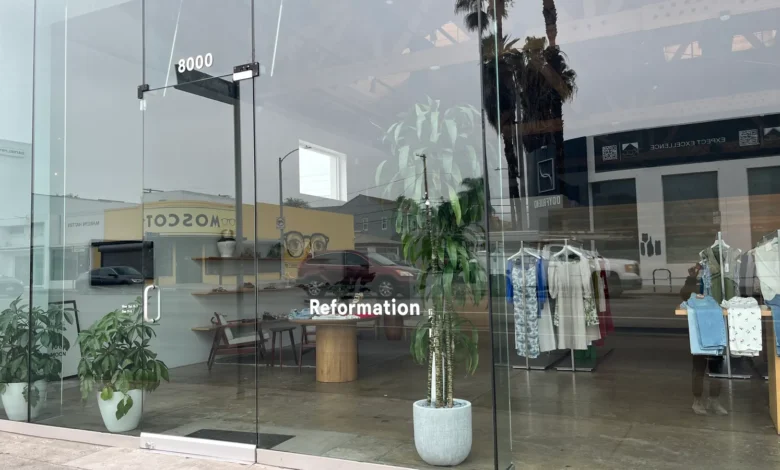
At the conclusion of the second quarter, Reformation operated a total of 70 brick-and-mortar storefronts across key metropolitan markets, including flagship locations in major fashion capitals such as Los Angeles, New York, and London. Company executives outlined an aggressive, yet measured, real estate expansion plan during the earnings briefing, revealing a clear trajectory to double the existing retail fleet over the next five years.

CFO Joshua Moore provided specific guidance regarding near-term real estate investments, noting that the brand expects to open between nine and 10 new stores during the second half of the year. This cadence will bring the total number of new store openings for the full 2026 fiscal year to 15 or 16 locations. Each new retail opening is subjected to rigorous demographic and financial modeling to ensure optimal return on investment, aligning with the company’s broader discipline around capital allocation.
Analyst Perspectives and Risk Assessment
Financial institutions have responded to Reformation’s public market debut with a blend of constructive optimism and analytical caution. In a research note published on Friday, analysts from William Blair weighed in on the company’s market position, highlighting both its long-term potential and inherent sector risks.
"While we understand some skepticism around any newly public apparel retailer, between these drivers and the clear visibility in the model, we have deeper conviction in out-year estimates, and the compelling opportunity for shares at these levels," the William Blair analysts wrote. They pointed to category extensions and sustained store growth as primary catalysts that could drive shareholder value over the medium to long term.
However, institutional observers have also issued warnings regarding potential operational vulnerabilities. The analysts identified model volatility—inherent to businesses utilizing short lead times and reactionary manufacturing—as the primary risk factor moving forward. Because Reformation relies on rapid adjustments to shifting consumer preferences, any systemic disruption within its supply chain or sudden macroeconomic shifts in discretionary spending could introduce earnings unpredictability.
Sustainability as a Commercial Differentiator
Beyond financial metrics and logistics, Reformation’s market valuation and ongoing expansion are deeply intertwined with its brand ethos centered on sustainability. As regulatory scrutiny regarding greenwashing intensifies globally, Reformation has positioned its transparent sourcing, use of recycled and deadstock fabrics, and carbon-neutral operations as core competitive advantages.

Consumer research consistently indicates that modern shoppers, particularly within the Millennial and Generation Z demographics, prioritize environmental accountability when making purchasing decisions. Reformation’s ability to scale its revenue by 24% while maintaining its commitment to sustainable manufacturing demonstrates that eco-friendly practices can coexist with aggressive corporate growth and public market expectations.
Implications for the Broader Retail Landscape
Reformation’s successful second-quarter earnings report serves as an important case study for the broader direct-to-consumer and retail sectors. As consumer behavior shifts rapidly and traditional retail models face pressure from fast-fashion giants and digital-first competitors, brands that master supply chain agility are proving best equipped to survive and thrive.
The company’s ability to navigate a lukewarm IPO valuation and transform it into a narrative of operational outperformance suggests that public markets are willing to reward fundamental business strength over initial hype. For Reformation, the challenge ahead will involve executing its five-year real estate expansion plan without diluting brand equity or compromising the sustainable supply chain practices that initially propelled it to prominence.
As the company prepares to close out the remainder of fiscal 2026, investors, analysts, and competitors alike will be closely monitoring whether Reformation can maintain its growth momentum and set a new benchmark for modern, sustainable retail success.