Rockport Brings Dr. J’s Basketball Legacy to Life in New AI-Driven Campaign

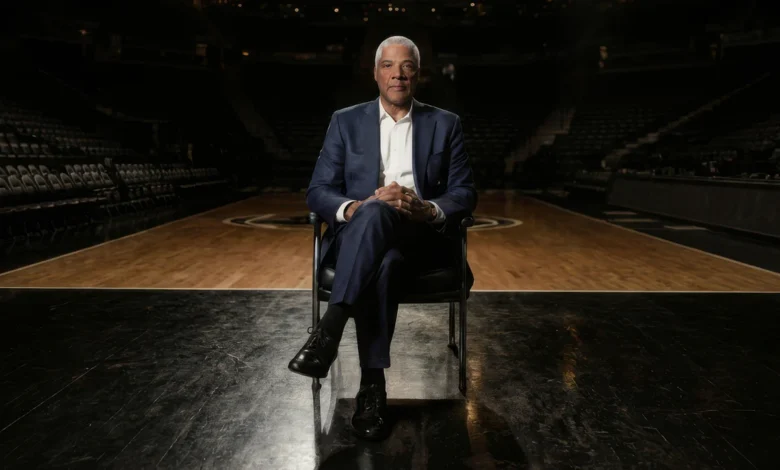
The announcement positions Rockport at the forefront of innovative marketing, specifically highlighting the use of AI to "explore how decades of influence across sport, style and culture continue to shape his perspective today," as stated by the company. While specific technical details regarding the AI’s application remain proprietary, Rockport emphasized that the campaign pushes into "new creative territory, leveraging AI-driven storytelling to render a personal, reflective portrait of an icon whose reach has always extended far beyond the game." An AI-generated image of Dr. J, depicting him in a thoughtful pose consistent with Rockport’s aesthetic, offers a tangible glimpse into this novel approach, showcasing a blend of artistic interpretation and technological execution.
Dr. J: A Legacy Forged in Innovation
Julius Erving’s career is synonymous with innovation, both on and off the court. Born in Roosevelt, New York, in 1950, Erving rose to prominence in the American Basketball Association (ABA) before making a historic transition to the National Basketball Association (NBA) in 1976. His electrifying style of play, characterized by soaring dunks like the iconic "Rock the Baby" and graceful, acrobatic moves, revolutionized basketball. He transcended the game, becoming a cultural phenomenon known simply as "Dr. J." His charisma, athleticism, and sportsmanship made him one of the most beloved figures in sports history, earning him the respect of peers and fans alike.
Beyond his on-court heroics, Erving’s business acumen and foresight were equally pioneering. In 1976, at the peak of his early career, he signed an endorsement deal with Converse for its Pro Leather sneaker. This groundbreaking agreement is widely recognized as the first major sneaker deal for a professional basketball player, predating Michael Jordan’s iconic partnership with Nike by nearly a decade. At a time when athlete endorsements were nascent, Erving’s deal set a precedent, establishing a blueprint for how athletes could monetize their personal brands and influence consumer culture. This pioneering move laid the groundwork for the multi-billion-dollar athletic footwear industry driven by athlete endorsements that exists today. His words resonate with this lifelong pursuit of advancement: "I’ve been an innovator since the day I stepped onto the court," Erving told FN exclusively. "Back then, it was about pushing the game forward, moves like the rock-the-baby dunk, a new kind of creativity, a new kind of performance. Today, that same mindset applies to how I live and move through the world."
This consistent theme of innovation is what makes his partnership with Rockport and its AI-driven campaign particularly fitting. Erving’s willingness to embrace new technologies and methodologies aligns perfectly with a campaign that seeks to reinterpret his legacy through a contemporary lens. "My first car was a ’71, a real beater, but it got me everywhere. Now I’m getting around the world with AI, still evolving, still learning," he remarked, underscoring his adaptability and forward-looking perspective. He clarified that the campaign is not about retrospection but about leveraging his "lived experience and moving forward." This sentiment encapsulates the strategic intent of the campaign: to honor his past while firmly positioning him, and by extension Rockport, in the future.
Rockport’s Strategic Reinvigoration Under ABG
The campaign also marks a pivotal moment for Rockport, a brand with a long history rooted in comfort and quality footwear. Founded in 1971, Rockport quickly established itself as a leader in comfortable, versatile shoes, pioneering lightweight construction and integrating athletic technology into dress and casual footwear. Despite its strong brand recognition, Rockport faced significant financial challenges in recent years, leading to multiple bankruptcy filings. The brand’s journey through corporate restructuring culminated in its acquisition by Authentic Brands Group (ABG) in 2023 for an undisclosed sum.
ABG, a global brand development, marketing, and entertainment company, specializes in acquiring and revitalizing iconic brands across various sectors, including fashion, sports, and entertainment. Its portfolio includes over 50 world-renowned brands such as Reebok, Nine West, Forever 21, and Eddie Bauer. ABG’s business model typically involves acquiring intellectual property and then licensing out operations, design, manufacturing, and distribution to specialized partners. This model allows ABG to focus on brand strategy, marketing, and global expansion, leveraging the expertise of its licensees.
Following the acquisition, ABG swiftly implemented its strategy for Rockport. A long-term licensing agreement was inked with Marc Fisher Footwear, designating it as Rockport’s U.S. footwear partner. Under this agreement, Marc Fisher Footwear oversees the critical aspects of footwear design, wholesale operations, and e-commerce for the Rockport brand in the United States. This partnership aims to leverage Marc Fisher’s deep expertise in footwear manufacturing and distribution to ensure product quality and market penetration.

Further expanding Rockport’s global reach, ABG signed a deal in May with Chapters Brand Group to distribute Rockport products across the U.K. and Ireland. This agreement grants Chapters Brand Group the rights to distribute Rockport’s men’s and women’s footwear collections throughout these key European markets, signifying ABG’s commitment to re-establishing Rockport’s presence on an international scale. The Dr. J campaign, therefore, serves as a high-profile marketing initiative designed to amplify these strategic moves, reintroduce Rockport to consumers, and infuse it with a renewed sense of relevance and innovation.
The Convergence of AI, Celebrity, and Brand Storytelling
The integration of artificial intelligence into the Rockport campaign with Dr. J represents a significant development in the evolving landscape of brand storytelling and celebrity endorsements. Historically, celebrity endorsements relied on the star’s direct association with a product, often through simple appearances or static advertising. Over time, this evolved into more sophisticated narratives, where celebrities became integral to a brand’s identity. However, the advent of AI offers new dimensions to this relationship.
AI’s role in marketing and advertising is rapidly expanding. It is employed for predictive analytics to identify target audiences, personalize content delivery, optimize campaign performance, and even generate creative assets. In the context of the Dr. J campaign, AI likely plays a multifaceted role. It could involve:
- Archival Analysis: AI algorithms can sift through vast amounts of historical data—game footage, interviews, articles, photographs—to identify key themes, gestures, and expressions that define Dr. J’s legacy.
- Content Generation: Utilizing this analyzed data, AI can generate new visual content, such as the featured image, or even script elements for videos, ensuring they resonate with Dr. J’s authentic persona while presenting it in a fresh, contemporary style. This could include rendering new scenarios or subtly enhancing existing imagery.
- Narrative Construction: AI can help craft compelling narratives by identifying patterns in Dr. J’s life story and career that align with Rockport’s brand values of comfort, innovation, and moving forward. It can help synthesize complex biographical information into concise, impactful messaging.
- Personalization: While not explicitly stated for this campaign, future applications could involve AI tailoring campaign messages or visuals based on individual consumer data, creating highly personalized experiences that resonate more deeply.
Industry analysts suggest that leveraging an iconic figure like Dr. J with cutting-edge AI technology offers several strategic advantages. For Rockport, it provides a unique selling proposition, differentiating it in a highly competitive footwear market. It allows the brand to tap into Dr. J’s established credibility and multi-generational appeal while simultaneously projecting an image of modernity and technological forward-thinking. For Dr. J, it ensures his legacy remains relevant and accessible to new generations, demonstrating that his spirit of innovation continues to embrace new frontiers. This approach allows for a dynamic exploration of his impact, moving beyond static retrospectives to a living, evolving narrative.
Broader Implications and Future Outlook
The Rockport campaign with Dr. J could serve as a significant case study for the broader advertising industry. It illustrates how heritage brands can revitalize their image by thoughtfully integrating modern technology with timeless celebrity appeal. In an era where authenticity and connection are paramount, AI can be a tool not just for automation, but for deeper, more nuanced storytelling.
The implications extend to how consumers perceive the intersection of technology and personal branding. As AI becomes more sophisticated, questions surrounding its ethical use in representing public figures, especially posthumously or in ways that could be perceived as inauthentic, will continue to arise. However, in this instance, with Dr. J actively participating and endorsing the AI-driven approach, the campaign maintains a strong foundation of genuine collaboration and consent. This partnership sets a precedent for how living legends can continue to shape their narratives in an increasingly digital and AI-infused world.
Ultimately, the collaboration between Julius "Dr. J" Erving and Rockport, powered by artificial intelligence, is more than just an advertising campaign. It is a compelling narrative about enduring influence, brand reinvention, and the exciting possibilities that emerge when human legacy meets technological innovation. As Rockport continues its journey under ABG’s strategic guidance, and as Dr. J continues to inspire, this campaign positions them both as pioneers in their respective fields, charting a new course for how stories are told and legacies are celebrated in the 21st century.