SEC Charges Former Lugano Diamonds CEO Mordechai Ferder with Billion-Dollar Fraud Scheme

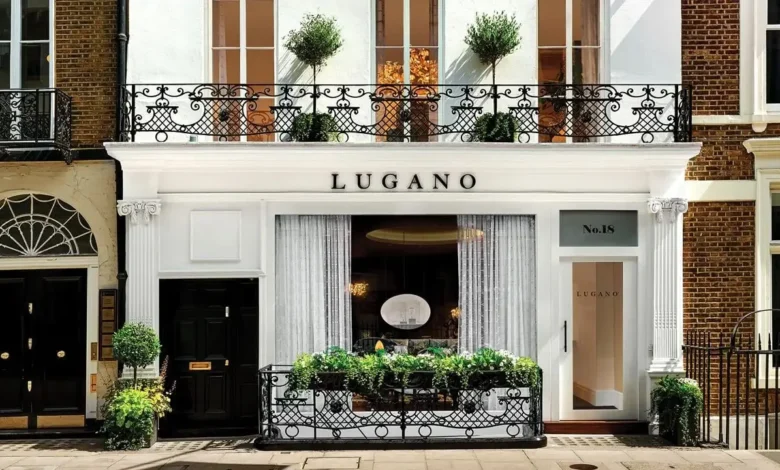
The United States Securities and Exchange Commission has formally filed sweeping civil charges against Mordechai Ferder, the former chief executive officer of high-end jewelry brand Lugano Diamonds, accusing him of orchestrating a massive, multi-year fraudulent investment scheme. According to regulatory filings, Ferder’s elaborate deception inflated the luxury firm’s financial records by more than $1 billion in fictitious revenue, ultimately precipitating the company’s dramatic financial collapse and subsequent bankruptcy filing.
The enforcement action, lodged in the US District Court for the Central District of California, details a sophisticated Ponzi-like operation that unfolded over a four-year period between 2021 and 2025. Federal regulators allege that Ferder systematically lured high-net-worth individuals and institutional investors by pitching lucrative, asset-backed opportunities involving rare and high-value diamonds. In reality, neither Ferder nor Lugano Diamonds ever owned the underlying gemstones, turning what was marketed as tangible luxury investment contracts into a web of financial falsehoods.
The fallout from the investigation has sent shockwaves through the luxury retail and private equity sectors, triggering severe accounting adjustments, corporate restructuring, and international regulatory scrutiny. As federal prosecutors and financial watchdogs press forward with civil penalties and asset recovery efforts, the case serves as a stark reminder of vulnerabilities within corporate governance and inventory oversight in high-end consumer markets.
Anatomy of an Elaborate Diamond Investment Fraud
At the core of the SEC’s complaint lies a series of material misrepresentations designed to project an image of unparalleled stability and explosive growth at Lugano Diamonds. Ferder allegedly convinced investors to pour hundreds of millions of dollars into specific diamond contracts under false pretenses.
According to the regulatory filing, Ferder assured participants that he or Lugano would directly acquire the specific diamonds designated in their investment contracts. Furthermore, he promised to actively identify profitable secondary buyers for the gemstones, or alternatively, to utilize Lugano’s master craftsmen to transform the raw stones into bespoke pieces of fine jewelry, thereby engineering substantial appreciation in the investment’s value.
None of these operations materialized. The SEC complaint reveals that Ferder and Lugano neither purchased the contracted diamonds nor took any steps to enhance their market value. Instead, when investors sought returns or liquidation, Ferder allegedly utilized incoming capital from new participants to make Ponzi-like payouts to earlier investors, creating the illusion of a thriving, self-sustaining financial ecosystem.
To conceal the illicit capital flows from auditors and corporate leadership, Ferder allegedly directed accounting personnel at Lugano to record incoming investor funds as standard operational revenue. Simultaneously, outgoing repayments to investors were disguised in the corporate ledgers as routine inventory purchases. This dual-layer deception allowed the company to artificially inflate its revenue figures by more than $1 billion over the course of the scheme, masking deep underlying structural insolvency.
Chronology of a Corporate Collapse
The unraveling of Mordechai Ferder’s billion-dollar facade began quietly in the spring of last year, sparked by routine corporate oversight and internal auditing procedures conducted by Lugano’s parent organization.
In May 2024, Compass Diversified (CODI), a publicly traded private equity firm that acquired Lugano Diamonds in 2021 for $256 million, initiated an internal investigation following the detection of sudden financial irregularities. As forensic accountants began probing the discrepancies within Lugano’s books, Ferder abruptly exited his role as chief executive officer.
The internal probe quickly uncovered the breadth of the deception, forcing CODI to take drastic remedial action. In subsequent financial disclosures, the parent company was forced to drastically revalue its luxury jewelry subsidiary. The asset value of Lugano, which had been pegged at $179 million at the time of the 2021 acquisition, was aggressively written down to a meager $5 million. Furthermore, CODI was forced to erase more than 85% of the previously reported revenue associated with the brand, exposing a massive valuation void that devastated the parent company’s consolidated financial statements.
Unable to withstand the liquidity crisis, loss of investor confidence, and the fallout from the forensic audit, Lugano Diamonds filed for Chapter 11 bankruptcy protection in November. The bankruptcy filing immediately put the storied luxury brand up for sale, as court-appointed administrators and creditors sought to salvage remaining tangible assets, retail boutiques, and intellectual property from the wreckage.
Regulatory Enforcement and Legal Remedies
The regulatory response has been swift and multifaceted. In its federal court filing, the SEC is pursuing comprehensive legal remedies against both Mordechai Ferder and Simba IL Holdings, an affiliated corporate entity directly controlled by Ferder.
The commission is seeking permanent injunctions to bar Ferder and Simba IL Holdings from future violations of federal securities laws, including anti-fraud and reporting provisions. Additionally, the SEC has requested court orders for disgorgement, forcing the defendants to surrender all ill-gotten gains derived from the fraudulent scheme, complete with prejudgment interest. Substantial civil monetary penalties are also being pursued to punish the alleged misconduct and deter similar corporate malfeasance.
Beyond financial penalties, the SEC has filed for a formal officer and director bar against Ferder, a measure designed to permanently disqualify him from serving in leadership or governance roles for any publicly reporting company.
The regulatory net has also extended to family assets. The SEC’s complaint names Ferder and his wife as relief defendants in their official capacities as trustees overseeing three separate family trusts. Regulators assert that these trusts were recipients of significant financial proceeds generated by the fraud, and the commission is moving to freeze and recover those assets for distribution to injured investors.
Broader Industry Implications and Corporate Governance Lessons
The Lugano Diamonds scandal has ignited rigorous debate across the private equity and luxury goods sectors regarding due diligence, internal controls, and inventory verification standards. Industry analysts point out that high-end luxury markets, while historically reliant on relationships, discretion, and physical asset exclusivity, are increasingly vulnerable to sophisticated financial engineering when corporate oversight lapses.
Private equity firms acquiring privately held luxury brands face renewed pressure to implement independent, third-party verification protocols for high-value inventory and revenue recognition. The dramatic write-down of Lugano’s valuation—from hundreds of millions down to single digits—demonstrates the catastrophic financial risks inherent in undetected executive-level fraud.
Furthermore, the case highlights the critical importance of whistleblower protections and robust internal audit committees. It was only through CODI’s willingness to investigate anomalies internally that the multi-year scheme was brought to light, preventing even greater losses.
As civil litigation proceeds in the US District Court for the Central District of California, legal experts anticipate that federal criminal prosecutors may also review the SEC’s findings for potential indictments. For investors, creditors, and former employees of Lugano Diamonds, the legal battle marks a protracted chapter in closing one of the most significant corporate fraud cases in the luxury retail sector in recent years.