Bridging the Trust Gap: How Made2Flow is Utilizing AI to Transform Fashion Sustainability Data into Actionable Intelligence

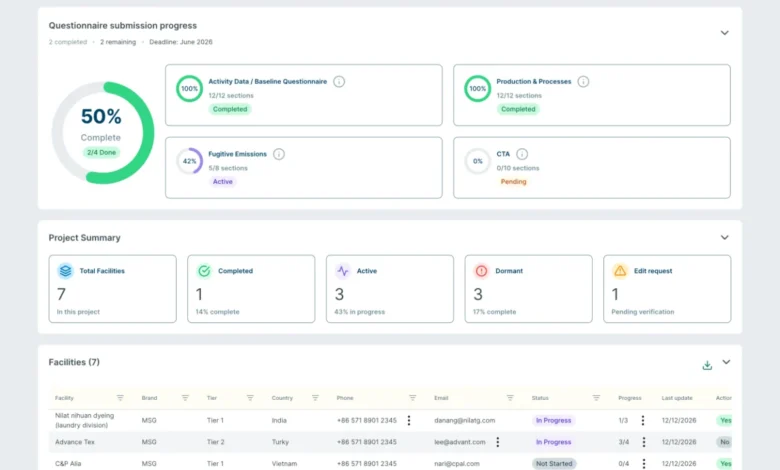
The fashion industry is currently navigating a period of unprecedented scrutiny, driven by a convergence of strict new regulatory mandates and a growing consumer demand for radical transparency. As brands scramble to comply with the European Union’s Digital Product Passport (DPP), the Corporate Sustainability Reporting Directive (CSRD), and the Corporate Sustainability Due Diligence Directive (CSDDD), they are confronting a fundamental structural issue: the data required for compliance is often fragmented, incomplete, or siloed within legacy systems. While the technical potential of Artificial Intelligence (AI) to resolve these issues is widely recognized, a significant "trust gap" persists, with many organizations hesitant to rely on AI-generated outputs for high-stakes regulatory disclosures.
The Chronology of a Data Crisis
For decades, sustainability data in the fashion sector has been characterized by its opacity. Historically, information regarding a product’s lifecycle—from raw material extraction to the final stitch—was scattered across disparate platforms including Product Lifecycle Management (PLM) software, Enterprise Resource Planning (ERP) systems, and ad-hoc supplier spreadsheets.
By 2020, as the regulatory environment began to tighten, the industry realized that manual data aggregation was no longer viable. Companies like Made2Flow entered the market with an "AI-native" approach, aiming to move beyond simple reporting toward a comprehensive infrastructure capable of capturing, cleaning, and interpreting supply chain data. The period from 2020 to 2026 marked a pivotal shift, as companies transitioned from pilot projects—often limited to small-scale environmental assessments—to the urgent need for enterprise-wide decarbonization frameworks.
Analyzing the Trust Disconnect
Recent research from The Interline’s AI Report 2026 highlights a persistent tension: while AI models are demonstrably more capable of processing complex datasets than ever before, end-user confidence in these outputs remains inconsistent. This disconnect is particularly damaging in the context of ESG (Environmental, Social, and Governance) reporting, where inaccuracies can lead to severe legal and reputational consequences.

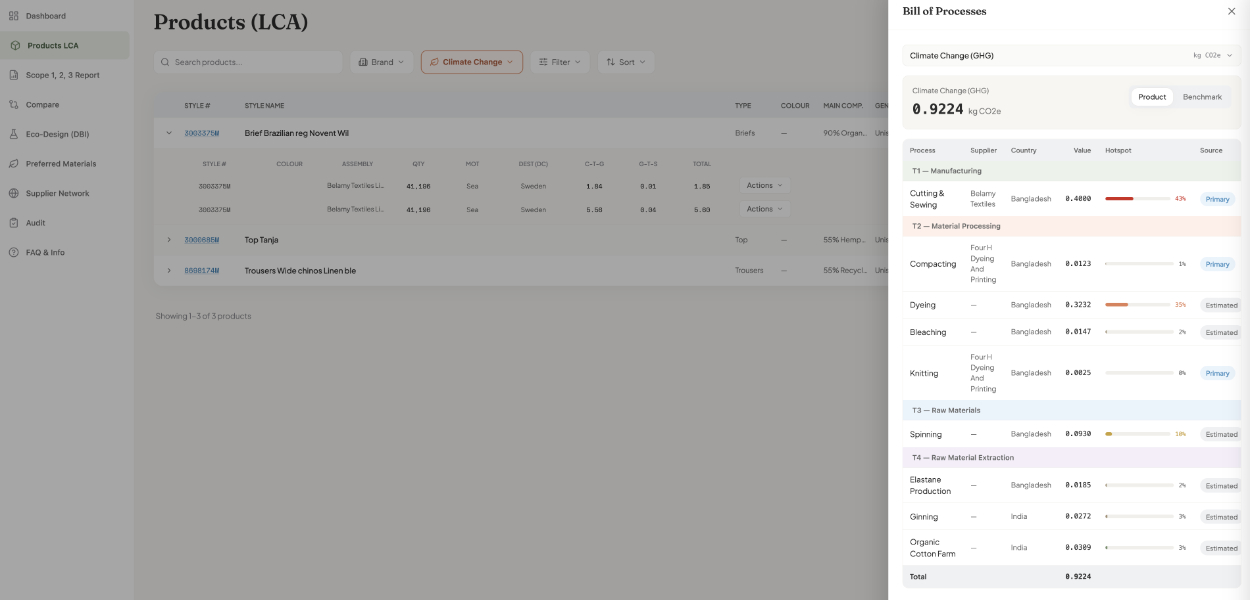
According to industry analysts, trust is not merely a product of accuracy; it is a product of auditability and methodology. Users are increasingly wary of "black box" algorithms that provide insights without explaining the underlying logic. To bridge this gap, organizations are shifting their focus toward "explainable AI," where platforms do not just deliver a carbon score but provide a clear, traceable path showing how that score was calculated based on specific Bill of Materials (BOM) and Bill of Process (BOP) data.
The Role of AI in Data Normalization
The primary technical challenge in modernizing fashion supply chains is the lack of a unified taxonomy. A dyehouse in Southeast Asia, a textile mill in Europe, and a garment factory in South America may all use different software standards and terminology to describe their energy consumption and water usage.
Made2Flow has addressed this by training AI models on millions of data points across heterogeneous structures. By identifying patterns in unstructured files—such as PDF invoices, scan-based reports, or informal email communications—the system can normalize information into a format suitable for Life Cycle Assessments (LCAs). This reduces the "setup phase" for sustainability reporting from the industry-standard 12 to 18 months down to a matter of weeks.
Furthermore, the AI functions as an automated auditor. Human data entry is prone to inconsistencies that, while negligible for general production, can cause significant errors in carbon calculations. By flagging anomalies in real-time, the AI ensures that the foundation of any sustainability report is robust enough to withstand the scrutiny of external auditors and regulators.
Empowering the Wider Organization
Historically, sustainability departments have acted as gatekeepers, functioning in relative isolation. The complexity of LCA methodology meant that only a handful of specialists possessed the training to interpret the data. However, the modern mandate for sustainability requires it to be a "whole-business initiative."
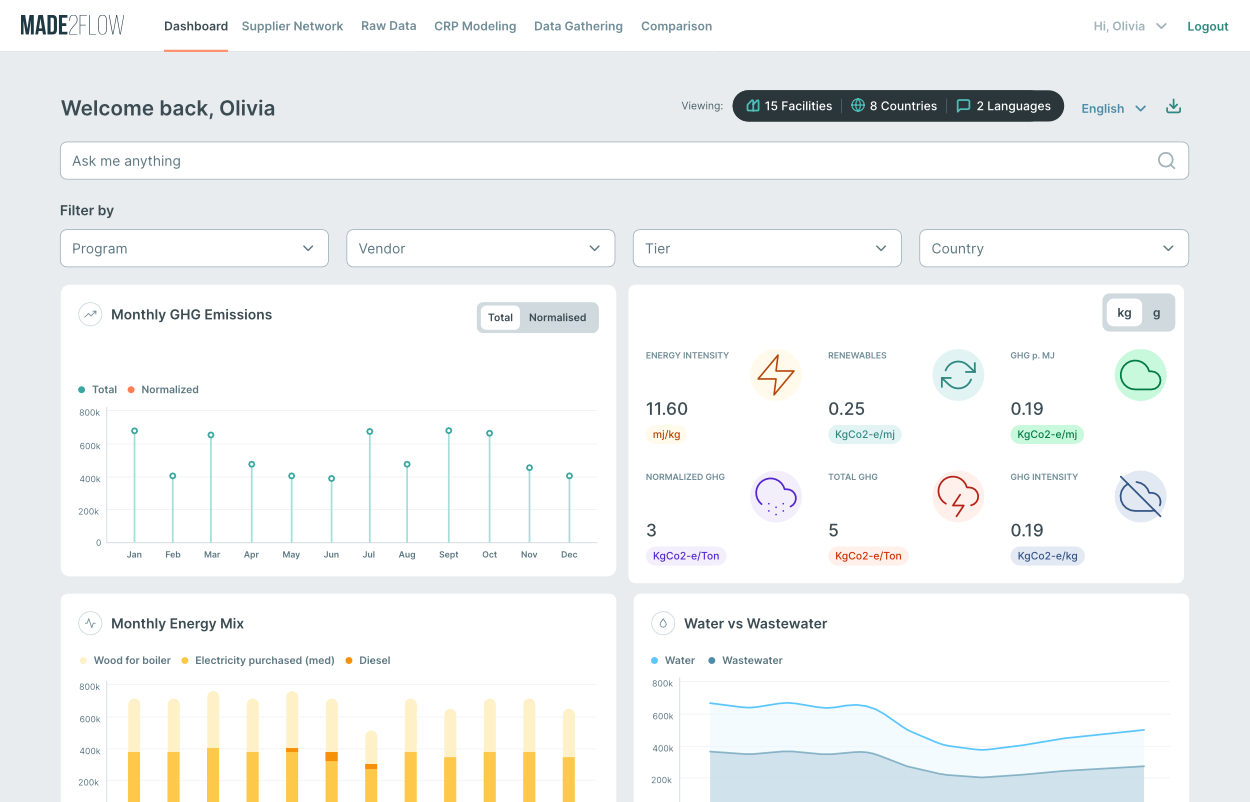
AI is now acting as a democratizing force, enabling cross-departmental access to environmental data through natural language processing. Instead of relying on static, once-a-year reports, stakeholders across the business can now interact with the data:
- Product Developers can query the system to identify which styles share specific dyehouses, allowing them to make design choices that minimize waste before the product enters the manufacturing phase.
- Sourcing Managers can model financial risks, identifying which regions or facility types are most vulnerable to fluctuating water and energy costs, thereby informing more resilient procurement strategies.
- Marketing Teams can access verified impact data to substantiate consumer-facing claims, reducing the risk of accusations of "greenwashing."
By shifting from a model of "sustainability as a constraint" to "sustainability as an operational input," companies can integrate environmental performance into the core of their commercial decision-making.
Regulatory Pressure vs. Technological Capability
The current landscape is defined by a race between legislative deadlines and technological maturity. The EU’s CSDDD, for instance, mandates that large companies perform due diligence on their global supply chains. This has created a "floor" for industry action, forcing companies to move beyond the "bare minimum" of compliance.
However, many firms still struggle to move past the scoping phase. The industry is currently split between those that rely on expensive, manual-heavy consultancies and those that implement "plug-and-play" SaaS solutions that often lack the depth required for complex, globalized supply chains. The emerging consensus among technology leaders is that the most successful implementations will be those that combine the depth of traditional consulting with the scalability of AI-native software.
Implications for Future Decarbonization
Looking ahead, the goal for fashion brands is to build a "structured intelligence stack." This begins with a granular LCA, evolves into Scope 1, 2, and 3 emissions accounting, and eventually culminates in a dynamic Climate Transition Plan.
The integration of AI into this journey is not just a luxury; it is a necessity for those seeking to remain competitive. As the industry moves toward 2030, the ability to rapidly ingest, analyze, and pivot based on accurate environmental data will likely become the primary differentiator between market leaders and those hindered by "perfection paralysis."
While the skepticism surrounding AI in fashion is a rational response to the industry’s history of complex, unverified data, the evidence suggests that the technology is maturing. By replacing fragmented, manual processes with AI-enabled, continuous data flows, companies are finally moving toward a state where sustainability data is as reliable, and as integral to business success, as financial data. The future of the industry rests on this transition: transforming environmental impact from an opaque, unpredictable metric into a manageable, transparent, and core component of the global fashion economy.