Garden Silk Mills boosts speciality yarn production through innovative single-stage Barmag spinning technology

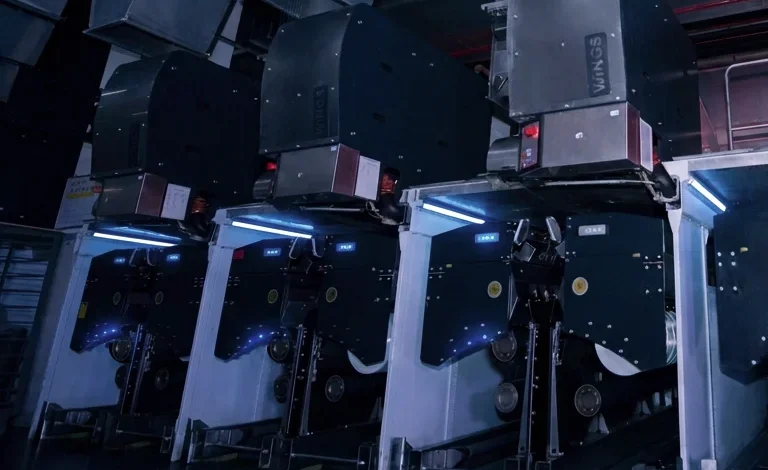
Indian polyester manufacturer Garden Silk Mills has successfully transitioned into a new era of high-value textile production, marking a significant milestone in its operational history by implementing a sophisticated single-stage spinning process for bi-shrinkage yarns (BSYs). The integration of this technology, developed by the industry-leading machinery manufacturer Barmag, has allowed the Surat-based company to retrofit 24 existing positions on its Barmag Wings FDY polyester spinning machines. After a year of sustained operation, the manufacturer reports substantial gains in both product quality and manufacturing throughput, signaling a strategic shift for the Indian textile sector as it moves away from commodity-grade manufacturing toward premium, high-margin textile solutions.
The Technological Evolution: From Two-Stage to Single-Stage
Traditionally, the production of bi-shrinkage yarns—a specialized category of intermingled textured yarns (ITYs)—was a complex, resource-heavy, and time-consuming endeavor. The conventional method required the separate manufacturing of partially oriented yarn (POY) and fully drawn yarn (FDY), followed by a secondary, labor-intensive process to combine and intermingle the two distinct filaments. This two-stage process not only required significant floor space for redundant machinery but also incurred higher energy costs and increased the risk of material degradation during transport between machines.
Barmag’s new single-stage spinning process, powered by the Wings FDY Plus eco technology, fundamentally alters this value chain. By integrating the POY and FDY production cycles into a single, continuous, and automated operation, the system eliminates the need for intermediate handling. The technology allows for the simultaneous production of up to 16 yarn ends, operating at high speeds that outperform traditional multi-stage systems. This streamlined approach significantly reduces the carbon footprint of the production cycle while simultaneously lowering the overhead costs associated with machine start-up and waste management.
Chronology of the Retrofit and Operational Integration
The project at Garden Silk Mills did not occur in a vacuum but followed a period of deliberate market analysis and equipment evaluation.
- Q4 2025: Initial discussions between Garden Silk Mills and Barmag technical teams regarding the limitations of existing commodity-focused machinery.
- Q1 2026: Strategic decision to retrofit existing Wings FDY units rather than pursuing a capital-intensive "greenfield" installation of entirely new machinery.
- Q3 2026: Installation and calibration of the retrofitted positions, focusing on precision engineering to handle the sensitive intermingling of the two yarn components.
- November 2026: Official evaluation of one year of operational data, confirming that the new process has successfully enabled the production of high-quality bi-shrinkage yarns at scale.
This phased approach allowed Garden Silk Mills to maintain its core production capabilities while simultaneously diversifying its portfolio to include the high-growth segment of speciality yarns.
Mechanics of Bi-Shrinkage Yarn (BSY)
To understand the significance of this technological leap, one must examine the physics of the yarn itself. Bi-shrinkage yarns are defined by the distinct shrinkage characteristics of their component filaments. Because the POY and FDY components react differently when exposed to heat during the subsequent fabric finishing process, the fabric naturally gains texture, bulk, and a sophisticated aesthetic—often characterized by crinkled, pleated, or chiffon-like appearances—without the need for the traditional, costly false-twist texturing processes.
The Barmag system’s primary innovation lies in its ability to exercise independent control over the two yarn components. Following the drawing process, the POY and FDY elements are brought together with precision. The machine’s optimized yarn path is engineered to minimize mechanical friction, which is critical for ensuring the consistency of intermingling points. These points are the "anchors" that hold the disparate yarns together; if the intermingling is uneven, the final fabric suffers from streaks or inconsistent texture. By achieving high-uniformity intermingling, Garden Silk Mills can now offer consistent, high-grade specialty yarns that meet the rigorous standards of global fashion houses.
Official Perspectives and Industry Feedback
Shashi Sharma, chief operating officer and group project head at Garden Silk Mills, has expressed high satisfaction with the performance metrics of the retrofitted machinery. According to Sharma, the transition has provided a clear competitive edge in a crowded market. "The quality of the yarn is excellent," Sharma noted, emphasizing that the efficiency gains from the single-stage process have provided the company with the agility needed to respond to changing consumer preferences in both domestic and international apparel markets.

From the perspective of Barmag, the successful implementation at Garden Silk Mills serves as a vital commercial reference. As manufacturers across India and Southeast Asia seek to escape the "commodity trap"—where margins are constantly eroded by oversupply—the demand for technologies that enable the production of differentiated, high-value fabrics is rising. Barmag’s ability to provide a modular, scalable solution through retrofitting existing machines makes the technology accessible to a broader base of manufacturers who may not be ready for a full-scale factory overhaul.
Broader Economic and Market Implications
The shift at Garden Silk Mills is emblematic of a broader trend within the Indian textile industry. Historically, India’s polyester sector focused on the mass production of standard filament yarns. However, with the rising influence of fast-fashion demand and a growing middle class that prioritizes apparel aesthetics, the demand for "value-added" yarns has surged.
The Impact on Home Textiles and Apparel
The versatility of BSYs produced on the new Barmag lines is significant. Beyond basic clothing, the yarn is finding applications in:
- Home Textiles: Creating high-end curtains and upholstery that require unique drape and texture.
- Performance Apparel: Producing lightweight fleece and moisture-wicking materials that benefit from the bulk-enhancing properties of bi-shrinkage filaments.
- Luxury Fashion: Enabling the production of intricate, pleated, and crinkled fabrics that were previously only available through more expensive, slower manufacturing techniques.
Economic Viability of Retrofitting
One of the most compelling aspects of this case study is the economic feasibility of retrofitting. In the current global climate of economic uncertainty, capital expenditure (CapEx) is scrutinized heavily. By choosing to upgrade existing Barmag Wings units, Garden Silk Mills effectively increased its asset utilization rate, extending the lifecycle of its existing machinery while gaining the capabilities of a modern, high-tech production facility. This strategy reduces the payback period for the investment and avoids the logistical and environmental costs associated with scrapping old machinery and installing new units.
Institutional Context: Barmag and the Rieter Group
The technology provided by Barmag is underpinned by decades of research and development. Now a subsidiary of the Swiss-based Rieter Group, Barmag continues to operate as a global leader in filament spinning technology. With a workforce of approximately 2,500 professionals and core R&D hubs in Remscheid and Neumünster (Germany) and Suzhou (China), the company is at the forefront of the "Smart Factory" initiative, which emphasizes automation, lower energy consumption, and high-precision output.
The integration of the Wings FDY Plus eco technology into the Indian market is part of a wider strategic effort by the Rieter Group to expand its footprint in Asia’s rapidly modernizing textile hubs. By focusing on sustainability and efficiency, Barmag is positioning its machinery as a necessary tool for companies aiming to meet the increasingly strict environmental, social, and governance (ESG) standards now being demanded by international retailers.
Future Outlook
As Garden Silk Mills continues to ramp up production using the single-stage process, the company is well-positioned to capture a larger share of the specialty polyester market. The success of this 24-position retrofit likely serves as a pilot for future upgrades across the company’s wider manufacturing fleet.
The implications for the wider industry are clear: the future of textile manufacturing in competitive markets lies in the ability to balance speed with sophistication. By leveraging modular technology, reducing waste through streamlined processes, and responding to the demand for diverse fabric textures, manufacturers can ensure their long-term relevance. The partnership between Garden Silk Mills and Barmag underscores a pivotal transition: in a market that no longer rewards volume alone, the ability to innovate on the factory floor has become the ultimate competitive advantage. Through this investment, Garden Silk Mills has not only improved its current output but has laid a foundation for ongoing diversification in the years to come.