Liquid-core fibres offer new weapon against malaria as Swiss researchers target insecticide resistance

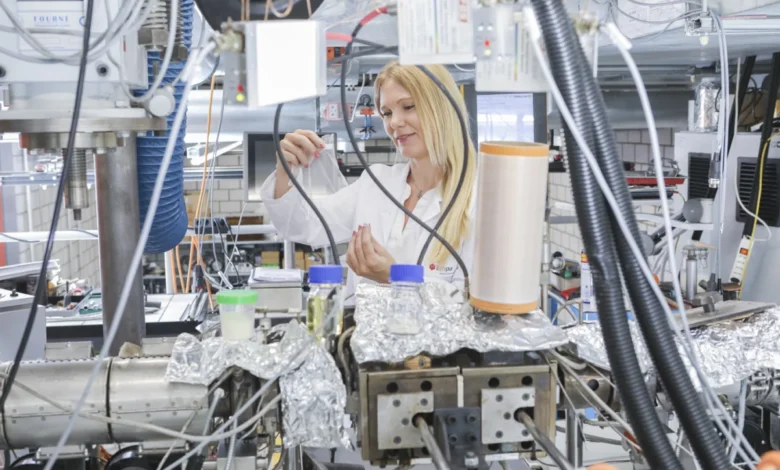
A groundbreaking collaboration led by the Swiss Federal Laboratories for Materials Science and Technology (Empa) has resulted in the development of a novel liquid-core fibre technology designed to combat the rising tide of insecticide resistance in malaria-carrying mosquito populations. By enabling the integration of heat-sensitive active ingredients into synthetic textiles, this innovation promises to extend the life and efficacy of mosquito nets, which remain a primary line of defense against one of the world’s deadliest diseases.
The Growing Crisis of Malaria and Insecticide Resistance
The urgency of this development is underscored by sobering global health statistics. According to the World Health Organization’s (WHO) most recent data, malaria continues to exert a devastating toll on humanity. In 2024 alone, more than 280 million people contracted the disease across 80 countries, leading to approximately 610,000 fatalities. Despite significant progress in the early 2000s, the rate of decline in malaria cases has stagnated, with experts pointing to the widespread evolution of mosquito populations as a primary driver.
For decades, the standard for malaria prevention has been the Long-Lasting Insecticidal Net (LLIN). These nets are traditionally treated with pyrethroid insecticides, which are highly effective at killing mosquitoes upon contact. However, the overuse of these chemicals has selected for mosquitoes that possess genetic resistance to pyrethroids, rendering many existing nets significantly less effective. Public health officials have long sought alternative insecticides, but traditional manufacturing processes—specifically melt spinning—have acted as a barrier to innovation.

The Engineering Challenge: Why Conventional Methods Failed
In the conventional production of synthetic yarns, polymers are melted at high temperatures and extruded through fine nozzles to form filaments. This process is highly efficient but inherently destructive to many modern, potent insecticides. Many of the newer, more effective compounds required to combat resistant mosquitoes are volatile; they evaporate or chemically degrade when subjected to the extreme heat of the melt-spinning process.
The Empa team, working under the three-year "MalCoFil" project and supported by the Swiss innovation agency Innosuisse, sought to bypass these thermal limitations entirely. The result is a dual-structured fibre consisting of a protective polymer sheath surrounding a liquid core. In this design, the insecticide is sequestered within the liquid center, never coming into contact with the high-heat zones of the extrusion process. As the fibre is used in a mosquito net, the active ingredient gradually migrates from the core through the permeable polymer sheath to the surface, creating a long-lasting, controlled release of the insecticide.
Chronology of the MalCoFil Project
The development of this technology represents the culmination of a multi-year effort to synchronize material science with public health requirements:
- 2023: The MalCoFil project is formally launched with a focus on overcoming thermal degradation in fiber-based pest control.
- Early 2024: Empa researchers, led by Edith Perret, successfully prototype the first liquid-core fibers, balancing the need for high-tensile strength with the requirement for controlled permeability.
- Mid-2024: Industrial partners Vestergaard and Monosuisse join the initiative. Vestergaard focuses on the biological efficacy of the yarns, while Monosuisse engineers specialized spinning nozzles for industrial-scale manufacturing.
- November 2026: Public disclosure of the technology confirms that the liquid-core construction can maintain mechanical integrity during weaving while delivering a steady dose of active ingredients.
Technical Specifications and Material Design
The success of the MalCoFil project relied on a delicate balance of material properties. If the polymer sheath were too dense, the insecticide would remain trapped inside; if it were too porous, the carrier fluid would leak, compromising the fiber’s integrity. Furthermore, the resulting yarn had to be compatible with industrial knitting and weaving machines.

"The yarn must be suitable for weaving, with high tensile strength, and the fibre must not become brittle," explains Edith Perret. By optimizing the polymer formulation and carefully selecting a carrier fluid that remains stable across various environmental conditions, the team achieved a product that is not only effective but also durable. Initial laboratory tests suggest that the nets could remain effective for up to three years, even when subjected to the repeated washing cycles common in households in tropical regions.
Industrial Synergy: Moving from Lab to Factory
The transition from a laboratory breakthrough to a viable public health product is largely due to the strategic inclusion of industry veterans. Vestergaard, a global leader in the production of LLINs, provided the necessary testing infrastructure to confirm that the new yarns could successfully neutralize mosquitoes that had already developed resistance to conventional pyrethroids.
Simultaneously, Monosuisse played a critical role in the mechanical engineering of the production process. Scaling the production of a liquid-core fiber requires precise control over the flow rate of both the liquid center and the outer polymer melt to ensure the core is centered and the sheath is uniform. The development of specialized spinning nozzles by Monosuisse is considered a key milestone, as it allows for a faster, more economical manufacturing process than previous niche techniques.
Implications for Global Health Policy
The implications of this research extend far beyond the textile laboratory. If industrial-scale production proves economically viable, this technology could provide a much-needed "reset" in the fight against malaria. By allowing manufacturers to use a wider array of insecticides—including those that were previously excluded due to heat sensitivity—the Empa technology provides a platform to rotate active ingredients. This is a critical strategy in pest management, as it prevents mosquitoes from developing resistance to a single class of chemicals.

From an economic perspective, the ability to produce these nets using existing industrial textile infrastructure could reduce the cost of deployment. While traditional nets have served as the backbone of malaria prevention, the failure of current-generation pyrethroids has forced health organizations to look toward more expensive or complex solutions. A cost-effective, high-performance, liquid-core fiber could lower the barrier to entry for regions with the highest disease burdens.
Future Outlook and Next Steps
Despite the success of the initial research, the path to widespread deployment remains rigorous. The researchers must now transition to large-scale field trials to confirm that the fiber’s release rate of the insecticide remains consistent in humid, hot, and high-wear environments. Durability, both in terms of mechanical strength and the longevity of the chemical release, remains the final hurdle before the product can be integrated into global health supply chains.
The collaboration between Empa, Vestergaard, and Monosuisse serves as a model for how interdisciplinary, industry-backed research can tackle urgent global health challenges. By applying advanced fiber technology to a long-standing environmental and biological problem, the MalCoFil project represents a significant, evidence-based leap forward in the mission to eradicate malaria. As resistance continues to spread, the arrival of this liquid-core technology may prove to be a timely intervention in the survival of millions.
Related posts: