The Children’s Place Files for Chapter 11 Bankruptcy to Seek a Sale After Steep Sales Declines


The Children’s Place, a staple of American children’s apparel retail for nearly sixty years, has officially filed for voluntary Chapter 11 bankruptcy protection in the United States. The landmark filing, submitted to the US Bankruptcy Court for the District of New Jersey, marks a turbulent chapter for the legacy brand, which has felt the acute pressure of shifting consumer habits, post-pandemic inflation, and declining mall traffic.
Despite initiating court-supervised restructuring proceedings, the company has emphasized that its physical retail footprint—consisting of 514 stores as of August 1, 2026—and its e-commerce platforms will remain fully operational. Furthermore, the retailer’s Canadian operations are included in the legal framework, subject to formal cross-border court recognition.
In a strategic move to preserve the enterprise as a going concern, leadership is pursuing an accelerated, court-supervised sale process under Section 363 of the US Bankruptcy Code. Company executives are actively fielding proposals from multiple prospective buyers, with an aggressive bidding deadline set for December 9, 2026, and an ambitious target to finalize a transaction by the end of that same month.
A Chronology of Financial Pressure and Strategic Decline
The path to Chapter 11 bankruptcy for The Children’s Place did not happen overnight; it is the culmination of years of macroeconomic headwinds compounded by company-specific operational hurdles. Founded in 1969, the retailer grew to become North America’s largest pure-play children’s specialty apparel retailer, famous for offering value-priced clothing, accessories, and footwear.
For decades, the brand thrived by anchoring itself in traditional shopping malls and building strong brand loyalty among multi-generational families. However, the rise of fast-fashion giants, direct-to-consumer digital competitors, and major big-box retailers eating into the children’s clothing market gradually eroded the company’s market share.
The structural vulnerabilities were severely aggravated by the economic turbulence of the early 2020s. Supply chain bottlenecks, soaring freight costs, and inflationary pressures squeezed profit margins. Middle-income families—the core demographic for The Children’s Place—faced severe cost-of-living constraints, forcing many to pivot toward deep-discount supermarkets and secondhand markets for children’s rapid-growth wardrobes.
These compounding pressures came to a head in the second quarter of the fiscal year. The company posted an alarming 18.9% year-on-year drop in net sales. This downward spiral was largely propelled by a 15.0% contraction in direct-to-consumer sales, which management directly attributed to sustained weakness in foot traffic across both digital and physical storefronts. Consequently, gross profit plummeted to $83.3 million, down substantially from $101.3 million during the corresponding period a year prior. Facing mounting debt obligations and a rapidly depleting liquidity cushion, executive leadership and the board of directors concluded that a court-supervised restructuring and sale process was the only viable mechanism to keep the business alive.
Operational Continuity and "First Day" Motions
Recognizing the anxiety that bankruptcy announcements typically provoke among employees, vendors, and landlords, leadership moved quickly to stabilize daily operations. Alongside the Chapter 11 petition, the company filed a series of customary "first day" motions designed to secure judicial approval for critical operational continuity measures.
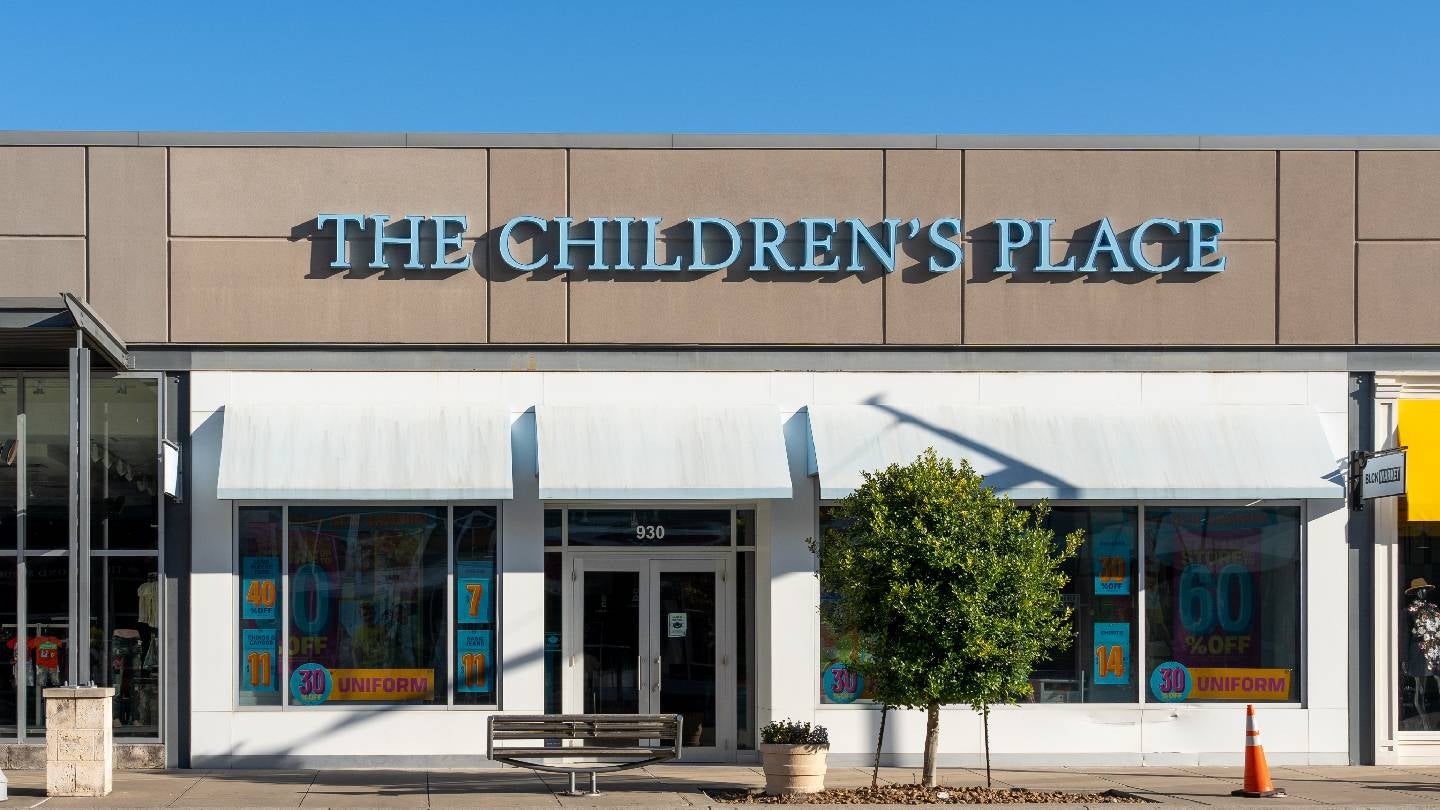
These emergency motions seek authorization to honor employee wage and benefit obligations without interruption, maintain customer loyalty and promotional programs, and ensure timely payments to vendors and suppliers for all goods and services delivered after the petition date. By securing these permissions, management hopes to maintain the supply chain integrity necessary to support inventory flow through the critical holiday shopping season.
To finance ongoing operations through the proceedings, The Children’s Place has negotiated a new term loan facility funded by its existing secured lenders. This debtor-in-possession (DIP) financing will provide the necessary liquidity buffer to keep stores stocked and payroll met while the competitive auction plays out.
Additionally, the retailer has engaged professional asset management firms to oversee a targeted inventory sale strategy across its store estate. The company appointed a joint venture comprising the GA Group, Tiger Group, and SB360 Capital Partners under a specialized consulting agreement to optimize inventory performance and maximize asset recovery throughout the restructuring phase.
Leadership and Advisory Statements
Addressing the restructuring announcement, Rudy Morando, co-chief restructuring officer of The Children’s Place, emphasized the company’s dedication to a transparent, orderly process that safeguards its historical legacy.
"Today’s announcement marks an important step in our efforts to secure the best path forward for The Children’s Place," Morando stated. "For nearly 60 years, The Children’s Place has supported growing families with apparel that customers have come to know and love. We recognise the significance of this development for our employees, customers, vendors, and other partners, and we are committed to conducting an efficient and transparent sale process. In the meantime, we remain focused on serving the families who have trusted The Children’s Place for generations."
Behind the scenes, the company has assembled a high-profile roster of legal and financial advisors to steer the complex legal maneuvers. Legal representation is being handled by White & Case, while BRG serves as the financial advisor, and Cascadia Capital acts as the exclusive investment banker managing the corporate sale process.
Broader Implications for Retail and the Children’s Apparel Market
The voluntary Chapter 11 filing of The Children’s Place underscores the unforgiving nature of the modern retail landscape, particularly for legacy brick-and-mortar brands anchored in traditional shopping malls. As foot traffic continues to polarize toward experiential lifestyle centers or migrate entirely online, mid-tier specialty apparel retailers face an uphill battle to maintain profitable scale.
The failure—or potential acquisition—of such a dominant name in children’s wear leaves a massive void in the retail ecosystem. If a buyer is successfully secured by the end of December 2026, millions of loyal customers may see their favorite neighborhood stores spared from permanent liquidation. However, if the bidding process fails to unearth a viable going-concern buyer, the liquidation of over 500 stores would trigger a seismic shift in market share, leaving competitors, discount department stores, and e-commerce platforms to absorb millions of displaced shoppers.
For suppliers and landlords, the coming weeks will be a nervous waiting game as the court-supervised auction progresses. The ability of The Children’s Place to attract a well-capitalized suitor before the December 9 bid deadline will ultimately determine whether this 60-year-old institution successfully reinvents itself or becomes another casualty of the retail apocalypse.
Related posts: