Planning a wedding is often described as one of the most exciting milestones in a couple’s life, yet it frequently ranks as one of the most financially stressful endeavors a household can undertake. As couples look ahead to the wedding seasons of 2024, 2025, and beyond, the economic landscape of matrimonial planning has shifted dramatically. With rising inflation impacting everything from venue rentals to floral arrangements, the need for precise financial oversight has never been more critical. Financial transparency and rigorous organization are no longer merely helpful suggestions; they are absolute prerequisites for couples hoping to begin their married lives without the heavy anchor of unnecessary debt.

Industry data consistently shows that the average cost of a modern wedding continues to climb, often exceeding tens of thousands of dollars depending on the geographic region and guest count. Amidst the romanticized ideals of dream venues, designer attire, and elaborate multi-course receptions, the stark reality of balance sheets, deposit schedules, and hidden vendor fees often catches fiancés unawares. To bridge the gap between romantic aspiration and financial pragmatism, experts continually emphasize the implementation of structured organizational tools from the very outset of the engagement period. Recognizing this pervasive industry pain point, comprehensive digital solutions have emerged to alleviate the administrative burdens traditionally associated with matrimonial event management.

The Evolution of Wedding Planning Tools and Digital Integration

Historically, couples relied on physical planners, handwritten binders, and rudimentary paper checklists to keep track of their mounting expenses and guest RSVPs. While these traditional methods offered a tactile sense of progress, they left significant room for human error, particularly when dealing with complex calculations such as proportionate guest alcohol consumption, dynamic venue pricing structures, and shifting catering minimums. The digital revolution has fundamentally transformed this space, offering dynamic spreadsheets and software templates compatible with industry-standard platforms like Microsoft Excel and Google Sheets.

Modern wedding planning resources now cater to varying degrees of organizational depth. For couples seeking a straightforward, no-nonsense approach to fiscal management, specialized budget spreadsheets provide an immediate framework for recording estimated costs versus actual expenditures. These tools allow users to monitor line items dynamically, tracking deposits made, outstanding balances due, and critical payment deadlines that might otherwise slip through the cracks of a busy daily routine. Conversely, for those orchestrating large-scale events with intricate moving parts, all-in-one digital planners have become the gold standard, consolidating dozens of specialized worksheets into a single, cohesive file.

An Inside Look at Free Budgeting Solutions for Every Couple

For many fiancés, the primary hurdle in financial planning is simply knowing where to begin. Recognizing the psychological barrier associated with staring at a blank document, industry veterans often share the exact frameworks they utilized for their own milestone celebrations. Designed with meticulous attention to detail, free wedding budget templates serve as an accessible entry point for newly engaged couples. Available universally across Google Sheets and Excel, these complimentary resources require no financial investment, making them immediately accessible to anyone with an internet connection.

The utility of a well-structured budget spreadsheet lies in its lifecycle utility. From the initial brainstorming phase—where couples attempt to align their dream aesthetic with their actual savings—to the final days preceding the ceremony when urgent vendor balances are settled, a centralized tracking document acts as an operational anchor. Essential features typically include automated calculation columns that instantly reflect how a splurge in one category, such as photography or entertainment, impacts the overall remaining balance. Furthermore, dedicated sections for vendor contact information, contract terms, and milestone payment schedules ensure that administrative oversights are kept to an absolute minimum.

Scaling Up: The Rise of Comprehensive All-in-One Planning Suites

While basic budget trackers suffice for intimate gatherings or minimalist celebrations, larger ceremonies involving extensive guest lists, multi-vendor coordination, and destination logistics demand a far more robust suite of tools. Addressing this market demand, comprehensive wedding planning suites have been developed in collaboration with premier bridal design shops, such as The Creations. Priced strategically to reflect their extensive value, these advanced packages often retail around $105, though promotional pricing structures occasionally lower the barrier to entry, making premium organizational architecture available for $69 during peak planning windows.

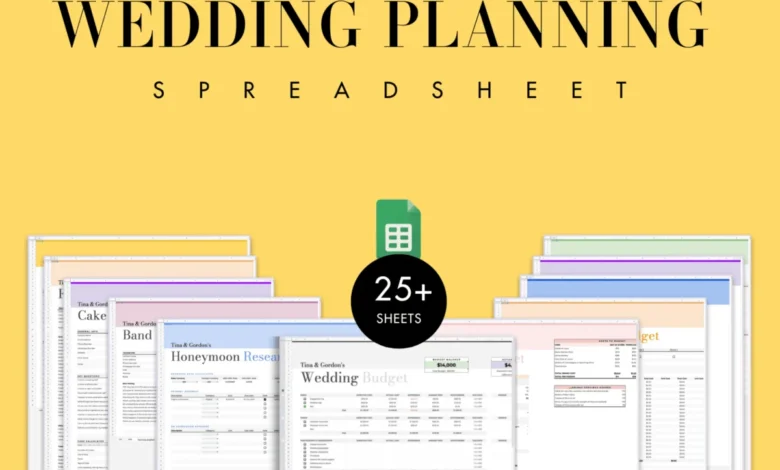
The core differentiator of a premium planning suite is its sheer breadth of coverage, frequently housing upwards of 25 custom-designed sheets within a unified workbook. Rather than forcing couples to cobble together disparate documents for guest management, seating charts, and music playlists, an all-in-one ecosystem provides seamless data integration. For instance, updating a guest’s RSVP status can automatically feed into catering headcounts and seating arrangements, drastically reducing the time spent cross-referencing multiple files.

Deconstructing the 25-Sheet Planning Ecosystem

A closer examination of comprehensive wedding planning spreadsheets reveals a level of granular detail tailored to the complexities of modern event production. These workbooks are typically categorized into logical modules, ensuring that users can navigate effortlessly between high-level financial overviews and micro-level logistical checklists.

Planning-Related Sheets: At the foundation of any successful event is a master timeline and a master checklist. These sheets break down the months leading up to the wedding into manageable, chronological action items, ensuring that tasks such as securing officiants, mailing save-the-dates, and applying for marriage licenses are executed well ahead of regulatory deadlines.

Wedding Day and Weekend Modules: The logistics of the wedding weekend extend far beyond the ceremony itself. Comprehensive planners incorporate specialized packing lists tailored separately for brides and grooms, covering everything from emergency fashion kits—stocked with safety pins, stain removers, and pain relievers—to honeymoon apparel. Additionally, minute-by-minute wedding day timelines ensure that hair and makeup artists, photographers, and wedding coordinators remain entirely synchronized.

Vendor Research and Budgeting Modules: Securing the right creative partners is often the most expensive component of a wedding. Advanced spreadsheets include dedicated research and comparison tabs for high-impact vendors, including venues, caterers, photographers, videographers, florists, and live musical bands. These sheets allow couples to compare package inclusions, pricing tiers, and contractual obligations side-by-side, facilitating objective decision-making.

Catering, Bar, and Reception Calculators: Food and beverage costs typically consume the largest portion of a wedding budget. Specialized calculators within modern spreadsheets help couples estimate exact quantities based on headcounts, factoring in variables such as signature cocktail popularity, wine consumption per guest, and tiered wedding cake pricing structures.

Guest List and Seating Architecture: Managing family dynamics, plus-ones, and dietary restrictions requires sophisticated database management. Dedicated guest list trackers monitor invitation statuses, meal preferences, and gift tracking simultaneously, feeding directly into intuitive seating plan grids that simplify the notoriously difficult task of table placement.

Implications for the Modern Wedding Industry

The proliferation of advanced, user-friendly digital planning tools reflects a broader cultural shift toward DIY organization and fiscal transparency among millennials and Generation Z couples. As traditional wedding planning fees charged by professional coordinators continue to price out a significant segment of the market, accessible digital alternatives democratize high-level event management. Couples are increasingly empowered to act as their own project managers, utilizing data-driven insights to negotiate with vendors, avoid hidden fees, and protect their hard-earned savings.

Furthermore, the economic implications of utilizing structured digital spreadsheets extend beyond mere cost savings. By mitigating the psychological stress associated with financial opacity, these tools allow couples to focus on the emotional and relational significance of their engagement period. Industry analysts note that couples who establish clear budgets and transparent tracking mechanisms early in their planning cycle report higher levels of satisfaction and significantly lower interpersonal conflict leading up to their wedding day.

Future Outlook and Technological Integration

As software capabilities continue to advance, the boundary between static spreadsheets and dynamic cloud-based applications will likely continue to blur. Future iterations of wedding planning suites are expected to incorporate advanced automation features, real-time currency conversions for destination weddings, and predictive analytics that forecast regional cost variations based on historical data.

For now, the combination of accessible foundational templates and robust all-in-one spreadsheets provides an optimal balance of flexibility and control. Whether a couple is orchestrating a modest backyard gathering or a grand ballroom affair, the integration of structured digital planning remains an invaluable asset in the modern matrimonial landscape. By embracing these organizational resources, fiancés can navigate the complexities of event production with confidence, ensuring that their wedding day remains a celebration of commitment rather than a source of financial anxiety.