Leonhard Kurz Receives 2026 Green Good Design Sustainability Award for Groundbreaking Recosys rPET Jersey

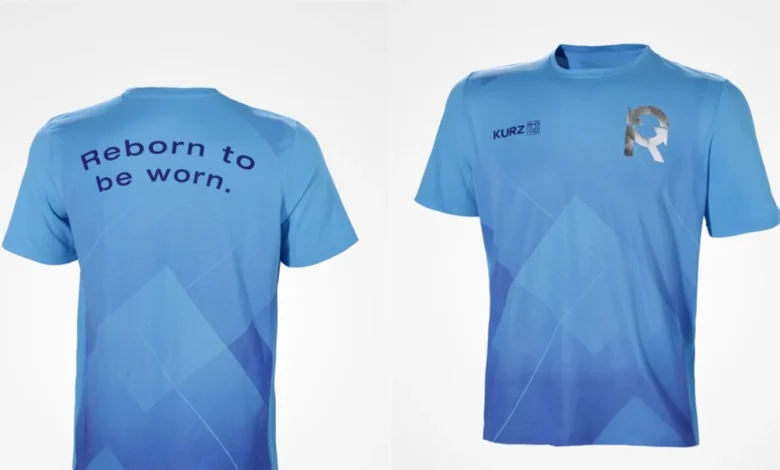
Surface finishing specialist Leonhard Kurz, headquartered in Fürth, Germany, has been honored with the prestigious 2026 Green Good Design Sustainability Award for its innovative Recosys rPET Jersey. This recognition highlights the company’s commitment to circular economy principles and its success in transforming post-consumer waste into high-performance textile solutions. The award underscores a growing trend within the textile and automotive industries to prioritize sustainability without compromising on design or functionality.
The Recosys 2.0 Process: A Closed-Loop System
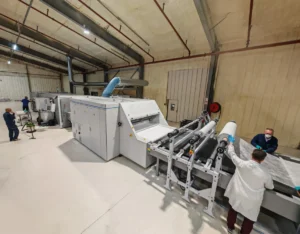
The Recosys rPET Jersey is a testament to Leonhard Kurz’s advanced Recosys 2.0 recycling process. This proprietary technology focuses on the efficient and high-quality recycling of PET carrier materials, primarily sourced from customers within the graphic arts industry. Unlike conventional recycling methods that can sometimes lead to downcycling, Recosys 2.0 is designed to produce a superior rPET granulate. The process involves meticulous sorting of PET carrier materials by type, ensuring the purity and integrity of the recycled feedstock. This attention to detail is crucial for achieving the high-performance characteristics required for demanding applications.
The journey from waste to high-quality textile begins with this meticulously processed rPET granulate. Leonhard Kurz collaborates closely with key industry partners to bring the Recosys rPET Jersey to life. Yarn specialist Technofibres plays a vital role in transforming the granulate into high-performance yarns. Subsequently, Hero Textil, an expert in specialized textile solutions, utilizes these yarns to weave and finish the advanced textiles. This collaborative approach ensures that each stage of production adheres to strict quality and sustainability standards.
The resulting Recosys rPET Jersey offers a versatile foundation for a wide array of applications. Its durability, aesthetic potential, and eco-friendly composition make it particularly well-suited for the automotive sector. Potential uses include seat covers, headliners, and door panels, areas where both visual appeal and long-term performance are paramount. Leonhard Kurz further enhances the textile’s design possibilities through sophisticated surface finishing techniques, including sublimation printing and metallic transfer decoration via a hot-stamping process. These methods allow for intricate patterns, vibrant colors, and premium metallic accents, demonstrating that sustainable materials can also be at the forefront of design innovation.

A Commitment to Sustainability and Innovation
Theresa Stigler, Environmental and Safety Manager of the Recycling and Sustainability Division at Kurz, articulated the company’s core philosophy. "Sustainability is a central component of our corporate strategy," she stated. "With Recosys, we aim to close material loops while enabling new design solutions." This sentiment reflects a broader industry shift towards embracing circular economy models, moving away from the linear "take-make-dispose" paradigm. The development of Recosys rPET Jersey exemplifies this strategic imperative, showcasing how responsible material management can coexist with and even drive innovation.
Stigler further elaborated on the significance of the Green Good Design Award: "Receiving the Green Good Design Award validates our approach of successfully combining environmental responsibility with technological innovation." This award serves not only as an acknowledgment of Kurz’s achievements but also as an encouragement for other companies to invest in similar sustainable practices. The ability to derive high-value products from recycled materials, particularly from waste streams that might otherwise be challenging to manage, is a critical step towards a more sustainable future for the textile and manufacturing industries.
The Green Good Design Awards: Setting New Standards
The Green Good Design Awards are an initiative by the European Centre for Architecture Art Design and Urban Studies and the Chicago Athenaeum. These awards are dedicated to recognizing design projects that prioritize environmental consciousness and sustainability. The selection process involves an international jury of experts who meticulously review hundreds of submissions from over 30 countries. Projects are evaluated based on their innovative use of materials, energy efficiency, environmental impact reduction, and overall contribution to sustainable design principles.
The fact that the Recosys rPET Jersey was selected from such a competitive global pool of entries underscores the exceptional nature of Kurz’s achievement. The jury’s decision to honor this particular product highlights its success in meeting stringent criteria for environmentally conscious design. The awards aim to inspire and promote design that is not only aesthetically pleasing and functional but also ethically and ecologically sound, setting new benchmarks for the industry.
Supporting Data and Industry Context
The textile industry is a significant contributor to global waste, with millions of tons of textile waste generated annually. The European Environment Agency estimates that textile waste generation in the EU has been increasing, with low recycling rates and high incineration or landfill rates. The development of advanced recycling technologies like Recosys 2.0 is therefore crucial for mitigating this environmental burden.

The automotive industry, a key target market for Recosys rPET Jersey, is also under increasing pressure to adopt sustainable practices. Regulatory bodies and consumer demand are pushing for greener vehicles, which extends to the materials used in their interiors. The use of recycled PET in automotive textiles offers several advantages:
- Reduced Carbon Footprint: Producing rPET typically requires significantly less energy than producing virgin PET, leading to lower greenhouse gas emissions. For example, studies suggest that recycled PET can reduce energy consumption by up to 50-75% compared to virgin polyester production.
- Conservation of Resources: Utilizing recycled materials reduces the reliance on fossil fuels and virgin raw materials, conserving finite natural resources.
- Waste Reduction: Diverting PET waste from landfills and incinerators contributes to a circular economy and minimizes environmental pollution.
- Performance Parity: Advanced recycling processes ensure that rPET materials can meet or exceed the performance standards of virgin materials, making them a viable and often preferable alternative for demanding applications.
The collaboration between Leonhard Kurz, Technofibres, and Hero Textil illustrates a model for effective supply chain integration in the pursuit of sustainability. By working together, these companies can optimize the entire value chain, from raw material sourcing and processing to yarn spinning and textile manufacturing. This integrated approach is essential for scaling up sustainable solutions and making them commercially viable.
Broader Impact and Implications
The recognition of Leonhard Kurz’s Recosys rPET Jersey with the Green Good Design Sustainability Award carries several important implications for the textile and automotive industries:
- Validation of Circular Economy Models: The award provides strong validation for the economic and environmental feasibility of closed-loop recycling systems in the textile sector. It demonstrates that businesses can achieve commercial success by prioritizing sustainability.
- Inspiration for Material Innovation: This achievement is likely to inspire other companies to invest in research and development of innovative recycling technologies and sustainable material solutions. The success of Recosys 2.0 can serve as a blueprint for similar initiatives across different material types.
- Increased Demand for Sustainable Automotive Interiors: As more automakers seek to incorporate sustainable materials into their vehicle designs, the availability of high-quality, aesthetically pleasing, and environmentally responsible options like Recosys rPET Jersey will become increasingly important. This could lead to a significant shift in the types of materials used in automotive interiors in the coming years.
- Consumer Awareness and Preference: Awards like the Green Good Design Award also play a role in raising consumer awareness about sustainable products. As consumers become more environmentally conscious, they are likely to favor brands and products that demonstrate a commitment to sustainability, further driving market demand.
- Technological Advancement in Hot-Stamping and Sublimation: The application of advanced decoration techniques like sublimation printing and metallic transfer via hot-stamping on recycled textiles showcases the ongoing evolution of textile finishing technologies. This integration allows for the creation of premium aesthetics on sustainable substrates, broadening their appeal and applicability.
A Glimpse into the Future
The success of Leonhard Kurz’s Recosys rPET Jersey is more than just an award; it represents a significant step forward in the quest for a more sustainable and circular textile industry. By demonstrating that recycled materials can be transformed into high-value, aesthetically appealing, and high-performance products, the company is setting a new standard for responsible manufacturing. As the global focus on environmental protection intensifies, innovations like Recosys are poised to play an increasingly pivotal role in shaping the future of both the textile and automotive sectors. The company’s commitment to closing material loops and fostering design solutions that are both eco-friendly and desirable positions them as a leader in the ongoing transition towards a greener economy.
Further details about Leonhard Kurz and their sustainable initiatives can be found on their official website: www.kurz-world.com.