Photographer Chester Higgins has dedicated over six decades to capturing the essence, history, and achievements of people of African descent. His profound photographic journey, deeply rooted in his upbringing in rural southern Alabama during the tumultuous era of the Civil Rights Movement, began during his student years at Tuskegee University. This pivotal period set him on a trajectory that would culminate in a distinguished nearly four-decade career as a photographer for The New York Times. Currently, a comprehensive exhibition titled Chester Higgins: Shared Memories, showcasing six decades of his impactful work, is on display at the Bruce Silverstein Gallery in New York, running through June 20, 2026. In an exclusive interview, Higgins shared insights into his philosophy of respecting subjects and narrating their stories with a method he describes as "unique, embracing, and nonjudgmental."
A Legacy of Identity and Celebration
The exhibition Chester Higgins: Shared Memories arrives at a moment of heightened global discourse on identity, representation, and the ongoing pursuit of racial equity. Higgins’ work is fundamentally about identity and the exploration of his own African spirit, which he sees as intrinsically linked to the broader spirit of life itself. This deeply personal quest is what he endeavors to share with his audience. He posits that his perspective on African people—one that is inherently unique, embracing, and free from judgment—offers a vital counterpoint to the often-negative and miseducated narratives that pervade contemporary society. "A positive and loving message about any people is a balm to the daily confusion and miseducation we are subjected to," Higgins stated, underscoring the therapeutic and restorative power of his imagery.
The significance of this exhibition is amplified by the current sociopolitical climate. In an era where visual representation plays a crucial role in shaping public perception, Higgins’ decades-long commitment to portraying Black Americans with dignity and complexity is more relevant than ever. His approach challenges prevailing stereotypes and offers a nuanced humanistic view, which he believes is essential for fostering understanding and empathy. The exhibition serves as a powerful reminder of the persistent need for authentic and respectful storytelling in media and art.
Redefining Representation Through the Lens
Higgins’ tenure at The New York Times marked a significant turning point in the visual representation of Black Americans within a major American publication. He articulated his primary motivation for pursuing a career in publishing photography: "The reason that I became a publishing photographer was because I wanted to change the visual diet from exclusive negativity when the subject is my people to include a more balanced human personality." He aspires to have contributed to broadening the public’s perception of Black individuals through his consistent visual narrative.

A cornerstone of his approach was to re-examine the portrayal of poverty, moving beyond the conventional lenses of classism, pity, or exclusion. Instead, Higgins focused on the universal human spirit that transcends economic and social circumstances. "In all of my images, regardless of their economic and social situation, I try to focus on something much larger, like their humanity," he explained. He observed that despite human complexity and inherent flaws, the fundamental human desire for happiness remains universal. The journey towards achieving this happiness, he noted, can be an arduous struggle, marked by differences and challenges. Yet, he emphasized the profound blessing of a benevolent creator who bestows upon all individuals the basic necessities of life—air, water, food—and the rich tapestry of emotions that season life’s experiences. His work deliberately highlights these shared human experiences, including celebrations, ceremonies, family bonds, struggles, moments of joy, and the natural process of aging.
The Impact of Visual Storytelling
The impact of Higgins’ work on broadening perspectives was acknowledged by the former Managing Editor of The New York Times, who stated upon his retirement that Higgins "had changed the way the newspaper (meaning mostly white staffers) see Black people, that I expanded everyone’s horizon." Higgins viewed his role as an "agent of expansion," finding privilege in his ability to place his photographs in the "paper of record." This allowed him to present information to America’s decision-makers that might have been outside their usual frame of reference, artfully packaging societal insights into digestible visual data.

This deliberate strategy of using art to convey sociological information highlights a powerful method for effecting change. By presenting subjects in a light that emphasizes their humanity and shared experiences, Higgins aimed to dismantle preconceived notions and foster a more empathetic understanding among those who consumed his work. The implications of this approach extend far beyond the confines of journalism, suggesting a broader applicability in education, advocacy, and interpersonal communication. The ability to reframe narratives through compelling visual storytelling remains a potent tool for social progress.
The Photographer’s Sentiment: A Mirror to the Subject
Higgins’ profound statement, "The photograph never lies about the photographer," speaks volumes about the intrinsic connection between the creator and their creation. He elaborated on this sentiment by explaining, "As social beings, we process current reality through our lens of prior experiences, which determines our level of comfort with new information. If the new information facing us provokes fear or comfort, then that will color our decision of acceptance or rejection. If a photographer loves their subject, it is almost impossible to make a demeaning image of that subject. The reverse is also true. The photographer leaves their sociological contract in their photographs."

This realization crystallized for Higgins during his student days at Tuskegee University. Following a political protest against the segregationist policies of Alabama Governor George Wallace at the State Capitol in Montgomery, he observed a stark discrepancy in media coverage. The following day, newspaper photographs depicted the student protestors not as citizens exercising their right to petition the government, but as a menacing group characterized as potential arsonists, rapists, thugs, and thieves. This experience served as a critical lesson: the photographer’s internal disposition—their "heart"—profoundly influences the message conveyed in their portrayal of the subject. This principle underscores the ethical responsibility inherent in photography and visual representation.
Seeking the Signature of the Spirit
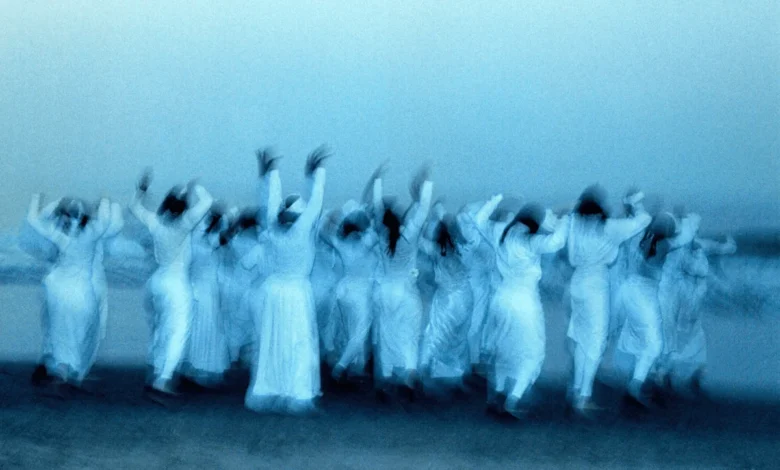
Higgins’ artistic philosophy is further illuminated by his concept of "looking for the marriage between Nature and life," where he visualizes "the Signature of the Spirit." This process of "looking" is not merely observational but deeply intuitive and spiritual. He described an out-of-body experience in his youth that fundamentally altered his perception of reality, leading him to believe that existence operates on parallel, multi-layered planes. This realization revealed the invisible forces that shape nature, forces often unnamed and operating below the threshold of ordinary sensory perception.

As an "ortovert" (a term he uses to describe someone who embraces the spiritual or unseen), Higgins has cultivated a profound sense of humility, allowing his ego to recede in favor of a belief that "the Spirit is in charge." He views experienced reality as akin to a "Marionette performance," appreciating the visible actions while seeking the underlying forces that direct them. It is within the liminal spaces—the transitions between the spiritual and the material worlds—that he endeavors to find the "Signature of the Spirit," the subtle manifestations of these unseen influences that reveal themselves in the fabric of existence. This philosophical framework imbues his photography with a depth that transcends mere documentation, aiming instead to capture the ethereal and the profound within the tangible world.
The exhibition Chester Higgins: Shared Memories is more than a retrospective; it is a testament to a lifetime dedicated to seeing and showing the world with clarity, compassion, and a profound respect for the human spirit. His work serves as a vital contribution to the ongoing dialogue about representation, challenging viewers to look beyond superficialities and engage with the deeper, shared humanity that connects us all. The exhibition, running until June 20, 2026, at Bruce Silverstein Gallery in New York, offers a unique opportunity to experience the powerful legacy of a photographer who has consistently used his lens to illuminate truth and foster understanding.