Luxury Jewelry E-commerce Faces New Threat as Sophisticated Typosquatting and Negative SEO Attacks Target Search Rankings

The luxury jewelry e-commerce sector is currently grappling with a sophisticated and quiet evolution in cyber-attacks that targets brand reputation and search engine visibility rather than direct consumer data. Traditionally, typosquatting—the practice of registering domain names that are slight misspellings of established brands—was used for phishing or credit card fraud. However, a new pattern emerging in late 2024 reveals a more patient and technical strategy designed to exploit the foundational algorithms of search engines like Google. By pairing typosquatting with aggressive negative SEO (Search Engine Optimization), attackers are successfully eroding the organic traffic of high-end retailers, often without the victims realizing they are under attack until their revenue begins to slide.
The Evolution of the Digital Threat Landscape
For years, the primary concern for online jewelers was the "fake storefront." An attacker would register a domain similar to a well-known brand, mirror the website’s design, and trick customers into entering their payment details. While this remains a threat, the new wave of attacks identified by industry experts at Opulent Jewelers operates on a different plane. These attackers are not interested in the individual customer’s credit card; they are interested in the retailer’s entire search engine ranking profile.
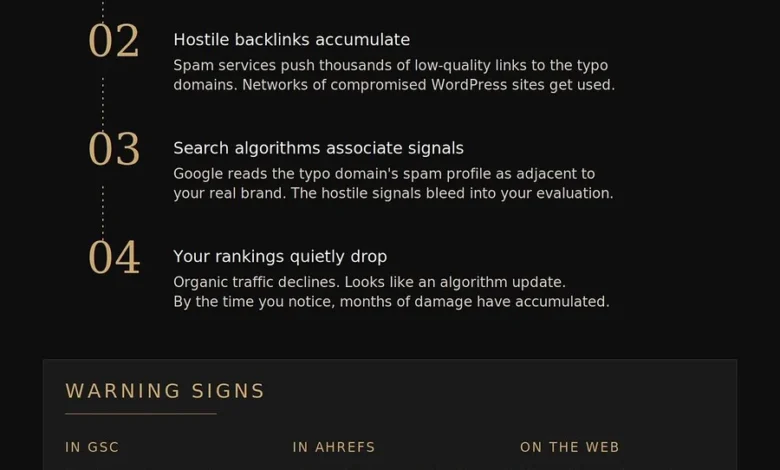
In this new model, the typosquatting domains often host no content at all. They are "parked" pages or empty shells. The weaponization occurs through the backlink profile. Attackers build thousands of low-quality, spam-saturated inbound links to these misspelled domains. Because search engines use brand association signals to determine the authority and safety of a brand, the "toxic" signal from the misspelled domain begins to bleed into the legitimate brand’s profile. If a search engine perceives that a domain nearly identical to a luxury brand is associated with massive amounts of link-spam, it may lower the trust score of the actual brand, leading to a decline in search engine results page (SERP) rankings.
Chronology of a Sophisticated Attack
The intensification of this pattern became noticeable in the final quarter of 2024. The attack usually follows a specific, multi-stage timeline:
- Reconnaissance and Domain Acquisition: The attacker identifies high-performing luxury jewelry brands, specifically those specializing in pre-owned and authenticated goods. They register several variations of the brand’s domain (e.g., adding an extra letter or swapping "s" for "z").
- Infrastructure Deployment: Instead of building a site, the attacker utilizes automated link-spam services. These services are often powered by compromised WordPress sites or "link farms" that inject commercial anchor text into thousands of unrelated web pages.
- The "Signal Bleed" Phase: Over a period of several weeks, the misspelled domain accumulates a massive backlink profile. Because the domain name is so similar to the real brand, Google’s "knowledge graph" and brand-association algorithms begin to link the two entities.
- Rank Degradation: The legitimate brand starts to see a slow, inexplicable decline in rankings for its most valuable keywords. Because there is no sudden "manual action" or security warning from Google, the jeweler often mistakes this for a routine algorithm update.
- Economic Impact: As organic traffic for high-intent keywords like "pre-owned Cartier Love bracelet" drops by even a few positions, the jeweler experiences a significant decline in conversions, often totaling hundreds of thousands of dollars in lost revenue.
Why Luxury Jewelry is the Primary Target
The choice of the luxury jewelry industry is a calculated economic decision. Several factors make this sector particularly vulnerable and attractive to attackers:
High Average Order Values (AOV): In the luxury space, individual transactions often range from $5,000 to over $50,000. Unlike fast fashion, where a small drop in traffic might result in a negligible loss, a 5% to 10% decrease in organic visibility for a jewelry retailer can result in millions of dollars in annual revenue loss. This high stakes environment makes negative SEO a potent tool for competitors or malicious actors looking to disrupt the market.
Specific and Competitive Keywords: The keyword landscape for luxury jewelry is highly concentrated. Phrases like "authenticated Van Cleef Alhambra" or "pre-owned Rolex" have immense commercial intent but limited inventory of authoritative retailers. Pushing a competitor off the first page of Google allows other players to capture that high-value traffic immediately.
The Trust and Authentication Barrier: Luxury e-commerce relies heavily on the "trust signal." Retailers invest heavily in content that proves their expertise and the authenticity of their products. By associating the brand name with spam and "black-hat" SEO techniques, the attacker strikes at the very heart of the brand’s digital provenance.
Identifying the Symptoms of an Attack
Most retailers will first notice the symptoms of an attack through their analytics tools. However, without technical expertise, these signs are easily misinterpreted. Industry analysts suggest that jewelers monitor three specific areas:
Google Search Console (GSC) Anomalies: A sudden spike in the "disavow report" or the "links to your site" report is a primary indicator. If a jeweler sees hundreds of new referring domains that have no relation to jewelry or luxury—often from mismatched geographic regions or languages—it is a sign that an attacker is building a hostile profile.
Third-Party SEO Tools: Tools like Ahrefs, SEMrush, or Moz can detect "toxic" link growth. Attackers often use randomized hash strings in URL paths or anchor text that combines the brand name with "pharmacy" or "gambling" keywords to maximize the toxicity of the link profile.
Typosquat Cluster Monitoring: Finding one misspelled domain is often just the tip of the iceberg. Coordinated attacks usually involve four or five variants of a brand name, all registered around the same time and exhibiting the same rapid, artificial backlink growth.
Supporting Data and Financial Analysis
While the exact number of affected retailers is difficult to quantify due to the "quiet" nature of the attack, SEO industry data suggests that negative SEO attempts have risen by approximately 22% in the e-commerce sector over the last 18 months. In the luxury segment, where margins are high and competition for "pre-owned" keywords is fierce, the impact is magnified.
Consider a mid-sized luxury jewelry retailer with an annual organic revenue of $20 million. If a negative SEO attack successfully pushes their primary product pages from the top three positions to the bottom of the first page, the click-through rate (CTR) can drop from approximately 30% to less than 5%. This represents a potential revenue hit of $5 million to $10 million annually, far exceeding the cost of the attack itself, which can be executed for a few thousand dollars using automated link-building infrastructure.
Strategic Responses and Legal Remedies
The defense against this new threat landscape is multi-layered. Security experts and IP attorneys emphasize that there is no "silver bullet," but rather a series of necessary infrastructure investments.
1. Persistent Disavow Management:
The most immediate defense is the Google Disavow tool. While Google has stated that its algorithms are better at ignoring spam links automatically, the "brand signal bleed" associated with typosquatting often requires manual intervention. Retailers must maintain a "living" disavow file, updating it weekly to ensure that toxic domains are explicitly discounted by the algorithm.
2. The UDRP and ACPA Legal Frameworks:
When an attack causes documented financial harm, legal action becomes necessary. The Uniform Domain-Name Dispute-Resolution Policy (UDRP) is a process managed by the World Intellectual Property Organization (WIPO). It allows trademark holders to seize or cancel domains registered in bad faith. The process typically costs around $1,500 in filing fees and takes about two months.
For more aggressive enforcement, the Anticybersquatting Consumer Protection Act (ACPA) in the United States allows for statutory damages ranging from $1,000 to $100,000 per domain. While more expensive and time-consuming than UDRP, the threat of federal litigation can act as a significant deterrent to domestic attackers.
3. Documentation as Infrastructure:
A critical but often overlooked aspect of defense is the rigorous documentation of the attack. Screenshots of WHOIS data, exports of backlink profiles, and a timeline of ranking declines are essential for both legal proceedings and for filing reconsideration requests with search engine webmaster teams.
Broader Industry Impact and Implications
The rise of typosquatting-based negative SEO signals a shift in the "arms race" of digital marketing. As Google’s AI-driven algorithms become more complex, they also become more sensitive to broad patterns of brand association. Attackers are learning to manipulate these patterns, moving away from simple site-hacking toward "signal-hacking."
For independent jewelers and smaller boutiques, this represents a significant challenge. Unlike major conglomerates, small retailers often lack the dedicated SEO and legal teams required to monitor and combat these attacks in real-time. The resource asymmetry—where an attacker can automate an offensive for a fraction of the cost of a manual defense—puts smaller players at a distinct disadvantage.
The industry’s response must therefore be collaborative. Awareness is the first line of defense. When jewelers share data regarding the types of spam domains and link patterns they are seeing, it allows the broader community to update their defensive filters more quickly. Furthermore, as search engines continue to refine their spam detection, the "signal bleed" vulnerability may eventually be closed. Until then, the burden of vigilance remains with the brand owners.
In the long term, this trend may force a change in how luxury brands approach their digital footprint. Trademarking not just the brand name but common misspellings, and proactively registering "defensive" domains, may become as standard as purchasing insurance for a physical showroom. The digital landscape of luxury jewelry is no longer just about the brilliance of the stones or the prestige of the brand; it is increasingly defined by the resilience of the brand’s digital identity against an invisible, technical, and highly motivated adversary.