Kyrgyzstans textile sector runs on improvisation not infrastructure

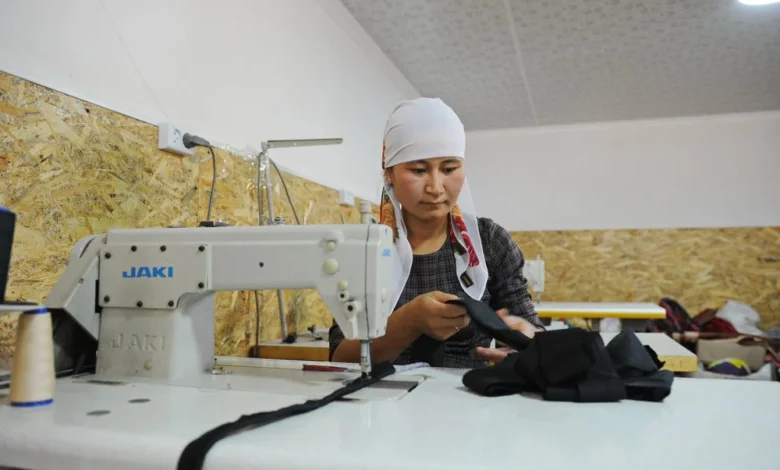
The textile and apparel manufacturing sector in the Kyrgyz Republic has long operated as a vital pillar of the nation’s export-driven economy, yet it remains fundamentally constrained by a profound lack of institutionalized infrastructure, modern industrial parks, and reliable logistics frameworks. While the sector has successfully carved out a lucrative niche supplying affordable garments to traditional markets across the Commonwealth of Independent States (CIS)—most notably the Russian Federation and Kazakhstan—its reliance on raw resource improvisation rather than standardized supply chain management exposes structural vulnerabilities. Industry stakeholders, economic analysts, and regional trade representatives point out that despite impressive agility, the absence of robust systemic investments threatens the long-term viability of Kyrgyzstan’s garment industry in an increasingly digitized and regulated global trade environment.
Main Facts and Current Landscape of the Kyrgyz Garment Industry
At the heart of Kyrgyzstan’s textile landscape is a dense cluster of small- and medium-sized enterprises (SMEs), concentrated primarily in the capital city of Bishkek and the surrounding Chu Region. These operations range from informal micro-workshops employing a handful of tailors to larger manufacturing hubs producing hundreds of thousands of units monthly. The sector’s primary competitive advantage has historically been its low cost of labor, high operational flexibility, and rapid turnaround times. Unlike rigid, highly automated manufacturing giants in East Asia, Kyrgyz manufacturers can pivot designs, adjust production lines, and fulfill bespoke orders with minimal lead times.
However, this flexibility is largely necessitated by chronic systemic deficits. Secure access to high-quality raw materials—such as domestically produced cotton and synthetic fabrics—is severely limited. The country exports the majority of its raw cotton while importing finished textiles, predominantly from China, Turkey, and neighboring Uzbekistan. Consequently, manufacturers face high import tariffs, unpredictable customs clearance timelines, and volatile currency fluctuations. Furthermore, the internal transport network suffers from deteriorating physical infrastructure, making domestic distribution costly and inefficient. Rather than relying on synchronized enterprise resource planning (ERP) systems, factory owners frequently depend on personal networks, informal credit arrangements, and manual problem-solving to navigate daily bottlenecks, effectively running an industrial sector on commercial improvisation.
Chronology and Evolution of Textile Production in Kyrgyzstan
The origins of Kyrgyzstan’s modern garment manufacturing trace back to the collapse of the Soviet Union in 1991. Following independence, the dissolution of state-planned supply chains dismantled the country’s heavy industrial base, leading to widespread unemployment and economic contraction. Amidst economic restructuring, the informal trade sector emerged as a primary economic buffer.
During the mid-1990s and early 2000s, traders began importing inexpensive textiles from China and utilizing the country’s relatively cheap, skilled labor pool—inherited from Soviet-era vocational training institutes—to sew basic apparel. Bishkek’s Dordoi Bazaar rapidly transformed into a massive regional re-export hub, channeling manufactured garments northward into Russia and westward into Kazakhstan.
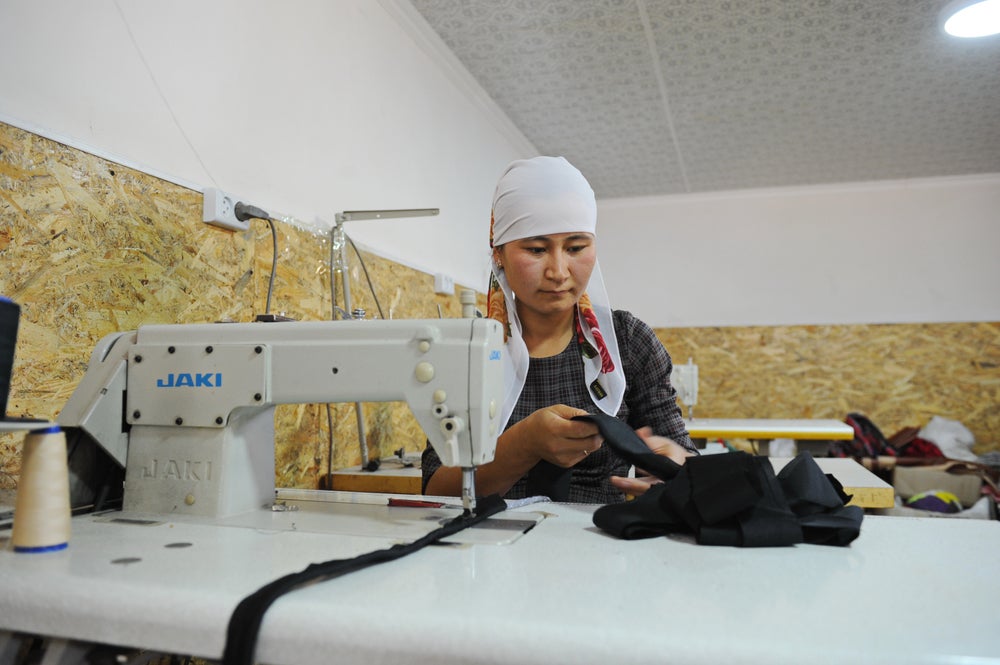
By the late 2000s and early 2010s, the sector began to formalize, transitioning from backyard workshops to semi-organized sweatshops and small factories. A pivotal moment arrived in August 2015 when Kyrgyzstan officially joined the Eurasian Economic Union (EAEU). Accession to the EAEU eliminated customs borders with key target markets like Russia and Kazakhstan, facilitating smoother cross-border trade and sparking a brief investment boom in local manufacturing capacity.
Despite EAEU integration, structural reforms stalled throughout the late 2010s and early 2020s. While trade barriers diminished, non-tariff barriers, logistical bottlenecks, and corruption at border checkpoints persisted. The onset of the COVID-19 pandemic in 2020 exposed severe vulnerabilities in supply chain continuity, highlighting the dangers of depending exclusively on foreign fabric imports and manual logistical coordination. The subsequent geopolitical shifts and economic sanctions on Russia following the invasion of Ukraine in 2022 created a paradoxical environment for Kyrgyz garment makers: while Western brands withdrew from Russia, leaving a massive market void, tightening international financial controls and logistics complications severely restricted payment processing and cargo transit.
Supporting Data and Economic Metrics
Quantitative metrics underscore both the economic significance of the textile sector and the precarious foundation upon which it rests. According to data from the National Statistical Committee of the Kyrgyz Republic, the textile and apparel industry accounts for approximately 3 to 5 percent of the nation’s official Gross Domestic Product (GDP) and generates tens of thousands of formal and informal jobs, predominantly employing women.
However, official figures are widely considered by economic researchers to underrepresent the sector’s true economic footprint due to high levels of informality. Estimates by international financial institutions, including the World Bank and the European Bank for Reconstruction and Development (EBRD), suggest that up to 50 percent of garment manufacturing operations operate partially or entirely within the shadow economy. This informal status deprives the state of vital tax revenues and prevents enterprises from accessing formal commercial credit, insurance products, and government subsidies.
Export data reveals a heavy reliance on a single destination market. More than 80 percent of Kyrgyz apparel exports are destined for the Russian Federation, routing primarily through massive wholesale markets such as Sadovod and South Gate in Moscow. While this provides a ready and lucrative outlet for low- to mid-tier garments, it exposes the domestic industry to acute geopolitical and macroeconomic shocks originating outside Kyrgyz borders. Furthermore, foreign direct investment (FDI) directed specifically into the textile manufacturing sector remains dismally low, constrained by perceptions of regulatory instability, property rights uncertainty, and weak enforcement of commercial contracts.
Official Responses and Institutional Perspectives
Government officials and trade associations have increasingly acknowledged the urgent need to transition from informal improvisation to institutionalized modernization. The Ministry of Economy and Commerce of the Kyrgyz Republic has repeatedly emphasized strategic priorities aimed at upgrading the sector’s productive capacities, including the establishment of specialized industrial parks equipped with stable utilities, modern waste management systems, and centralized warehousing facilities.

In public statements, representatives from the Association of Light Industry Enterprises of Kyrgyzstan (Legprom) have advocated for targeted state support to address chronic labor shortages. While the country boasts a legacy of skilled tailors, demographic shifts and persistent low wages have driven many qualified professionals to migrate in search of higher-paying employment in Russia, Kazakhstan, or the West. Legprom has continually lobbied for the modernization of vocational education systems, pushing for partnerships between technical colleges and private manufacturers to train a new generation of machine operators, designers, and supply chain managers.
International development agencies have also stepped in to provide technical assistance. Programs sponsored by the United States Agency for International Development (USAID) and the International Trade Centre (ITC) have focused on helping Kyrgyz manufacturers adopt international quality standards, digitize their operations, and diversify their export markets beyond the traditional CIS sphere. These initiatives aim to introduce concepts of circular economy, sustainable production, and digital traceability, which are becoming mandatory prerequisites for entering European and North American retail markets.
Broader Impact, Global Implications, and Future Outlook
The reliance of Kyrgyzstan’s textile sector on improvisation rather than infrastructure carries profound implications for the country’s broader economic development trajectory. Without systematic investments in modern logistics, energy reliability, and environmental compliance, the sector risks hitting a hard operational ceiling. As consumer markets worldwide increasingly demand supply chain transparency, ethical labor practices, and adherence to environmental standards—exemplified by the European Union’s emerging Corporate Sustainability Due Diligence Directive—informal, ad-hoc manufacturing models will face mounting barriers to entry.
Moreover, the lack of robust financial infrastructure limits the ability of Kyrgyz firms to scale operations. Commercial lending rates in the Kyrgyz Republic remain comparatively high, and local banks frequently lack the specialized financial instruments required to fund capital-intensive upgrades, such as the acquisition of computerized cutting tables, automated sewing machinery, and advanced design software. Consequently, many businesses remain trapped in low-value-added production segments, competing primarily on price rather than quality, design innovation, or brand equity.
Ultimately, the future of Kyrgyzstan’s apparel industry hinges on a concerted, collaborative effort between the state, private enterprise, and international partners. Transitioning away from a reliance on reactive improvisation will require deliberate policy reforms focused on strengthening property rights, streamlining tax administration, securing stable energy supplies, and constructing modern industrial infrastructure. If the Kyrgyz Republic successfully navigates these structural transformations, its textile sector possesses the innate dynamism, entrepreneurial resilience, and regional market positioning required to evolve into a competitive, modern manufacturing powerhouse on the Eurasian continent. Failure to institute these reforms, however, may relegate the industry to perpetual vulnerability, leaving it ill-equipped to survive the pressures of a rapidly modernizing global economy.