Jeanologia reports significant environmental savings in 2025 as the textile industry pivots toward sustainable manufacturing standards

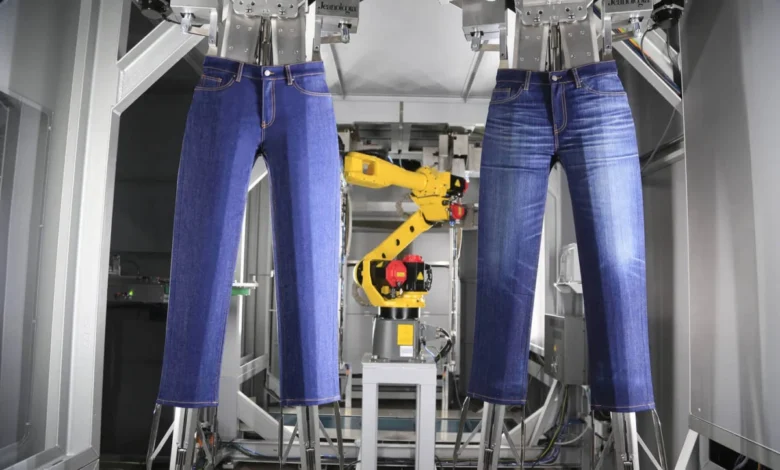
The global textile sector stands at a critical juncture, balancing the insatiable demand for fast-moving fashion with the urgent necessity of ecological preservation. Jeanologia, the Valencia-based technology firm, has emerged as a central architect in this transition, recently releasing its Sustainability Report for 2025. The data indicates that the company’s suite of proprietary textile finishing technologies—centered on laser, ozone, and e-flow systems—prevented 21.52 million cubic meters of water pollution and mitigated 103.53 million kilograms of CO2 emissions throughout the 2025 calendar year. These metrics serve as a quantifiable benchmark for the industry, contrasting sharply with the traditional, resource-intensive processes that have historically dominated garment manufacturing.
A Chronology of Sustainable Innovation
Jeanologia’s journey toward these 2025 milestones is rooted in over three decades of research and development. Since its inception, the company has sought to decouple economic growth from environmental degradation.
- 1994–2010: The formative years focused on the development of laser technologies to replace the hazardous manual sandblasting and potassium permanganate treatments used in denim finishing.
- 2017: A pivotal year for transparency, as the company published its first Sustainability Report and introduced the Environmental Profit and Loss (EP&L) account, a mechanism designed to quantify the specific environmental savings generated by their machines.
- 2019: The company formalized its commitment to international standards by joining the United Nations Global Compact and establishing a cross-functional Sustainability Committee.
- 2021–2024: During this period, Jeanologia expanded its focus beyond denim, integrating its technologies into general garment processing, dyeing, and finishing, while simultaneously refining its EIM (Environmental Impact Measuring) methodology.
- 2025: The current reporting year represents a milestone in operational efficiency, with the company achieving a 13.64% reduction in its own carbon footprint, dropping from 895.79 tons of CO2 equivalent in 2024 to 773.57 tons in 2025.
Quantifying the Footprint: The EIM Methodology
One of the most persistent challenges in the textile industry is the prevalence of "greenwashing"—vague, unverifiable claims of sustainability. Jeanologia has sought to combat this by moving from qualitative assertions to hard data. Its EIM methodology provides a standardized language for brands and manufacturers to assess the environmental cost of individual finishing processes.
The second EIM report, published concurrently with the 2025 Sustainability Report, is built upon a massive dataset encompassing over 100,000 production processes performed by 359 manufacturers across more than 40 countries. By creating this common framework, Jeanologia is effectively commoditizing transparency. The company is now pivoting to treat EIM as an independent unit, aiming to scale this measurement tool as an industry-wide standard that could potentially influence procurement policies for major global fashion retailers.

EU Taxonomy Alignment and Regulatory Compliance
Beyond voluntary reporting, Jeanologia has taken the significant step of conducting a voluntary assessment against the EU Taxonomy—the European Union’s rigorous classification system for environmentally sustainable economic activities. The findings provide a clear picture of the company’s alignment with European climate goals: 96.37% of its total turnover is derived from activities that the EU classifies as "Taxonomy-aligned."
Furthermore, 84.43% of the company’s capital expenditure (CapEx) and 34.96% of its operating expenditure (OpEx) are directed toward activities that directly contribute to climate change mitigation and the transition to a circular economy. This high level of alignment suggests that Jeanologia’s business model is fundamentally structured to meet the future regulatory requirements that are currently being drafted in Brussels and other major economic hubs.
The Philosophy of Enrique Silla
Enrique Silla, the founder and CEO of Jeanologia, has long maintained that sustainability should not be relegated to a corporate social responsibility (CSR) silo. "Sustainability is not a destination or a department but a way of thinking, creating and acting," Silla stated in the lead-up to the report’s publication. "Real transformation only happens when sustainability and business progress together."
Silla’s leadership emphasizes that the financial health of the textile industry is inextricably linked to its resource efficiency. By lowering the water and energy demands of production, manufacturers do not merely satisfy environmental mandates; they also protect their own margins against rising energy costs and water scarcity risks.
Industry Implications and Future Priorities
The data provided by Jeanologia offers a sobering look at the scale of the challenge remaining. While the savings of 103.53 million kg of CO2 are substantial, they represent only a fraction of the total emissions generated by the multi-trillion-dollar global textile industry. The primary implication of this report is that technology exists to fundamentally alter the environmental impact of fashion, but its adoption must scale at an exponential rate.

Looking toward the 2026–2030 period, Jeanologia has identified three critical areas for advancement:
- Improved Emissions Data: Further refining the granularity of its reporting to capture Scope 3 emissions more accurately, particularly regarding the upstream supply chain.
- Supply Chain Visibility: Leveraging digital tools to provide brands with real-time insights into the energy consumption of their contractors.
- Climate Resilience: Developing modular technology updates that allow existing factories to withstand future energy price volatility and resource shortages.
Analyzing the Shift Toward Circularity
The textile industry has historically been defined by a linear model: take, make, and waste. Jeanologia’s focus on laser and ozone technology is a direct intervention in this chain, specifically during the "finishing" phase—one of the most water-intensive stages of garment production. By replacing traditional chemical baths with dry processes, the company has enabled a shift toward closed-loop water systems.
The integration of EIM as an independent, data-driven framework is likely to serve as a catalyst for future investment. As institutional investors increasingly demand adherence to ESG (Environmental, Social, and Governance) criteria, manufacturers who can prove their environmental performance through standardized metrics like those provided by Jeanologia will likely gain a competitive advantage in securing financing and contracts with major retail brands.
Conclusion: A Blueprint for the Future
The 2025 Sustainability Report from Jeanologia acts as both a scorecard and a roadmap. It demonstrates that while the textile industry has a long way to go to reach true carbon neutrality, the tools for significant reduction are not merely theoretical—they are already in use.
By achieving 96.37% alignment with the EU Taxonomy and providing transparent, verified data to its partners, Jeanologia is setting a standard for accountability that is becoming increasingly difficult for the rest of the industry to ignore. As global regulations tighten, the "Jeanologia model"—characterized by the transition from chemical-heavy, water-intensive processes to high-tech, data-driven manufacturing—is positioned to become the industry standard for any firm hoping to operate in a resource-constrained future. The company’s focus on the next decade, centered on climate resilience and supply chain visibility, underscores a move from merely "reducing harm" to actively "building resilience" into the very fabric of the global clothing and footwear market.