The Erosion of Brand Equity: Navigating the Quality Crisis in the Era of AI-Driven Marketing

It is Fall 2026, and the annual advertising industry conference circuit is in full swing. From the glass-walled convention centers of New York and London to the burgeoning tech hubs of Western Europe, the industry is reverberating with a single, pervasive theme: Artificial Intelligence. However, the tone of these discussions has shifted dramatically since the initial, euphoric adoption of generative AI tools. Where early industry discourse was dominated by promises of unprecedented innovation and operational efficiency, the current narrative is defined by a growing sense of weariness, apprehension, and a palpable decline in creative standards. As organizations grapple with the fallout of massive, AI-induced labor force reductions, the advertising sector is facing a crisis of identity: how to maintain brand integrity in a world where "good enough" is increasingly becoming the industry standard.
The Changing Landscape of Agency-Client Relations
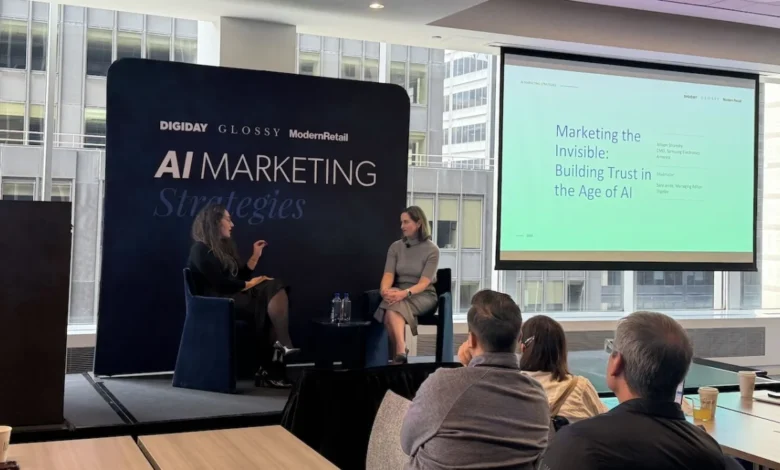
The inaugural AI Marketing Strategies event, co-hosted on September 24, 2026, by Digiday, Glossy, and Modern Retail, served as a lightning rod for these industry tensions. During a series of town hall sessions held under the Chatham House Rule—allowing brand-side executives to speak with rare, unfiltered candor—a clear divide emerged between the promises of AI-led efficiency and the reality of brand maintenance.
For many years, the marketing industry operated on a model of high-touch creative development. Today, that model is under siege by automated workflows. Brand-side marketers, particularly those in the premium and luxury sectors, expressed significant alarm regarding the quality of content output from their agency partners. The consensus among these executives is that the reliance on AI-driven automation has not only commoditized creative work but has actively threatened the brand equity that these companies have spent decades building.
One executive from a premier beauty brand articulated the struggle vividly, noting that the "quality control is abysmal." The executive described a workflow where AI output is treated merely as a "rough draft," necessitating a strict "10/80/10" formula. In this model, 10% of the effort is dedicated to precise, upfront prompt engineering; the AI handles the 80% bulk of the production; and the final 10% is reserved for human intervention to correct errors and inject brand-specific nuances. The frustration stems from the fact that agencies, under pressure to cut costs and speed up delivery, are often skipping that final, vital stage of human refinement.
The "Good Enough" Trap and Declining Standards
The phenomenon of "good enough" has become a point of friction between brands and their service providers. Several brand-side participants reported instances where agency deliverables arrived with glaring errors—misplaced logos, incorrect brand colors, or tone-deaf copy—suggesting that the oversight process has been hollowed out.
The industry’s labor shift is a significant factor. With many agencies replacing senior, experienced creative staff with junior employees whose primary role is to oversee automated platforms, the institutional knowledge required to uphold a brand’s specific "voice" is being lost. For premium brands, where perception is the product, this decline in rigor is not just a nuisance; it is an existential threat. When a luxury brand’s visual identity is compromised by an AI-generated hallucination or a sloppy automated execution, the trust between the brand and its high-net-worth consumer base is permanently eroded.
The Human Element in Change Management
The transition toward an AI-first operating model is proving to be as much a psychological challenge as a technical one. During the summit, leaders acknowledged that "change management" is the most critical, yet most neglected, aspect of the current industry evolution. The rapid displacement of traditional creative roles has created a climate of fear, which in turn stifles the very innovation the industry claims to pursue.
One agency principal remarked that while AI can compress production timelines from weeks to hours, the value of the human worker has shifted from execution to curation and strategic intent. "People are going to feel threatened," the agency lead noted. "But we have to help them understand how they fit in this new paradigm." This transition mirrors the industry’s digital transformation of the early 2000s, where traditional media planners had to learn to navigate the nascent internet landscape. The difference, however, is the speed of change. In the 2000s, there was a decade of gradual adoption; today, the shift is occurring in months.
Measuring the Gap: A New Strategic Framework
As the industry moves away from vanity metrics—the "numbers" that dominated the digital-first era—new frameworks are emerging. Isabel Perry, Global EVP of Strategy at DEPT, highlighted the necessity of moving toward a model of "gap measurement." In a digital landscape increasingly populated by non-human traffic, chasing semi-generic industry metrics is no longer a viable strategy.
Perry’s argument is that marketing budgets must be reallocated based on the consumer journey. Leaders must distinguish between the components of a campaign that can be handled by an AI agent and the touchpoints that require a human emotional connection. By measuring the "gap" between where the consumer is and where the brand needs to be, marketers can allocate resources to the high-impact areas that require human intuition, rather than wasting capital on automated noise.
The "Zero-Click" Reality and Content Curation
The shift toward an AI-first internet—what some refer to as the "internet of two audiences," comprising both human users and agentic AI bots—has fundamentally altered the nature of content discovery. Rajiv Ragu, VP of Digital at Thorne, emphasized that we are entering a "zero-click" world, where users often receive answers directly from AI interfaces rather than clicking through to a brand’s website.
This shift necessitates a rigorous approach to the management of legacy content. Brands can no longer afford to let their online libraries gather dust. If an AI agent scrapes outdated, inaccurate, or low-quality content from a brand’s legacy archives to provide a summary to a user, the potential for brand damage is significant. Curation, authorship updates, and active content maintenance are no longer optional "housekeeping" tasks; they are essential defensive strategies in the age of AI.
Broader Implications and Future Outlook
The industry is currently at a critical juncture. The initial fervor for AI-driven automation has revealed a structural weakness in the advertising supply chain: the loss of human oversight and the erosion of creative standards.
Looking ahead, we can expect a bifurcated market. On one side, there will be "commodity agencies" that compete on price and speed, leveraging AI to churn out high-volume, low-quality content. On the other, there will be "premium agencies" that lean into the human element, positioning their service as a boutique, high-touch consultation that guarantees brand safety and creative excellence.
The data suggests that the market is already beginning to correct. As companies experience the negative repercussions of low-quality AI content—ranging from consumer complaints to drops in conversion rates—there is a growing demand for "human-verified" content. Industry leaders are increasingly advocating for a hybrid model where AI handles the heavy lifting, but the "final mile" of creative work remains firmly under the control of experienced human talent.
Ultimately, the goal of the 2026 advertising landscape is to find the equilibrium between the efficiency of the machine and the empathy of the human. The industry’s ability to survive this transition will depend on its willingness to treat AI not as a replacement for talent, but as a sophisticated tool that, without the right human hand at the helm, is prone to failure. The "good enough" era may be the current reality, but the market is already signaling that for brands to survive, "good enough" will never be enough.